Walking After Meals: What the Research Shows
Walking after meals explained: what trials found for blood sugar, how soon and how long to walk, who benefits, and what the studies cannot yet show.

Walking after meals is one of the simplest habits people suggest for steadier blood sugar, and it is also one of the better studied. The idea is that a short, easy walk soon after eating helps your muscles pull glucose out of the blood, so the spike after the meal is lower. This guide to walking after meals goes through what the trials actually measured, how big the effects were, how soon and how long to walk, who benefits most, and what the studies still cannot tell us.
⚕️ Medical Disclaimer
This article is general information, not medical advice. If you have diabetes or take medicine that lowers blood sugar, talk to your doctor or diabetes team before changing your activity, because exercise can change how much medicine you need and can cause low blood sugar. Do not walk if you feel dizzy, unwell or short of breath, and do not use a walk to replace treatment.
The short version
- A 2023 meta-analysis of 8 small crossover trials found that exercise after a meal lowered the blood sugar rise more than exercise before eating, and more than staying inactive. The effect was larger the sooner the exercise started after the meal.
- A 2022 meta-analysis of 7 one-day trials found that light walking breaks lowered blood sugar and insulin after meals compared with sitting, and did better than standing breaks.
- In a 2016 trial of 41 adults with type 2 diabetes, walking 10 minutes after each main meal lowered the blood sugar rise more than one 30-minute walk at another time. The gain was biggest after the evening meal.
- Most trials were small, lasted from a day to two weeks and used blood sugar as the outcome. None of them show that walking after meals prevents diabetes or heart disease on its own.
Why walking after meals changes blood sugar
When you eat carbohydrate, glucose enters your blood and your pancreas releases insulin. Your muscles are the largest place glucose goes. Working muscles can take up glucose with less help from insulin, so a gentle walk starts moving sugar out of the blood while it is still rising.
That is the reasoning behind walking after meals. It is a plausible mechanism, and the trials below test it directly by measuring blood sugar after a meal with and without a walk. The measure most of them report is the incremental area under the curve, or iAUC. In plain terms it is the total size of the blood sugar rise above your starting level during the hours after eating. A smaller iAUC means a smaller spike.
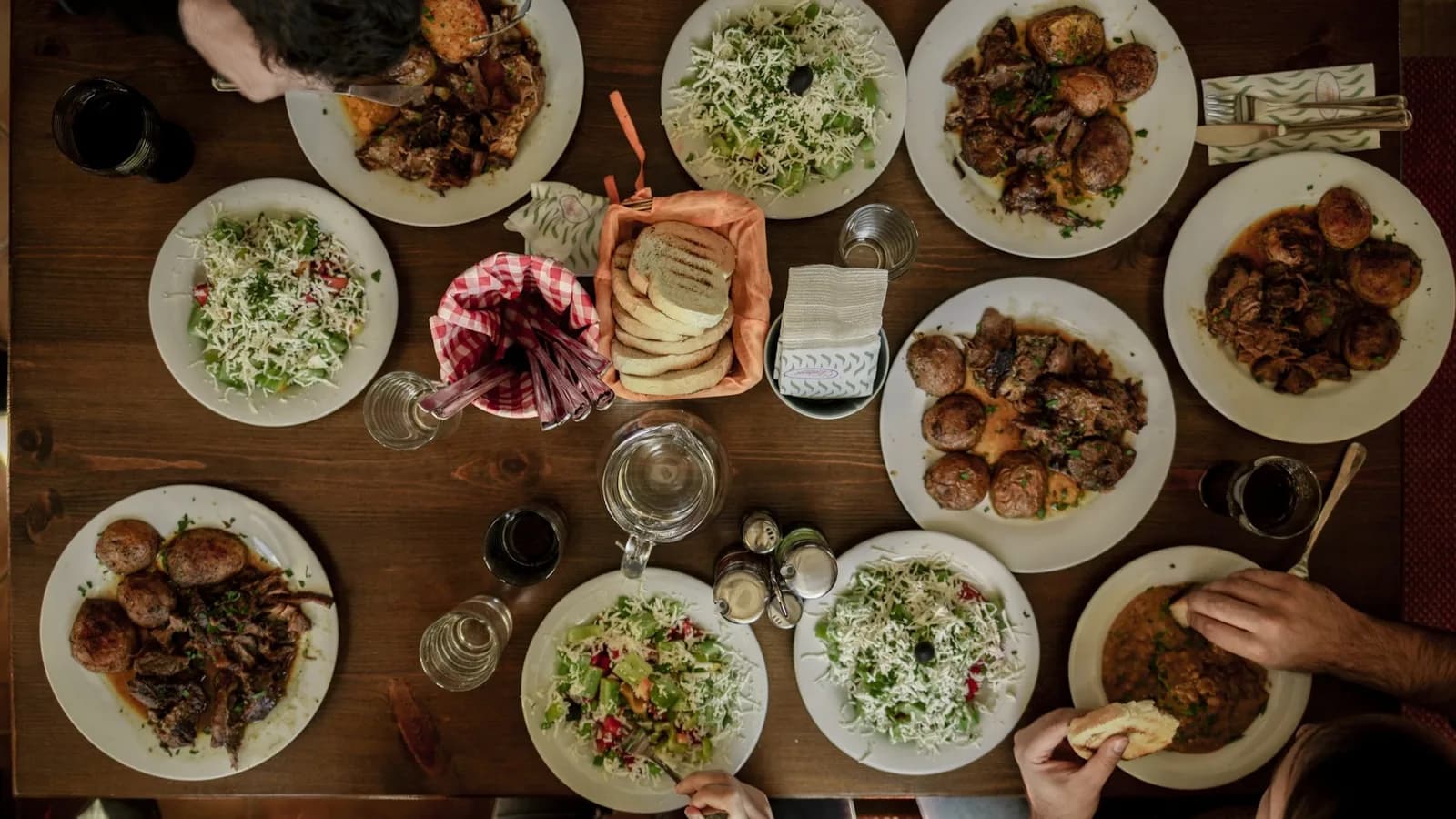
What the research shows about walking after meals
Timing: soon after the meal looks best
The most useful review for timing is a 2023 systematic review and meta-analysis in Sports Medicine by Engeroff and colleagues. It pooled 8 randomised crossover trials with 116 participants, 47 with type 2 diabetes and 69 without. Each trial compared exercise before a meal, exercise after a meal and no exercise.
Exercise after the meal lowered the rise in blood sugar compared with exercise before eating, with a standardised mean difference of 0.47. It also beat the inactive condition, with a standardised mean difference of 0.55. Exercise before the meal was not significantly better than doing nothing. The time between the meal and the exercise also mattered: the longer people waited, the smaller the benefit. The authors concluded that walking has a larger acute effect on high blood sugar after a meal when it starts as soon as possible after eating.
The caution is in the same paper. The trials were crossover studies rated at high risk of bias, and the total number of people was small. The result is consistent, but it is not the last word.
Light walking breaks beat sitting, and beat standing
A 2022 meta-analysis in Sports Medicine by Buffey and colleagues looked at trials that broke up sitting with short bouts of standing or light walking. It included 7 randomised crossover trials of single days, mostly in adults who were overweight or had obesity. Light walking lowered blood sugar after meals (a standardised difference of minus 0.72) and insulin (minus 0.83) compared with continued sitting. Standing also lowered blood sugar (minus 0.31) but did not change insulin. Walking was better than standing for both.
An earlier trial from Dunstan and colleagues in Diabetes Care shows what this looked like in practice. Nineteen overweight or obese adults aged 45 to 65 drank a test drink with 75 g of glucose and 50 g of fat. When they sat the whole time, their blood sugar iAUC was 6.9. With a 2-minute light walk every 20 minutes it was 5.2, and with a 2-minute moderate walk every 20 minutes it was 4.9. Insulin fell from 829 to about 634 with either type of walking. That is roughly a quarter lower blood sugar rise from very short walks.
Walking after meals in type 2 diabetes
Reynolds and colleagues ran one of the most practical trials, published in Diabetologia in 2016. Forty-one adults with type 2 diabetes, average age 60, followed two different pieces of advice for two weeks each. One was to walk 30 minutes a day whenever they liked. The other was to walk 10 minutes after each main meal. Both met the activity guidelines, and blood sugar was tracked with a continuous glucose monitor.
Blood sugar in the three hours after meals was lower when people walked after eating. The ratio of the iAUC was 0.88 compared with the single daily walk, which is about 12 percent lower. After the evening meal, when people ate the most carbohydrate and were most sedentary, the ratio was 0.78, about 22 percent lower. The authors suggested that guidelines should specify activity after meals, especially after meals that are high in carbohydrate.
Dempsey and colleagues tested a different approach in 24 inactive adults with type 2 diabetes who sat for 8 hours on three separate days. Adding 3 minutes of light walking every 30 minutes cut the blood sugar iAUC from 24.2 to 14.8 and lowered insulin and C-peptide as well. Simple resistance moves such as half-squats and calf raises did the same job for blood sugar, and lowered triglycerides too, while walking did not significantly lower triglycerides. So walking works, but it is not the only option.
How long do you need to walk?
A small 2025 trial in Scientific Reports by Hashimoto and colleagues compared a 10-minute walk straight after a sugary drink with a 30-minute walk starting 30 minutes later, and with rest. Twelve healthy young adults took part. Both walks lowered the two-hour blood sugar area compared with rest. Only the 10-minute walk that started right away lowered the peak, from about 182 to 164 mg/dL, while the later 30-minute walk did not significantly lower it.
This fits the timing review: a short walk that starts early can do as well as a longer, later one for the spike itself. It was a very small study in healthy young people using a glucose drink rather than a normal meal, so treat it as a clue and not a rule.
A 2023 dose-response trial in Medicine and Science in Sports and Exercise by Duran and colleagues looked at how often and how long breaks should be. Eleven middle-aged and older adults sat for 8 hours on five different days. Only the most frequent and longest routine, 5 minutes of light walking every 30 minutes, significantly lowered the blood sugar iAUC. All of the break routines lowered systolic blood pressure, with the largest drops of about 5 mmHg for 1 minute every hour and about 4 mmHg for 5 minutes every 30 minutes.
How to try walking after meals
The studies point to a simple plan. None of these steps is a prescription, and you can adjust them to your day.
- Start soon after eating. The meta-analysis found that the benefit shrank the longer people waited. Aim to start within the first 10 to 30 minutes after you finish.
- Keep it easy. Light walking was enough in most trials. You should be able to talk normally.
- Ten minutes is a sensible target. Ten minutes after each main meal was the approach in the best-known diabetes trial, and it is easy to fit into a day.
- Prioritise the biggest meal. The largest benefit in the 2016 trial came after the evening meal, which is often the largest and the one followed by the most sitting.
- Add movement breaks on sitting days. If a walk is not possible, a few minutes of standing or light movement every 30 to 60 minutes also helped in the break-up trials.
If you want more background on daily movement targets, read our articles on where the 10,000 steps number came from and on walking pad benefits. For the energy side of blood sugar, see glycemic variability and the 3 pm crash and our guide to how fiber changes your gut and blood sugar. If you prefer to walk in the morning instead, our piece on the benefits of morning walking covers that routine.
Who should be careful
Walking after meals is low risk for most healthy adults, but a few groups should check first.
- People using insulin or medicines that lower blood sugar. Exercise can lower blood sugar further, so you may need to check your levels and adjust with your care team.
- People with heart or lung conditions, or new symptoms. Chest pain, severe breathlessness, dizziness or fainting need medical advice before exercise.
- People with reflux or a very large meal. A brisk walk straight after a heavy meal can be uncomfortable. A slow stroll is usually fine.
- People with foot problems from diabetes. Wear suitable shoes and check your feet.
What the research does not show
- It does not show long-term disease prevention. The trials measured blood sugar and insulin over hours to two weeks. They did not follow people for years to see who developed diabetes or heart disease.
- The studies are small. Many have fewer than 30 participants, and the 2023 timing review judged its included crossover trials at high risk of bias.
- Some used test drinks, not real meals. A glucose drink makes a clean experiment but does not match a plate of mixed food.
- Walking is not the only way. Light resistance moves were as effective for blood sugar in one trial, and a walk at another time of day still counts toward your weekly activity.
- It is not a substitute for treatment or a healthy diet. The effect of a walk is real but modest next to the effect of what and how much you eat.
Bottom line
Across small randomised trials, walking after meals consistently lowered the blood sugar and insulin rise that follows eating, most clearly when the walk started soon after the meal and in people with insulin resistance or type 2 diabetes. Ten easy minutes after your biggest meal is a low-cost habit that fits the evidence. It is a useful tool and not a cure, and anyone managing diabetes should build it into their plan with their doctor.
Sources
[Engeroff et al., "Systematic review with meta-analysis on the acute postprandial glycemic response to exercise before and after meal ingestion," Sports Med, 2023. PMID: 36715875] [Buffey et al., "Acute effects of interrupting prolonged sitting with standing and light-intensity walking on cardiometabolic biomarkers: systematic review and meta-analysis," Sports Med, 2022. PMID: 35147898] [Dunstan et al., "Breaking up prolonged sitting reduces postprandial glucose and insulin responses," Diabetes Care, 2012. PMID: 22374636] [Reynolds et al., "Advice to walk after meals is more effective for lowering postprandial glycaemia in type 2 diabetes than advice that does not specify timing," Diabetologia, 2016. PMID: 27747394] [Dempsey et al., "Benefits for type 2 diabetes of interrupting prolonged sitting with brief bouts of light walking or simple resistance activities," Diabetes Care, 2016. PMID: 27208318] [Hashimoto et al., "Positive impact of a 10-min walk immediately after glucose intake on postprandial glucose levels," Sci Rep, 2025. PMID: 40594496] [Duran et al., "Breaking up prolonged sitting to improve cardiometabolic risk: dose-response analysis of a randomized crossover trial," Med Sci Sports Exerc, 2023. PMID: 36728338]Frequently Asked Questions
Does walking after meals lower blood sugar?
Yes, in small randomised trials it did. A 2023 meta-analysis of 8 crossover trials found that exercise after a meal lowered the rise in blood sugar more than exercise before eating or no exercise, and a 2016 trial in 41 adults with type 2 diabetes found that 10-minute walks after meals lowered the post-meal rise by about 12 percent compared with one daily walk. The studies were small and short, so the evidence is consistent but not final.
How soon after eating should I walk?
The research favours starting as soon as is comfortable. The 2023 meta-analysis found that the benefit shrank the longer people waited after the meal, and a 2025 trial found that a 10-minute walk starting immediately lowered the peak, while a 30-minute walk started 30 minutes later did not. Starting within about 10 to 30 minutes of finishing is a practical target.
How long should a walk after a meal be?
Ten minutes is the amount used in the best-known trial of people with type 2 diabetes, and a 10-minute walk was enough to lower the blood sugar peak in a small 2025 trial. Longer walks are fine, but the studies do not show that you need more than a short, easy walk to get the effect on the spike.
Is a walk after dinner better than after breakfast or lunch?
The biggest benefit in the 2016 diabetes trial came after the evening meal, with about 22 percent less blood sugar rise compared with a single daily walk. The authors suggested this is because the evening meal had the most carbohydrate and people were most sedentary afterwards. That is one trial, so it is a good place to start rather than a rule.
Can I stand or do light exercise instead of walking?
Yes, to a degree. A 2022 meta-analysis found that standing breaks lowered blood sugar after meals compared with sitting, but light walking worked better and also lowered insulin. A 2016 trial found that simple resistance moves such as half-squats and calf raises lowered blood sugar as much as light walking in adults with type 2 diabetes.
Is walking after meals safe if I have diabetes?
It is widely used and was safe in the trials, but you should talk to your doctor or diabetes team first. Exercise can lower blood sugar and, if you take insulin or certain tablets, you may need to check your levels more often or adjust your treatment. Stop and seek help if you feel dizzy, shaky, confused or unwell.
Rate this article
Click on a star to rate this article
Keep Reading
Walking Pad Benefits: What the Research Shows
Walking pad benefits explained: calories burned, steps, sitting time and blood sugar after meals, with what trials found and how to use one safely.
Read article →
fitnessDead Hang Benefits: What the Evidence Supports and What It Does Not
Dead hang benefits, examined honestly: what the grip-strength research actually shows, why the shoulder claim does not hold up, and how to start properly.
Read article →
fitnessRucking for Beginners: How Much Weight, and What the Evidence Shows
Rucking for beginners — how to start, how much weight to carry, and which benefits the research supports. An honest guide to walking with weight.
Read article →

Vitality & Strength Editorial Team
Independent research synthesists — not licensed clinicians
Independent health writers and research synthesists. We are not doctors or registered dietitians; every claim we publish is sourced and linked to primary research, and we take no affiliate or industry money.