Read Nutrition Labels Like a Pro: Dietitian's Guide
Master nutrition label reading with expert tips on serving sizes, ingredient lists, daily values, and identifying hidden sugar and sodium.

Reading nutrition labels is one of the most direct paths to better health decisions, yet most people treat them as an afterthought. The food industry spends billions on marketing and label design specifically to guide your attention away from less-appetizing nutritional facts. Understanding how to read labels correctly—and what the marketing terms actually mean—transforms you from a passive consumer into an informed decision-maker.
⚕️ Medical Disclaimer
This article is for educational purposes and shouldn't replace personalized nutritional guidance from a registered dietitian, especially if you have medical conditions requiring dietary management such as diabetes, kidney disease, or hypertension.
The Nutrition Facts Label: What You're Actually Reading
The FDA-regulated Nutrition Facts label contains standardized information that allows you to evaluate the nutritional profile of food. However, its organization and terminology confuse many consumers. Understanding each component is the foundation of label literacy.
The label breaks down into four primary sections: serving information, caloric content, nutrient breakdown, and ingredient list. Each serves a specific purpose, and reading them in sequence provides the complete nutritional picture. Most importantly, every value on the label is per serving—not per package—which trips up many shoppers.
[U.S. Food and Drug Administration. (2024). "How to Understand and Use the Nutrition Facts Label." FDA Consumer Information.
]The label was redesigned in 2016 to emphasize certain nutrients that Americans commonly consume in excess—sodium, saturated fat, added sugar. These nutrient categories now appear in larger fonts and bolder text. The FDA's intent is to make these concerning nutrients immediately visible, shifting your attention to what really matters for health.
Serving Size: The Critical First Step
The most overlooked element of nutrition labels is serving size. Before examining any other information, you must establish whether the serving size matches your consumption. Manufacturers are required to define serving sizes based on typical consumption amounts established by the FDA, but these don't always match what people actually eat.
For example, a package might state "Serving Size: 1 cup (200g)" but you might eat 1.5 cups. In this case, you must multiply all nutritional values by 1.5 to determine what you're actually consuming. Failing to account for serving size discrepancy leads to dramatic underestimation of calories, sugar, and sodium intake.
✅ Key Takeaway
Always verify serving size against what you actually eat. This single step prevents most nutrition label misinterpretation. Many people unknowingly consume double or triple the nutrients they think because they ignore serving size differences.
Comparing products requires particular attention to serving size. A yogurt brand might list a 100g serving while another uses 150g. Comparing nutrition facts without standardizing serving sizes produces misleading conclusions. Convert both to the same serving size (e.g., per 100g) for fair comparison.
Calories: Context Over Absolute Numbers
Calorie content represents energy density—how much energy a food provides per unit weight. Calories themselves aren't "bad"—your body needs a specific amount daily—but calorie density helps assess whether a food provides satiety or if you'll need to eat large quantities to feel full.
Foods high in water, fiber, and protein tend to be low in calories but high in satiety. Foods high in fat are calorie-dense (fat provides 9 calories per gram versus 4 for carbohydrates and protein). This is why nuts, despite being nutritious, are calorie-concentrated: you need small portions to achieve fullness, while you could eat a large volume of vegetables for minimal calories.
For weight management, understanding calorie density helps you construct satisfying meals without excessive portions. A dietitian's goal isn't counting calories obsessively but building dietary patterns with satisfying foods at lower calorie densities.
Understanding Daily Values and the 5-20 Rule
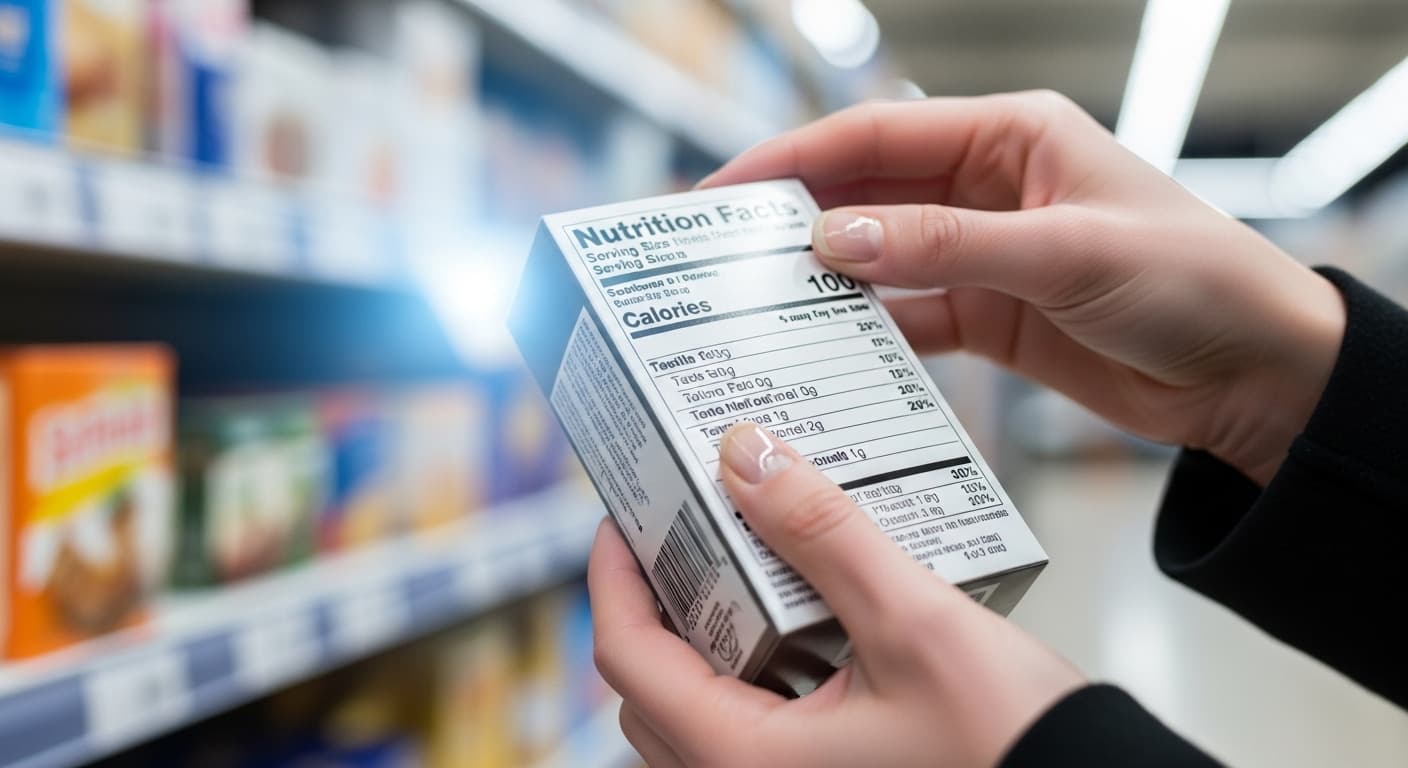
Daily Values (% DV) represent how much a nutrient in one serving contributes to the total daily recommendation. The FDA established these percentages using a 2,000 calorie daily diet—a reasonable average for some people but inaccurate for others based on age, gender, and activity level.
The 5-20 rule provides a practical approach: 5% Daily Value or less is considered "low" in that nutrient, while 20% or higher is "high." This applies differently depending on the nutrient. For sodium, saturated fat, and added sugar, you want 5% DV or less. For fiber, protein, vitamins, and minerals, you want 20% DV or higher.
A product might claim "excellent source of fiber" when it provides 20% Daily Value per serving. By understanding what 20% represents, you evaluate whether that claim is actually impressive or merely adequate. Many marketing claims exploit the technical definitions of "good" or "excellent" source while providing minimal practical nutritional benefit.

✅ Key Takeaway
The 5-20 rule simplifies label analysis. Want less of something (sodium)? Keep it below 5% DV. Want more (fiber, protein)? Aim for 20% DV or higher. This framework removes ambiguity and guides better choices.
Decoding the Ingredient List
While the Nutrition Facts panel focuses on quantity, the ingredient list reveals composition. Ingredients are listed in descending order by weight, meaning the first ingredient comprises the largest portion of the product. This simple ordering reveals manufacturer priorities.
A cereal might claim to be "made with whole grains" and include whole wheat as the first ingredient, or it might include whole wheat flour as the tenth ingredient—a vastly different product. Reading ingredient order prevents being misled by selective marketing.
Also examine ingredient count: products with 5-10 ingredients are typically less processed than products with 20+ ingredients. More ingredients often correlate with more additives, preservatives, and artificial substances. This isn't absolute—some additives provide legitimate preservation benefits—but fewer ingredients generally indicate less processing.
[Harvard T.H. Chan School of Public Health. (2024). "Understanding Food Labels and Ingredients." Department of Nutrition.
]Watch for hidden sugars, which appear under numerous names: sucrose, dextrose, fructose, honey, agave nectar, cane juice, and dozens of others. Manufacturers use multiple sugar sources specifically to spread them throughout the ingredient list, preventing any single sweetener from appearing first. Scanning for all sugar forms reveals the actual sweetening strategy.
Added Sugar vs. Total Sugar: A Critical Distinction
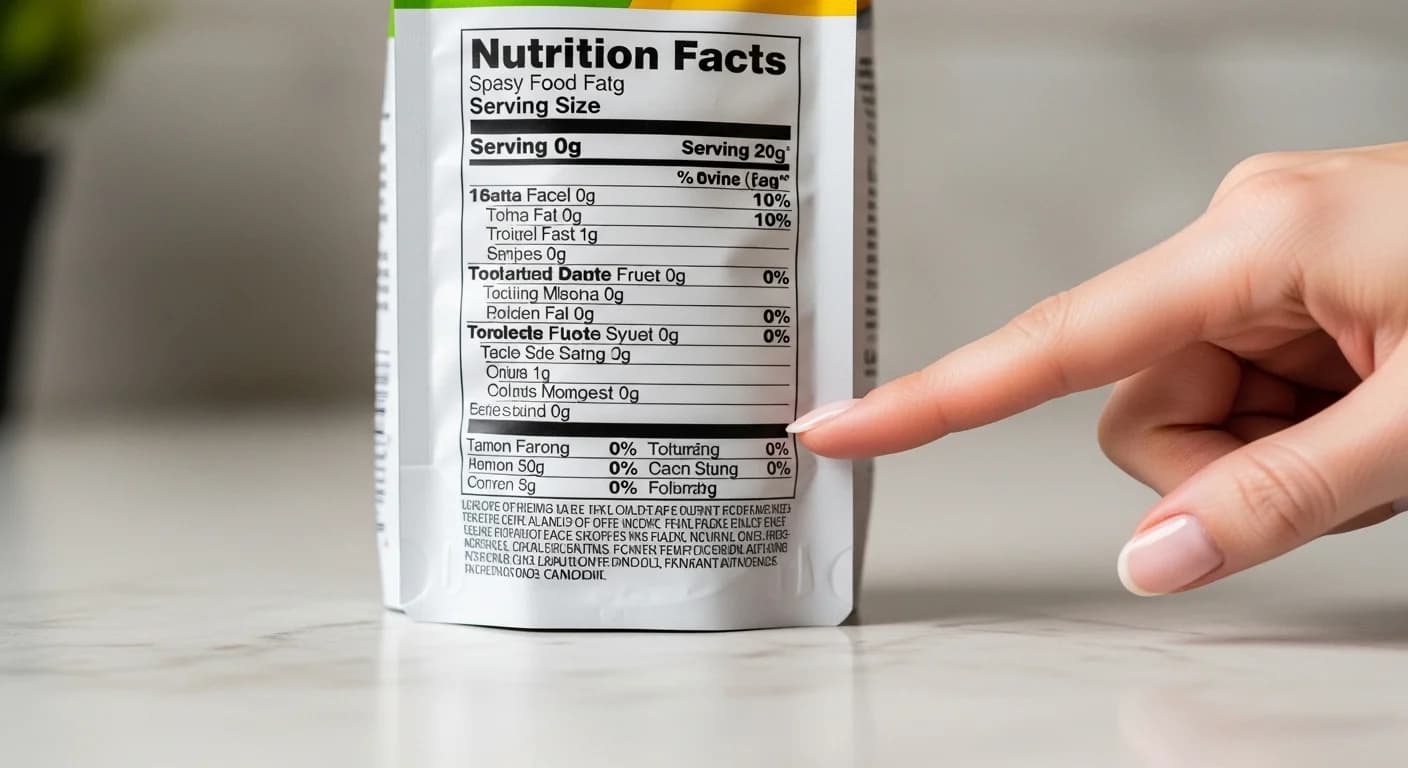
One of the most important label improvements is the distinction between added sugar and naturally occurring sugar. Total sugar includes both naturally present sugars (like lactose in milk or fructose in fruit) and sugars added during manufacturing.
Added sugar represents the primary concern for health. Natural sugars in whole fruits come packaged with fiber, water, and nutrients. Added sugars provide energy without nutritional benefit and contribute to obesity, diabetes, and dental problems. The FDA now requires "Added Sugars" labeling specifically to highlight this distinction.
Added sugar makes up more than 13% of the average American's daily calories—far exceeding the American Heart Association's recommendation of 6% or less. Reading added sugar content helps you identify which products are significant sugar contributors.
Importantly, a product with 12g of total sugar but 0g of added sugar is substantially different from one with 12g of added sugar. The first contains naturally occurring sugars while the second represents sweetening. The label distinction makes this clear.
Sodium: The Hidden Threat
Most Americans consume 3,500-4,000 mg of sodium daily, far exceeding the recommended 2,300 mg. The vast majority comes from processed and restaurant foods, not home cooking or table salt. Reading sodium content helps identify which products contribute disproportionately to excess intake.
A single serving might represent 20-30% Daily Value of sodium—seemingly not extreme—but a typical meal might include several such items, quickly exceeding daily limits. Comparing products highlights massive variations: some yogurts contain 40mg sodium while others contain 500mg for comparable serving sizes.
The FDA considers a product "low sodium" if it contains 140mg or less per serving. "Reduced sodium" means at least 25% less sodium than the standard version. Understanding these definitions prevents being misled by marketing claims.
Recognizing Marketing Language
Food packaging includes numerous claims designed to catch your eye while being technically accurate but misleading. Understanding the difference between claims and facts prevents marketing manipulation.
"Natural" has no FDA definition and carries no nutritional meaning—manufacturers use it freely despite minimal standards. "Multigrain" simply means multiple grain sources, which might all be refined grains. "Made with real fruit" might mean 2% fruit content. "Light" or "lite" refers to color or taste, not calories (though sometimes it does mean fewer calories—you must check the label to be sure).
These terms exploit the assumption that educated-looking language indicates health. By checking actual nutrition facts and ingredients, you see through marketing and make data-driven choices.
✅ Key Takeaway
Marketing claims are designed to be technically true while misleading. Always verify claims by examining actual nutrition data and ingredients. The label never lies, but marketing language often does.
Reading for Specific Health Goals
Different health goals require different label focus. Understanding what to prioritize based on your specific needs streamlines decision-making.
For weight management: Focus on calorie content and satiety factors (fiber and protein). Products with high protein (20%+ DV) and high fiber (20%+ DV) while remaining lower in calories support sustained fullness.
For blood pressure control: Sodium content becomes primary. Most people with hypertension benefit from keeping sodium below 2,300mg daily. Choosing consistently low-sodium options is necessary for meaningful reduction.
For blood sugar management: Added sugar and total carbohydrates matter most. Fiber slows sugar absorption and improves blood sugar stability. Products with high fiber and low added sugar are optimal.
For muscle building: Protein content is central. Aim for 20-30g per meal. Also examine what accompanies the protein—a high-protein product might contain excessive sodium or sugar alongside the desired nutrient.
Nutrient Density and Nutritional Quality
Two products might have identical calorie counts but vastly different nutritional quality. Whole grain bread and white bread with added sugar might both contain 80 calories per slice, yet the whole grain provides fiber, B vitamins, and minerals while the sugared white bread provides minimal nutritional benefit beyond calories.
Nutrient density—how many nutrients you get per calorie—guides quality choices. Whole foods like vegetables, fruits, legumes, and whole grains offer exceptional nutrient density. Processed foods often provide calories with minimal accompanying nutrition.
This concept extends beyond individual products. Constructing meals that emphasize nutrient-dense whole foods means you can eat satisfying portions while naturally controlling calories and maximizing health benefits.

Frequently Asked Questions
Should I prioritize organic and natural labels, or focus on nutrition facts?
Focus primarily on nutrition facts and ingredient quality. Organic certification indicates production methods, not nutritional superiority—organic sugary cereal remains unhealthy despite organic labeling. Natural has no official meaning. A product with excellent nutrition facts, whole food ingredients, and conventional farming is often a better choice than an inferior product marketed as organic or natural. Let nutrition data, not labels, guide decisions.
Are store-brand products nutritionally equivalent to name brands?
Frequently, yes. The actual manufacturing often occurs in the same facilities, with store brands and name brands differing primarily in packaging and marketing. Comparing nutrition facts reveals whether specific products are equivalent. Many store brands offer superior nutrition at lower cost because they spend less on marketing. Check labels rather than assuming brand names indicate superior quality.
How do I compare products with different serving sizes fairly?
Convert both to a consistent basis before comparing—most easily done per 100g. A product listing 200g servings and another listing 150g servings can't be fairly compared at face value. Divide all values by serving size, then multiply by your standard amount (usually 100g) to create equal footing. This reveals true nutritional differences rather than artifacts of serving size manipulation.
References
- FDA. "Nutrition Labeling Guide." U.S. Food and Drug Administration.
- Academy of Nutrition and Dietetics. "Nutrition Fact Label Guide." AND.
- Cowburn G, et al. "Consumer understanding and use of nutrition labelling: a systematic review." Public health nutrition, 2005.
- USDA MyPlate. "How to Read Food Labels." USDA.
Rate this article
Click on a star to rate this article
Keep Reading
7 Superfoods That Boost Your Immune System Naturally
Discover the top immune-boosting superfoods backed by science. From blueberries to turmeric, learn how these nutrient-rich foods strengthen your body's natural defenses and keep you healthy year-round.
Read article →
nutritionGlycemic Variability: Why Energy Crashes at 3pm
Your 3pm slump is glycemic variability, not just fatigue. See what CGM data reveals and the 4-step plate that flattens your blood sugar curve.
Read article →
nutritionAnti-Inflammatory Diet: 7 Foods That Lower CRP
Build an anti-inflammatory diet around seven foods with documented effects on NF-kB, COX-2, and CRP, plus the everyday amounts that matter.
Read article →

Vitality & Strength Editorial Team
Independent research synthesists — not licensed clinicians
Independent health writers and research synthesists. We are not doctors or registered dietitians; every claim we publish is sourced and linked to primary research, and we take no affiliate or industry money.