Healthy Meal Prep Guide for Busy People: Save Time and Eat Well
Practical meal prep strategies that save hours each week while supporting nutrition goals. Includes templates, storage tips, and budget-friendly recipes.
Introduction
One of the primary barriers to healthy eating isn't lack of knowledge—it's lack of time. Studies show that busy professionals spend an average of 2.5 hours weekly deciding what to eat and preparing meals. When energy is depleted and hunger strikes, the convenient fast-food option wins against good intentions.
Meal preparation—dedicating a few hours weekly to prepare multiple meals and components—solves this problem through strategic planning and batch cooking. Research published in the Journal of the Academy of Nutrition and Dietetics found that individuals who meal prep consume significantly more vegetables, adequate protein, and fewer calories from ultra-processed foods compared to non-prepping peers.
The compelling benefits include:
- Saving 5-10 hours weekly
- Reducing food costs by 20-30%
- Maintaining consistent nutrition even during busy periods
- Reducing food waste
- Supporting fitness and health goals
- Decreasing daily stress around meal decisions
This comprehensive guide provides practical meal prep strategies for any lifestyle.
Understanding Meal Prep Models
Meal prep isn't one-size-fits-all. Choose an approach matching your preferences and lifestyle:
Full Meal Prep
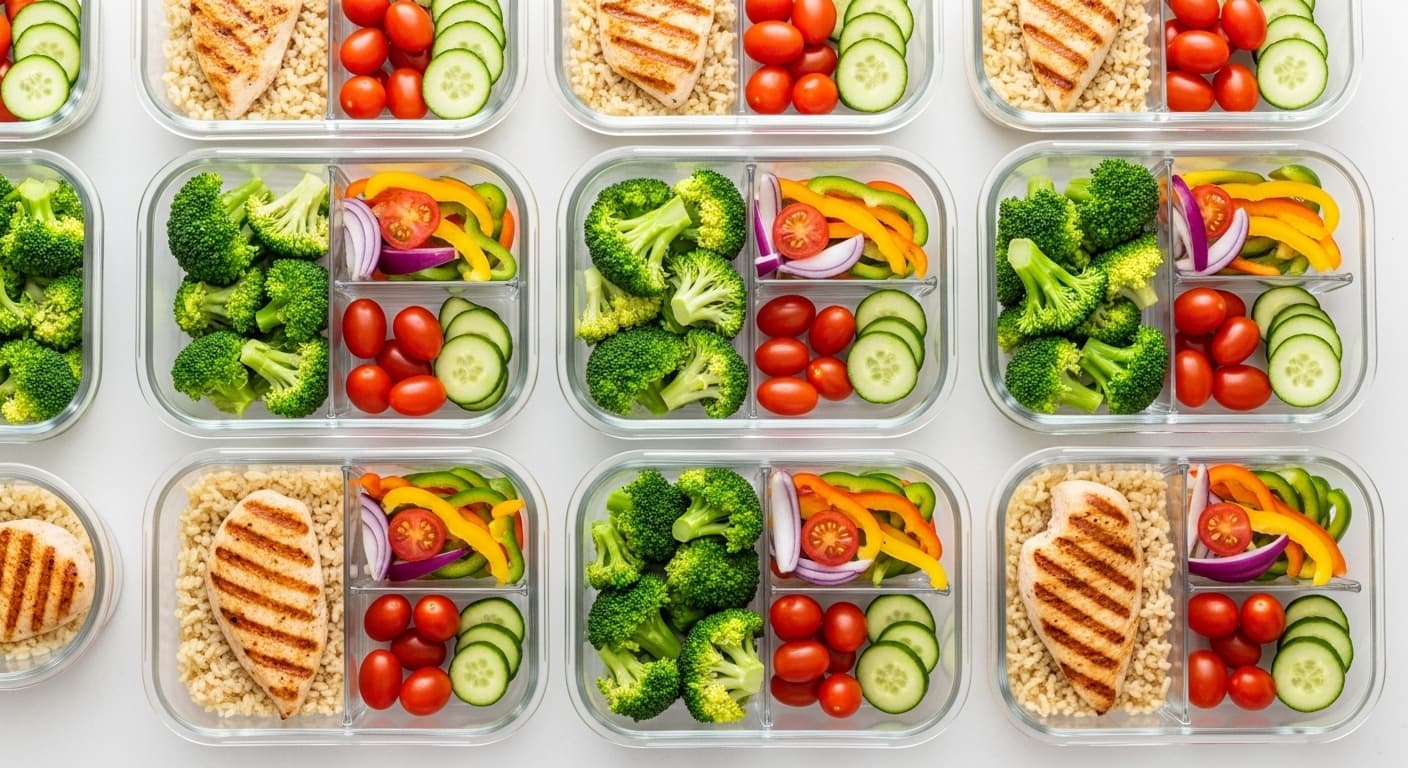
Prepare 4-6 complete meals for 3-5 days. You cook proteins, grains, and vegetables, then combine them into containers. This approach maximizes convenience—you simply grab, reheat, and eat.
Best for: Busy professionals, fitness enthusiasts, people learning to cook
Time investment: 2-3 hours weekly
Component Prep
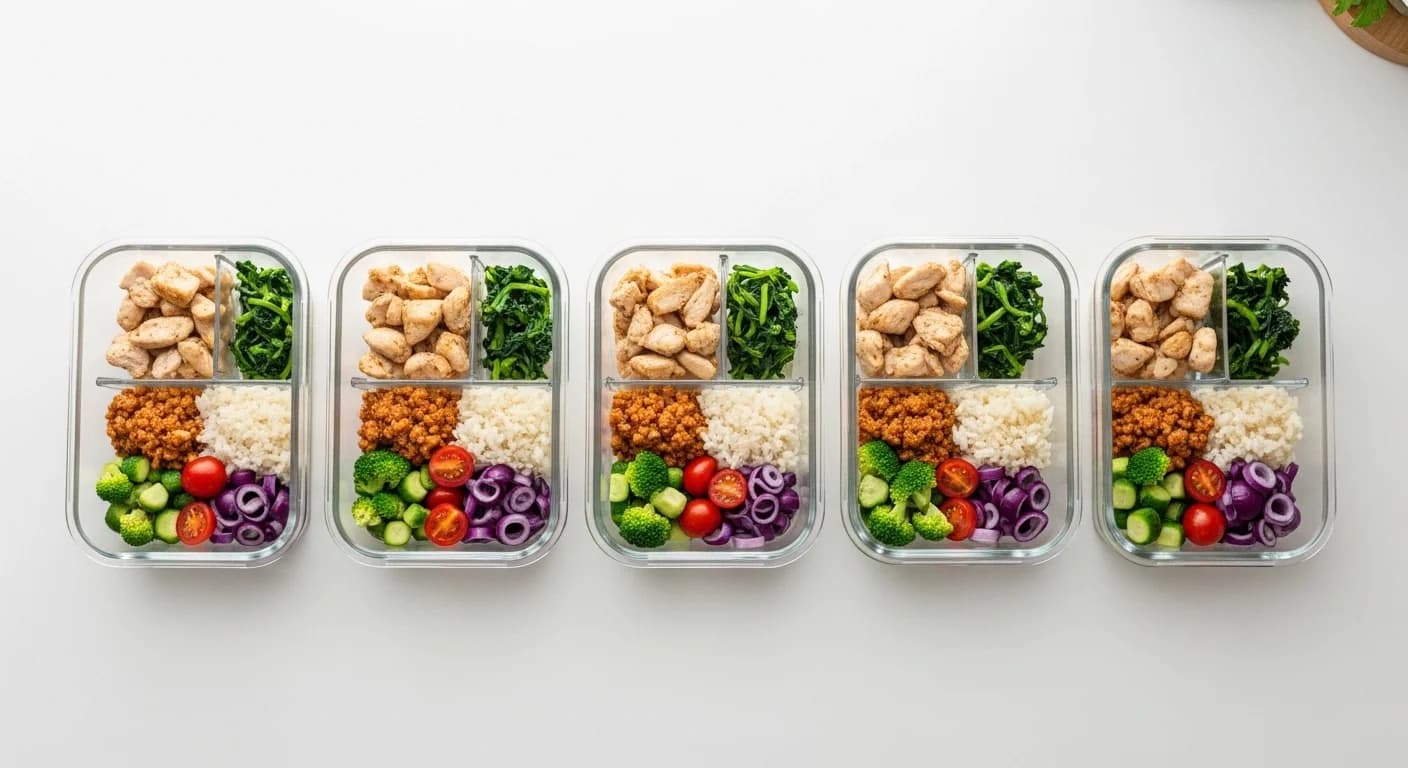
Prepare individual components separately: cooked proteins, grains, vegetables, and sauces. During the week, you combine them into different meals. This provides more variety without additional cooking.
Best for: People wanting meal variety, creative cooks
Time investment: 2-2.5 hours weekly
Batch Cooking
Cook large quantities of specific recipes: soups, casseroles, or curries. Freeze portions and thaw as needed throughout the month.
Best for: Minimal kitchen time, freezer space available
Time investment: 3-4 hours monthly
Snack Prep
Prepare healthy snacks: cut vegetables, portion nuts and cheese, prepare energy balls. No complete meal cooking required.
Best for: Complementing existing meals, supporting weight management
Time investment: 45 minutes weekly
Your Meal Prep Game Plan
Step 1: Choose Your Prep Day
Select a consistent day—ideally 2-4 hours before your busiest period. Sunday works for many; others prefer Tuesday or Saturday. Consistency is more important than the specific day.
Block this time like an important appointment. Inform household members you're unavailable. Prepare mentally for focused kitchen time.
Step 2: Plan Your Meals
Start with your objectives:
- How many breakfasts do you need?
- How many lunches?
- How many dinners?
- What are your dietary goals (high protein, vegetarian, calorie target)?
Then select 2-3 breakfast options, 2-3 lunch recipes, and 2-3 dinner recipes for the week. Repeating meals isn't failure—it's efficiency. Variation comes from different components, not entirely new recipes weekly.
Sample Weekly Plan:
- Breakfast: Overnight oats or egg muffins (choose one, make 5 servings)
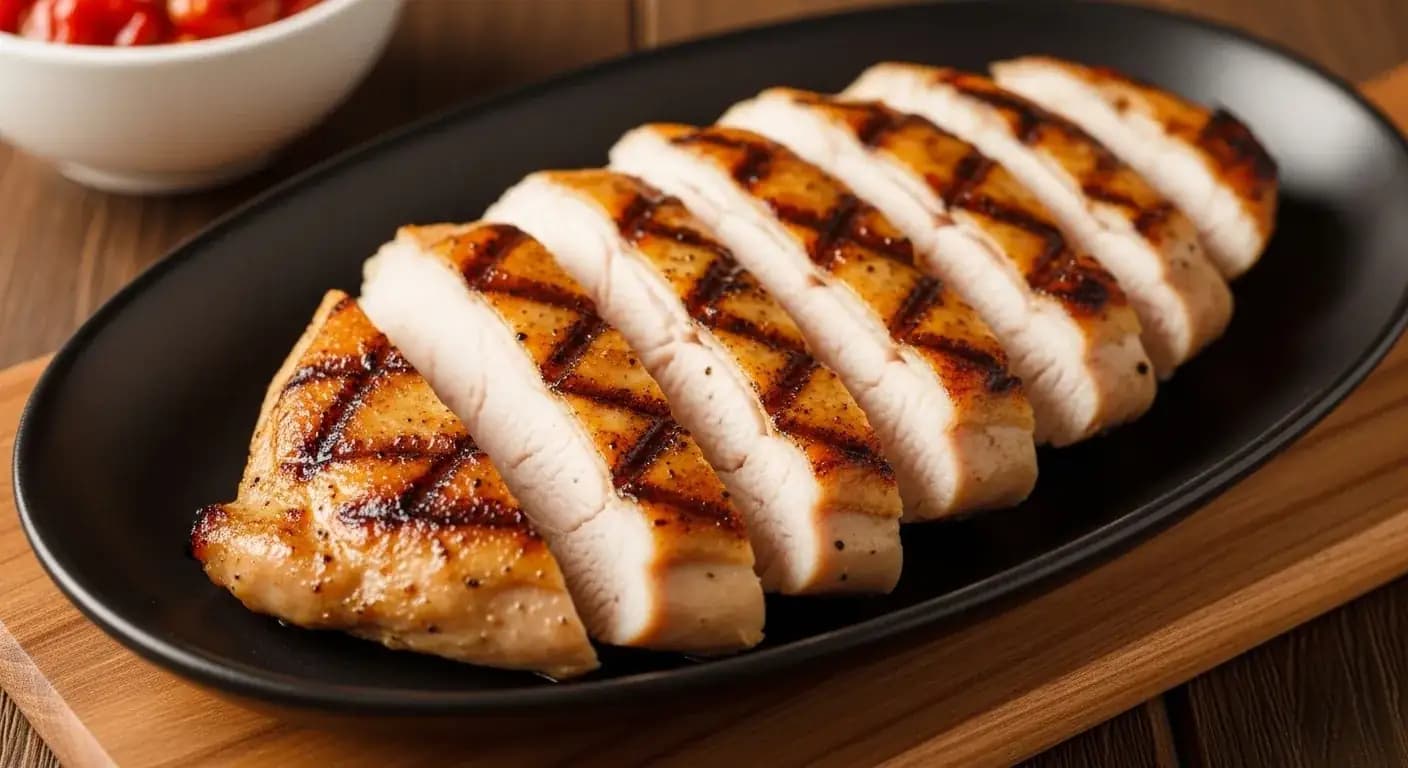
- Lunch: Grilled chicken with roasted vegetables and brown rice (3 servings), Turkey chili (2 servings)
- Dinner: Salmon with sweet potato and broccoli (3 servings), Pasta primavera (2 servings)
This requires minimal recipe variety but substantial meal diversity through component mixing.
Step 3: Create a Shopping List
Organized shopping prevents both forgotten items and impulse purchases. Categorize your list by store section:
- Proteins: Chicken breasts, ground turkey, salmon, eggs, Greek yogurt
- Grains: Brown rice, quinoa, whole wheat pasta, oats
- Vegetables: Broccoli, bell peppers, sweet potatoes, spinach, Brussels sprouts
- Pantry: Olive oil, spices, canned beans, low-sodium broth
- Dairy/Other: Cheese, Greek yogurt, fresh herbs
Shop the periphery of the grocery store where whole foods live. Buy frozen vegetables and fish—they're often fresher than "fresh" due to flash freezing immediately after harvest and have identical nutritional profiles.
Step 4: Cook Strategically
Use these time-saving techniques:
Simultaneous Cooking: Use your oven, stovetop, and microwave simultaneously. While oven roasts vegetables, cook rice on the stovetop and chicken in a skillet.
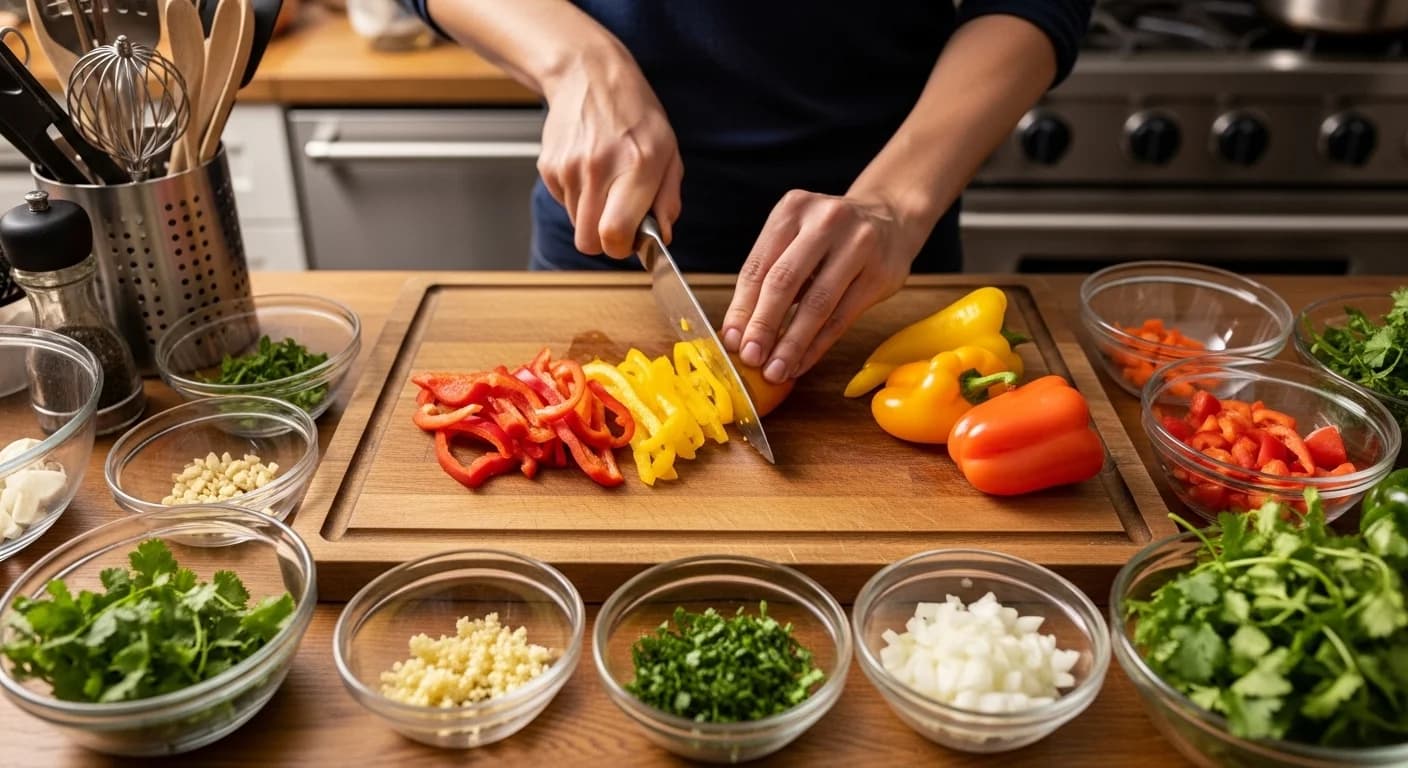
Batch Similar Tasks: Chop all vegetables at once. Cook all proteins. Then assemble meals.
Use Kitchen Tools:
- Food processor chops vegetables in seconds
- Instant Pot cooks grains and proteins quickly
- Sheet pan meals cook everything together
- Rice cooker frees stovetop space
Timeline Example (90-minute meal prep):
- 0-5 min: Preheat oven, gather ingredients
- 5-15 min: Chop vegetables, put chicken in oven
- 15-25 min: Start rice cooker, cook ground turkey
- 25-45 min: Roast vegetables, complete chicken
- 45-60 min: Assemble meals while grains finish cooking
- 60-90 min: Cool, store, clean
Meal Prep Recipes
High-Protein Breakfast Egg Muffins (10 muffins)
Ingredients:
- 8 eggs
- 1/2 cup milk
- 1 cup spinach, chopped
- 1/2 cup diced bell peppers
- 1/2 cup diced ham or turkey
- 1/2 cup shredded cheese
- Salt and pepper to taste
Instructions:
- Preheat oven to 350°F. Grease muffin tin.
- Whisk eggs with milk, salt, and pepper.
- Divide vegetables, meat, and cheese among muffin cups.
- Pour egg mixture evenly into each cup.
- Bake 20-25 minutes until set.
- Cool and refrigerate.
Nutrition per muffin: 90 calories, 8g protein, 4g fat, 2g carbs
Sheet Pan Salmon and Vegetables
Ingredients (4 servings):
- 1.5 lbs salmon fillets
- 2 cups broccoli florets
- 2 medium sweet potatoes, cubed
- 2 tbsp olive oil
- Lemon, garlic, and herbs
- Salt and pepper
Instructions:
- Preheat oven to 400°F.
- Toss vegetables with 1 tbsp oil, season, spread on sheet pan.
- Roast 15 minutes.
- Add salmon, drizzle with remaining oil, season with lemon and herbs.
- Roast 12-15 minutes until salmon flakes easily.
- Cool and portion into containers.
Nutrition per serving: 380 calories, 35g protein, 15g fat, 28g carbs
Simple Turkey Chili (6 servings)
Ingredients:
- 2 lbs lean ground turkey
- 1 onion, diced
- 3 cloves garlic, minced
- 2 cans diced tomatoes
- 1 can black beans, drained
- 2 tbsp chili powder
- 1 tsp cumin
- Low-sodium broth (1 cup)
- Salt and pepper
Instructions:
- Brown turkey with onion and garlic.
- Add tomatoes, beans, spices, and broth.
- Simmer 25-30 minutes.
- Cool and portion.
Nutrition per serving: 310 calories, 40g protein, 8g fat, 18g carbs
Storage and Food Safety
Container Selection
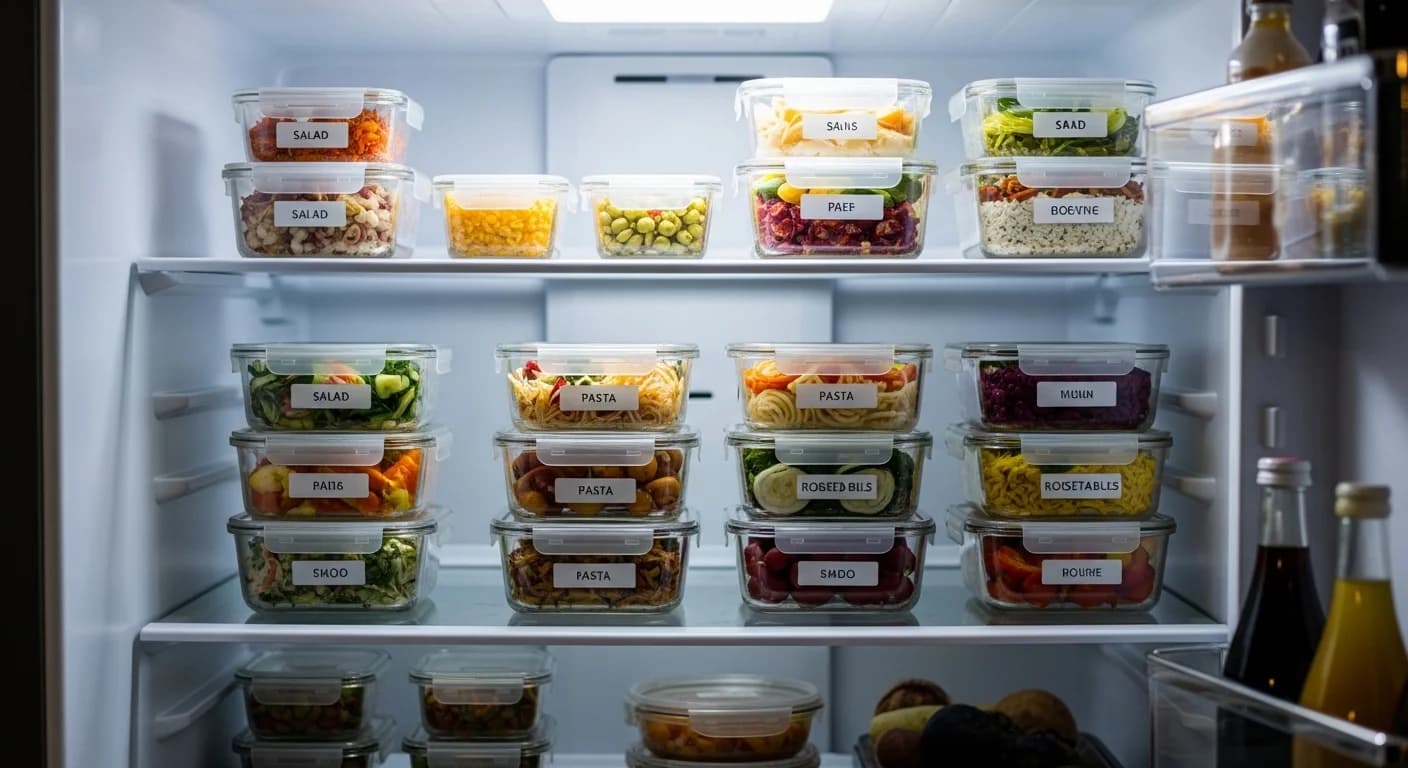
Invest in quality, airtight glass or BPA-free plastic containers. Glass is superior—it:
- Doesn't retain stains or odors
- Lasts indefinitely
- Microwave and freezer safe
- More sustainable
Portion meals according to your goals (typically 1-1.5 cups per lunch/dinner).
Refrigerator Storage
- Label all containers with contents and date
- Most prepared meals last 3-4 days
- Store proteins separately from vegetables if prepping for 5+ days (proteins start degrading on day 4)
- Keep refrigerator at 40°F or below
Freezer Storage
Freeze meals individually in freezer-safe containers:
- Soups and chilis freeze excellently (3 months)
- Grains and prepared proteins freeze well (2-3 months)
- Fresh vegetables soften when frozen (freeze separately or in soups)
- Leave 1/2-inch headspace for expansion
- Thaw overnight in refrigerator, never at room temperature
Reheating
- Microwave: 2-3 minutes until heated through (stir halfway)
- Stovetop: Medium heat, 5-8 minutes, adding water if needed
- Oven: 350°F covered for 15-20 minutes
Common Obstacles and Solutions
"I Don't Have Time"
Start with simple component prep—just roasted vegetables, cooked proteins, and grains. Combine them differently daily. This requires 60-90 minutes and covers most eating occasions.
"I Get Bored Eating the Same Meals"
Prepare the same components but different sauce combinations:
- Monday: Chicken with teriyaki sauce and vegetables
- Wednesday: Same chicken with Italian herbs and vegetables
- Friday: Same chicken with curry sauce and vegetables
Variety comes from condiments and seasonings, not completely different recipes.
"I Don't Like Cold Meals"
Many meals reheat excellently. Quick reheating takes 2-3 minutes and is still faster than cooking from scratch. Alternatively, prepare hot components separately and combine during the week.
"My Family Has Different Preferences"
Prep components and let family members choose: "Here's cooked chicken, rice, and three vegetable options. Build your meal."
"I'm on a Tight Budget"
Buy proteins on sale and freeze for later. Use seasonal vegetables (cheapest when in season). Buy grains and dried beans in bulk. A whole roasted chicken (~$8) yields 4-5 meals.
Shopping List Template
Budget: $75-100/week for 2 people or $50-60 for 1 person (3-5 meals)
- 2 lbs lean protein: $12-16
- Eggs (18-24): $4-5
- 2-3 types fresh vegetables: $8-12
- Grains/starches: $6-8
- Pantry items (oils, spices, canned goods): $8-10
- Dairy/other: $6-8
⚕️ Medical Disclaimer
This article is for educational purposes only and not a substitute for professional medical or nutritional advice. Individual nutritional needs vary based on age, activity level, health status, and goals. Consult a registered dietitian for personalized guidance if you have specific dietary needs, allergies, food intolerances, or health conditions. Always follow proper food safety practices.How long can prepared meals safely stay in the refrigerator? Most prepared meals last 3-4 days in the refrigerator when stored properly in airtight containers at 40°F or below. Mark containers with the date prepared. If freezing, most meals stay fresh for 2-3 months. Always follow proper food safety guidelines and use your senses to verify freshness.
What's the best day to meal prep? Sunday is popular because it's before a typical workweek, but choose whatever day works for your schedule. The key is consistency. Many people prep on the same day weekly, making it an automatic habit. Some prep for 3 days at a time, doing it twice weekly.
Can I meal prep if I have dietary restrictions? Absolutely. Meal prep works with any dietary approach—vegetarian, vegan, keto, gluten-free, or allergen-conscious. Simply adapt recipes to your needs. Having prepped compliant meals actually makes it easier to maintain dietary goals when busy.
References
- Wolfson JA, et al. "Greater Frequency of Cooking Dinner at Home and More Time Spent Cooking Are Inversely Associated With Ultra-Processed Food Consumption Among US Adults." Journal of the Academy of Nutrition and Dietetics, 2024.
- Di Costanzo G, et al. "Cross-sectional associations of home cooking with diet quality and food consumption by degree of processing in women from the Moli-sani Study." International journal of food sciences and nutrition, 2025.
- Academy of Nutrition and Dietetics. "Evidence Analysis Library." AND.
- Harvard School of Public Health. "The Nutrition Source." Harvard Health.
Rate this article
Click on a star to rate this article
Keep Reading
Mediterranean Diet: Complete Beginner's Guide
Learn how to follow the Mediterranean diet. Discover foods to eat, meal planning tips, and health benefits of this evidence-based eating pattern.
Read article →
nutritionAnti-Inflammatory Diet: 7 Foods That Lower CRP
Build an anti-inflammatory diet around seven foods with documented effects on NF-kB, COX-2, and CRP, plus the everyday amounts that matter.
Read article →
nutritionProtein Timing: Why Total Daily Intake Wins
Protein timing matters far less than your daily total. See what the research says about the anabolic window and how much protein per meal.
Read article →

Vitality & Strength Editorial Team
Independent research synthesists — not licensed clinicians
Independent health writers and research synthesists. We are not doctors or registered dietitians; every claim we publish is sourced and linked to primary research, and we take no affiliate or industry money.