Bodyweight Exercises: Complete Strength Training Without a Gym
Comprehensive guide to bodyweight training including effective exercises, progressions, workout plans, and how to build strength without equipment.

Introduction
The most accessible excuse for not training is lack of gym access. Yet some of the most fit individuals in history trained with nothing but their bodyweight—prison inmates, elite gymnasts, soldiers in basic training, and ancient warriors. Bodyweight training is legitimate, effective, and produces substantial results.
The advantage of bodyweight training extends beyond accessibility. It builds functional strength (movements your body actually performs), improves movement quality, requires no equipment investment, and can be done anywhere. For beginners and many intermediates, bodyweight training alone produces excellent results.
This guide provides everything needed to build significant strength and muscle using only bodyweight.
Why Bodyweight Training Works
Mechanical Tension and Progressive Overload
Muscle growth requires progressive overload—gradually increasing challenge to your muscles. In traditional weight training, you simply add weight. With bodyweight, you modify difficulty through:
Exercise variations: Progressing from incline push-ups (easier) to regular push-ups to one-arm push-ups (harder)
Range of motion: Progressing from partial to full range movements
Tempo: Slowing movement speed increases time under tension
Density: Completing more reps or sets in the same time
Unilateral work: Single-limb exercises are substantially harder than bilateral
This progression is limitless. A one-arm pull-up or pistol squat requires comparable strength to heavy weighted movements.
Functional Strength
Bodyweight movements train strength in movement patterns your body naturally performs. This develops functional strength—useful in daily life and sports.
Joint Health
Bodyweight training typically maintains better joint health than heavy weights. You're less likely to overload joints when resisting only your own body weight, and movement patterns remain relatively natural.
Essential Bodyweight Exercises
Effective strength training requires movements targeting major muscle groups. These core exercises form the foundation:
Upper Body Pushing: Push-Ups
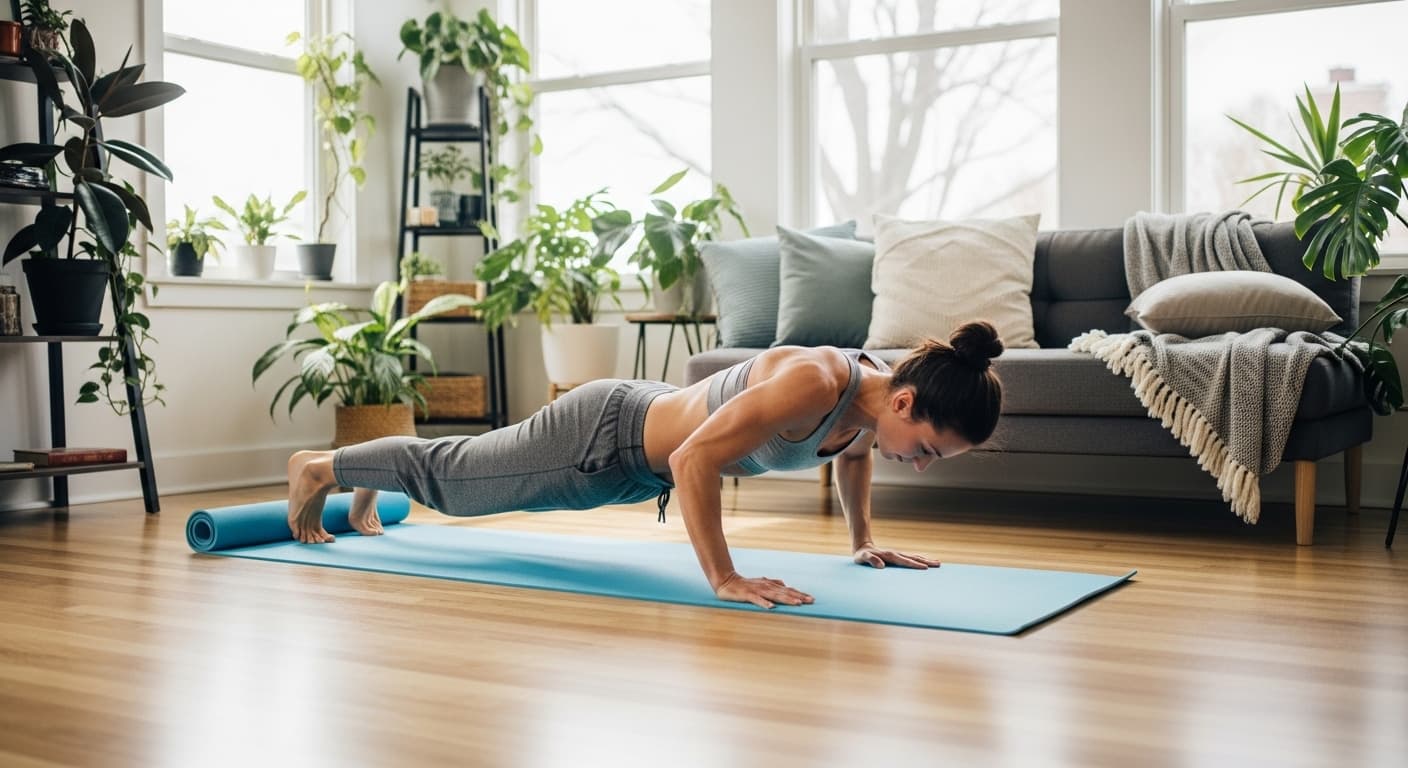
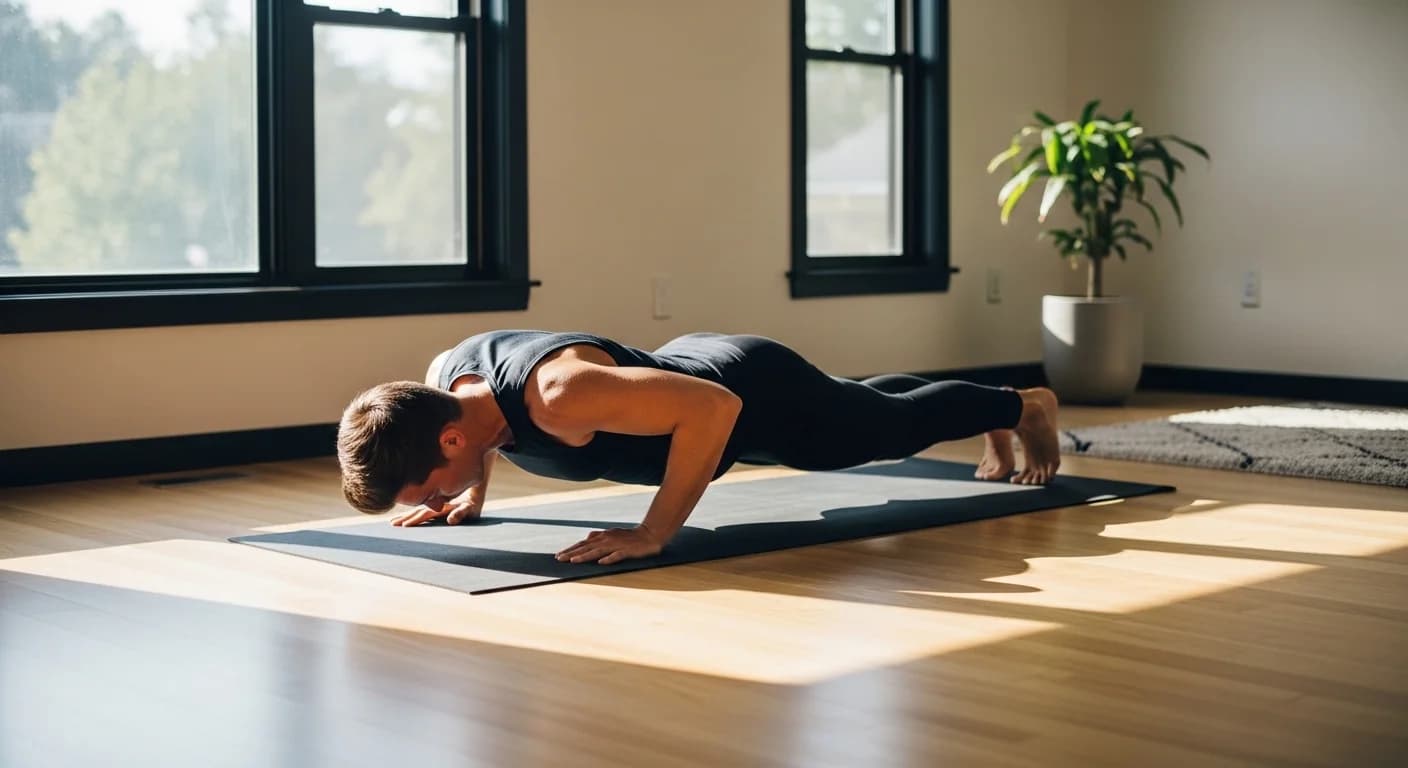
Standard Push-Up: Hands shoulder-width apart, lower body until chest nearly touches ground, press back up.
Muscles targeted: Chest, shoulders, triceps
Progression:
- Incline push-ups (hands on bench or elevated surface) - easier
- Standard push-ups
- Decline push-ups (feet elevated) - harder
- Archer push-ups (hand position shifts side to side) - very hard
- One-arm push-ups - extremely difficult
Beginner protocol: 3 sets of 8-12 reps of your current progression
Upper Body Pulling: Pull-Ups or Inverted Rows
Pull-Ups: Hang from bar, pull until chin over bar, lower controlled.
Muscles targeted: Back, biceps, rear shoulders
Progression:
- Assisted pull-ups (resistance band or machine assistance)
- Jumping pull-ups (jump to assist)
- Standard pull-ups
- Weighted pull-ups (add weight belt)
- One-arm pull-ups - extremely difficult
Alternative - Inverted Rows: Hang under bar with body straight, pull chest to bar.
Beginner protocol: 3 sets of 5-10 reps, rest 2-3 minutes between sets
Lower Body Pushing: Squats
Bodyweight Squat: Feet shoulder-width apart, descend until thighs parallel to ground, press back up.
Muscles targeted: Quadriceps, glutes, hamstrings
Progression:
- Box squats (squat to bench)
- Regular bodyweight squats
- Bulgarian split squats (back foot elevated) - harder
- Pistol squats (single-leg squats) - extremely difficult
- Pistol squat variations (holding for assistance)
Beginner protocol: 3 sets of 12-20 reps (legs tolerate higher reps)
Lower Body Hinging: Glute Bridges
Glute Bridge: Lie on back, knees bent, feet flat, press hips up until body forms straight line.
Muscles targeted: Glutes, hamstrings, lower back
Progression:
- Regular glute bridges
- Single-leg glute bridges
- Elevated glute bridges (upper back on bench)
- Nordic curls (advanced hamstring work)
Beginner protocol: 3 sets of 15-20 reps
Core: Planks and Variations
Front Plank: Forearms on ground, body straight, hold.
Muscles targeted: Core, shoulders, back stabilizers
Progression:
- Forearm plank
- Regular plank (hands instead of forearms)
- Plank with arm extended
- Plank with leg extended
- One-arm, one-leg plank - extremely difficult
Beginner protocol: 3 sets of 30-60 second holds
Complete Beginner Bodyweight Workout Program
Program Structure
Frequency: 3 days weekly (e.g., Monday, Wednesday, Friday)
Duration: 30-45 minutes
Format: Full-body workouts (each session targets all major muscle groups)
Day 1 and 2 (Identical for Beginners)
- Push-ups: 3 sets x 8-12 reps (adjust progression as needed)
- Pull-ups or inverted rows: 3 sets x 5-10 reps
- Squats: 3 sets x 15-20 reps
- Glute bridges: 3 sets x 15-20 reps
- Plank: 3 sets x 30-60 seconds
- Optional - Dips: 2 sets x 8-12 reps (if dip bar available)
Rest between sets: 1-2 minutes for upper body; 2-3 minutes for lower body or difficult exercises
Day 3
Same workout with additional volume (1 extra set per exercise if recovering well) or increased difficulty (progress to harder variations)
Progression Protocol
Week 1-2: Master movement patterns; focus on perfect form over volume
Week 3-4: Once form improves, add reps to your sets (aiming for 12+ reps before progressing difficulty)
Week 5+: Once you can complete 15-20 reps comfortably, progress to harder variation
Example progression: Struggling with 8 incline push-ups → Complete 15 incline push-ups → Switch to regular push-ups
Advanced Bodyweight Training
Upper-Lower Split (Intermediate+)
More advanced lifters benefit from split routines, training upper body and lower body on separate days:
Monday (Upper): Push-ups, pull-ups, dips, rows, rear delt work
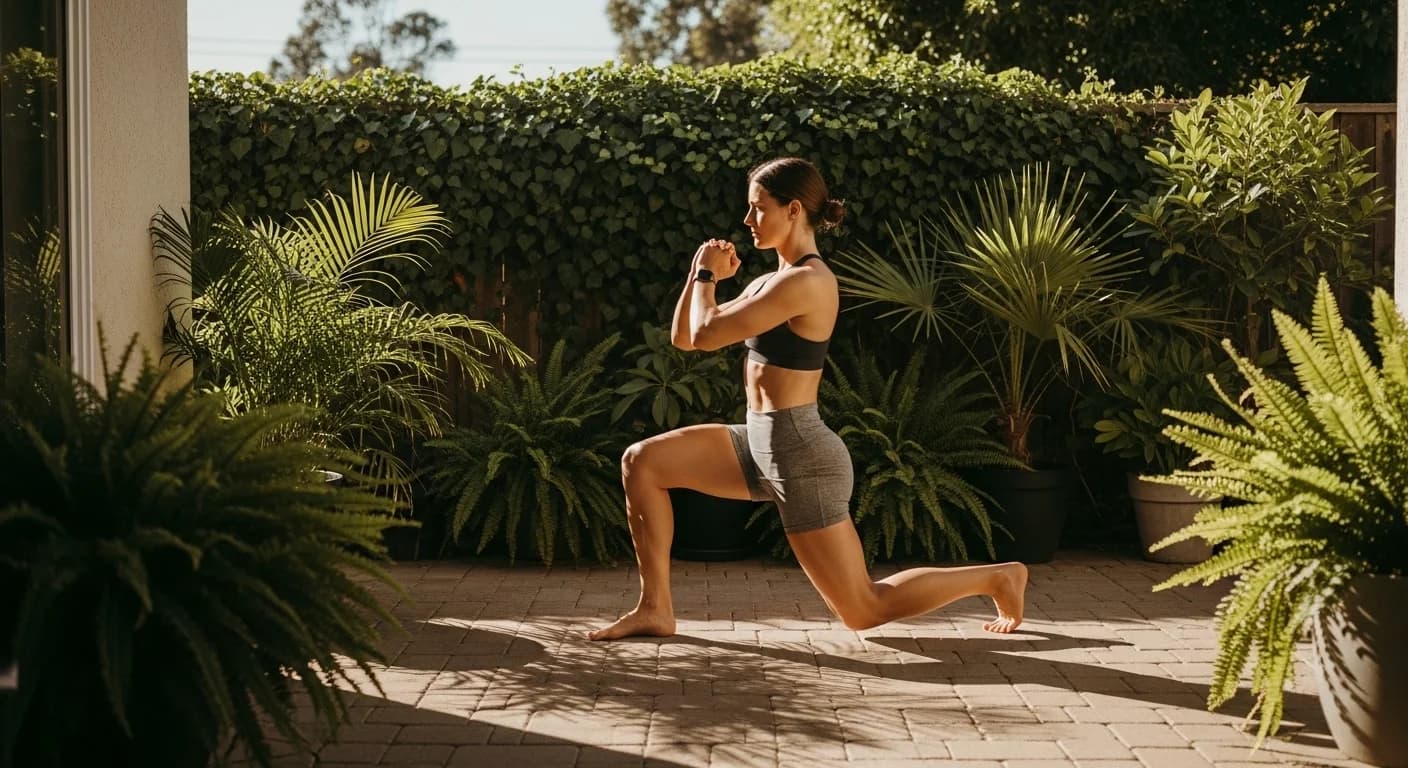
Tuesday (Lower): Squats, glute bridges, lunges, calf raises
Thursday (Upper): Different variations than Monday
Friday (Lower): Different variations than Tuesday
This allows more volume for each area and longer recovery windows.
Skill Training
Beyond strength, bodyweight training develops unique skills:
Handstand holds: Balance and shoulder strength
- Progression: Wall-assisted → free-standing
Handstand push-ups: Extremely demanding overhead pressing
Muscle-ups: Combining pull-up and dip
Front levers: Advanced core and pulling strength
These take months to years of practice but provide engaging long-term goals.
Overcoming Bodyweight Limitations
Some individuals find pure bodyweight limiting:
Very heavy individuals: Bodyweight may be excessive load, increasing injury risk. Progress using lower-impact variations (incline push-ups, inverted rows) while losing weight.
Advanced lifters: Strength gains slow as difficulty of bodyweight variations approaches maximum. Options:
- Add weight vest or backpack
- Use resistance bands
- Invest in adjustable dumbbells
- Combine bodyweight with minimal equipment
Specific muscle development: Bodyweight emphasizes compound movements. Isolation exercises are limited. Adding light dumbbells provides additional options.
Nutrition for Muscle Gain
Bodyweight training stimulus is only half the equation; nutrition determines whether muscles actually grow.
Protein Requirements
Aim for 1.6-2.2 grams per kilogram of body weight daily. For a 150-lb person:
- 150 lbs = 68 kg
- 68 kg × 1.8g = ~120g protein daily
Practical sources:
- Eggs (6g per egg)
- Greek yogurt (15-20g per cup)
- Chicken (25-35g per 3 oz)
- Fish (25-35g per 3 oz)
- Legumes (15-20g per cup cooked)
- Nuts and seeds (5-10g per ounce)
Calorie Balance
For muscle gain, eat at slight surplus (200-300 calories above maintenance). For fat loss with muscle preservation, eat at modest deficit (300-500 calories below maintenance) with emphasis on protein.
Micronutrient Support
Ensure adequate:
- Vitamin D: Supporting immune function and testosterone
- Iron: Supporting oxygen transport and recovery
- Zinc: Supporting testosterone and recovery
- Magnesium: Supporting muscle function and nervous system
A diverse diet with vegetables, fruits, whole grains, legumes, and quality proteins provides these naturally.
Recovery and Consistency
Recovery is where adaptation occurs, not during training.
Sleep
Prioritize 7-9 hours nightly. During sleep:
- Muscle protein synthesis increases
- Growth hormone spikes
- Testosterone (essential for muscle gain) increases
- Cortisol (catabolic) decreases
Poor sleep sabotages training gains.
Consistency Over Perfection
The best training program you actually do beats the perfect program you don't. Consistency—regularly training 3x weekly—produces results in 8-12 weeks. Missing weeks repeatedly prevents progress.
Deload Weeks
Every 4-6 weeks, reduce training volume (fewer sets, lighter progressions). This allows complete recovery and injury prevention. It feels counterintuitive but essential for long-term progress.
Sample 12-Week Progression
Weeks 1-4: Master movement patterns, establish habit
- Focus on perfect form
- 3 sets per exercise
- Beginner progressions
Weeks 5-8: Increase volume and difficulty
- Add sets to 4 sets per exercise
- Progress to harder variations
- Maintain form integrity
Weeks 9-11: Peak phase
- Maximum volume and difficulty
- 4-5 sets per exercise
- Advanced progressions
Week 12: Deload
- Reduce to 2-3 sets
- Easier progressions
- Focus on recovery
Then restart with slightly harder progressions.
Common Mistakes
Progressing too fast: Adding difficulty before mastering current progression risks poor form and injury. Only progress when you can complete target reps with perfect form.
Neglecting lower body: Many focus on flashy upper body movements. Legs require similar attention for balanced development and injury prevention.
Inconsistent training: Missing workouts prevents adaptation. Consistency matters more than perfection.
Inadequate nutrition: Training without sufficient calories and protein limits muscle growth. Fuel appropriately.
Ignoring recovery: Training stimulus is only part of the equation. Recovery, sleep, and stress management determine results.
⚕️ Medical Disclaimer
This article is for educational purposes only. Before beginning any strength training program, consult a healthcare provider if you have joint problems, cardiovascular disease, or other health conditions. Stop exercise immediately if you experience sharp pain, dizziness, or shortness of breath and seek medical attention. Consider consulting a fitness professional for proper form and appropriate progression, especially if you're new to exercise.Can I build significant muscle with just bodyweight exercises? Yes, bodyweight training can build substantial muscle, particularly for beginners and intermediates. Progression through harder variations (pistol squats instead of regular squats) creates sufficient overload. However, advanced lifters eventually reach muscle-building limits without external resistance. For optimal results at any level, combine bodyweight with light external resistance (resistance bands, dumbbells) if available.
How often should I do bodyweight workouts? 3-4 times weekly is ideal for strength and muscle gains, allowing adequate recovery between sessions. Training the same muscle groups every other day is reasonable. Some effective programs alternate upper and lower body (upper-lower split) with 4 workouts weekly. Beginners should start 3x weekly, increasing to 4-5x weekly only after establishing a consistent base.
How long before I see results from bodyweight training? Strength improvements typically appear within 2-3 weeks of consistent training. Visible muscle gains take 4-8 weeks. Body composition changes (fat loss, muscle gain) require 8-12 weeks of combined training and proper nutrition. Progress is gradual but consistent; avoid unrealistic expectations of overnight transformation.
References
- Momma H, et al. "Muscle-strengthening activities are associated with lower risk and mortality in major non-communicable diseases: a systematic review and meta-analysis of cohort studies." British journal of sports medicine, 2022.
- Alizadeh S, et al. "Push-Ups vs. Bench Press Differences in Repetitions and Muscle Activation between Sexes." Journal of sports science & medicine, 2020.
- Warburton DE, et al. "Health benefits of physical activity: the evidence." CMAJ : Canadian Medical Association journal = journal de l'Association medicale canadienne, 2006.
- CDC. "Physical Activity Basics." Centers for Disease Control and Prevention.
Rate this article
Click on a star to rate this article
Keep Reading
Beginner's Guide to Strength Training: Start Your Journey
Learn how to start strength training safely. Discover exercises, programming, recovery, and nutrition for beginner lifters.
Read article →
fitnessRunning for Beginners: Complete Couch to 5K Guide for Starting Your Running Journey
Beginner's guide to running including training progression, injury prevention, gear essentials, pacing strategies, and building sustainable running habits.
Read article →
fitnessHIIT vs Steady-State Cardio: Which Is Better?
Compare HIIT and steady-state cardio. Learn the benefits, drawbacks, and best use cases for each training approach.
Read article →

Vitality & Strength Editorial Team
Independent research synthesists — not licensed clinicians
Independent health writers and research synthesists. We are not doctors or registered dietitians; every claim we publish is sourced and linked to primary research, and we take no affiliate or industry money.