Running for Beginners: Complete Couch to 5K Guide for Starting Your Running Journey
Beginner's guide to running including training progression, injury prevention, gear essentials, pacing strategies, and building sustainable running habits.

Introduction
Starting a running program is daunting. The internet provides contradictory advice: run as slow as possible, run fast to build fitness, do high-intensity intervals, do long runs, stretch before running, don't stretch before running. Beginning runners often become discouraged when reality clashes with unrealistic expectations—progressing slowly, experiencing aches, or struggling to maintain motivation.
Yet starting a running practice is achievable for nearly anyone, and it provides profound benefits: improved cardiovascular health, mental resilience, mood enhancement, and the satisfaction of measurable progress. This guide provides evidence-based strategies for beginning runners to achieve the goal of continuously running 5 kilometers (3.1 miles)—a realistic first milestone that builds confidence and aerobic fitness.
Why Running?
Running offers unparalleled benefits-to-barrier ratio among fitness activities:
- Accessibility: You need only shoes and willingness
- Cardiovascular benefits: Running builds aerobic capacity faster than most activities and consistently improves VO2 max, a key longevity predictor
- Mental health: Running provides stress relief, mood improvement, and cognitive benefits
- Measurable progress: Distance and time provide clear, objective progress tracking
- Community: Running communities provide support and accountability
Pre-Running Considerations
Medical Clearance
If you have:
- Cardiovascular disease or family history
- Joint problems or arthritis
- Significant weight to lose (>50 lbs)
- Sedentary for 5+ years
- Other significant health conditions
Consult a healthcare provider before beginning. Running is safe for most people, but medical conditions may require modifications or clearance.
Footwear
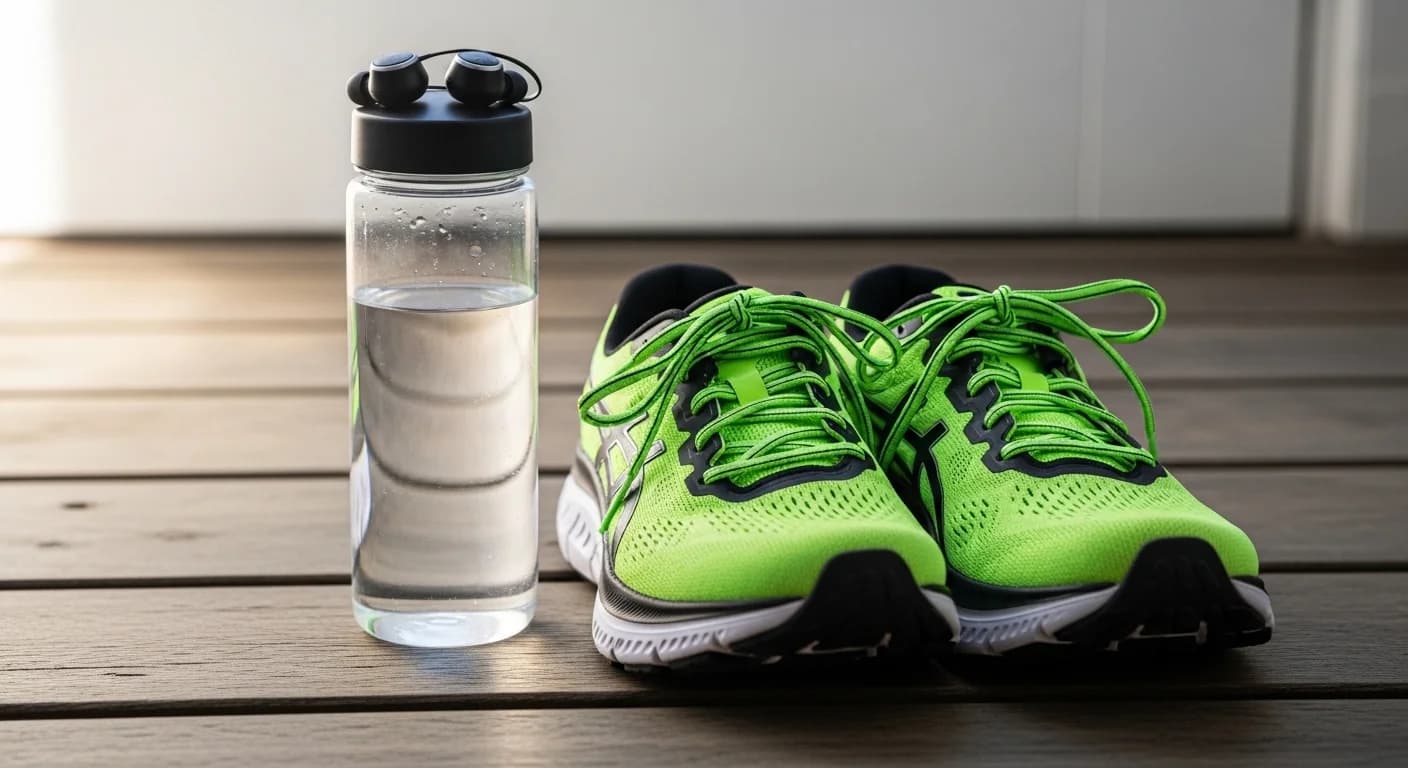
Proper running shoes matter for injury prevention. Unlike casual sneakers, running shoes are designed to manage impact and promote proper biomechanics.
Selection guidance:
- Visit a specialty running store for gait analysis (many analyze your running pattern free)
- Shoes vary: stability shoes for overpronation, neutral shoes for normal mechanics, minimalist for natural strikers
- Budget $100-150 for quality running shoes; they're worth it
- Replace shoes every 300-500 miles (roughly 3-6 months for beginners)
- Properly fitted shoes prevent plantar fasciitis, shin splints, and runner's knee
Comfortable Clothing
Don't overthink it initially—any comfortable clothing works. As you continue, you may prefer:
- Moisture-wicking shirts (technical fabric, not cotton)
- Running-specific shorts or tights
- A supportive sports bra (for those who menstruate)
Cotton absorbs sweat and increases chafing; moisture-wicking fabric is superior but not essential for starting.
The Couch to 5K (C25K) Program
The original Couch to 5K program is a 9-week progression from sedentary to running 5K continuously. This proven progression has helped millions start running.
Program Structure
3 workouts per week, allowing at least one rest day between sessions
Each workout includes: Warm-up walk, alternating walking and running intervals, cool-down walk
Progression: Running intervals gradually increase; walking intervals decrease
Week-by-Week Progression
Week 1-2: Alternating 60 seconds running with 90 seconds walking (8-10 cycles)
- Run-walk-run-walk pattern
- Builds aerobic capacity and allows adaptation
- Total workout: ~20-22 minutes
Week 3-4: Increasing running intervals (90 seconds) with 2-minute walks
- Longer running intervals challenge cardiovascular system
- Walking recovery allows continued effort
- Total workout: ~20-24 minutes
Week 5: Varied intervals (3-5 minutes running, shorter walks)
- First week where continuous running becomes feasible
- Most runners experience breakthrough this week
- Total workout: ~28-30 minutes
Week 6: Longer running intervals (5-8 minutes with walking breaks)
- Continuous running now achievable for extended periods
- Walking breaks become shorter rest recovery
- Total workout: ~25-28 minutes
Week 7-8: Mostly continuous running (20-28 minute runs with optional walk breaks)
- Running continuously becomes normal
- Brief walk breaks acceptable if needed
- Total workout: ~25-30 minutes
Week 9: Continuous 5K running (20-30 minutes running, no walking)
- Achievement of continuous 5K
- Pace naturally slower than when using walk intervals but sustainable
- Total workout: 25-35 minutes
Real-World Timing
The program takes about 3 months with 3 workouts weekly. However, if you're significantly deconditioned or experiencing soreness, extending the program to 12-16 weeks is appropriate. Pushing too hard risks injury; patience pays dividends.
Pacing and the Conversation Test

Beginning runners typically run too fast, which:
- Exhausts aerobic capacity, requiring walk breaks sooner
- Increases injury risk
- Reduces enjoyment (it feels hard)
The solution: use the conversation test. Your easy running pace should allow you to speak in complete sentences—roughly matching a Zone 2 heart rate, which is the sweet spot for building an aerobic base safely. You should be able to recite the Pledge of Allegiance without stopping for breath. If you can't speak easily, slow down.
Your easy pace is likely much slower than you expect—often 10-14 minute miles for beginners. Accepting this psychological challenge is crucial to successful running.
Injury Prevention
Common Beginning Running Injuries
Most beginning running injuries are overuse injuries from doing too much too soon. Prevention is straightforward:
Runner's knee: Pain around kneecap, typically from rapid mileage increase
- Prevention: Follow gradual progression; don't increase weekly mileage more than 10%
- Treatment: Rest, ice, modify running form if needed
Shin splints: Pain along shin, typically from impact forces exceeding tolerance
- Prevention: Quality shoes, gradual progression, adequate rest days
- Treatment: Rest, ice, running on softer surfaces
Plantar fasciitis: Heel or arch pain, typically from impact forces and tight calves
- Prevention: Proper shoes, calf stretching, gradual progression
- Treatment: Rest, stretching, potentially night splint to stretch calf while sleeping
Injury Prevention Principles
Increase gradually: Don't increase weekly mileage more than 10%; take easy weeks every 3-4 weeks
Rest adequately: At least one full rest day weekly; beginners benefit from two rest days
Strength training: 2x weekly lower body and core work (squats, lunges, planks) reduces injury risk significantly

Flexibility: Daily calf and hip stretching maintains mobility
Listen to pain: Sharp pain is warning; stop and rest. Soreness is normal; sharp pain isn't
Building the Habit
Consistency Over Perfection
Missing one workout doesn't derail progress; missing weeks does. Build consistency through:
Environmental design: Lay out running clothes the night before; reduce friction for showing up
Social accountability: Run with a friend or join a running group; external commitment enhances consistency
Tracking: Use a simple calendar to mark completed workouts; visual progress motivates
Gradual expectation building: Start with just showing up, not perfect effort; habit builds first, intensity comes later
Maintaining Motivation
Celebrate milestones: First continuous 10 minutes, first mile, first 5K—acknowledge progress
Join communities: Running clubs, online forums, apps like Strava connect you with other runners
Track progress: Note pace, distance, how you felt; improvement data provides motivation
Find enjoyable routes: Scenic running routes are more enjoyable than treadmill running (though treadmills work too)
Set future goals: After 5K, set a 10K goal or a 5K speed goal; ongoing progression maintains engagement
Running Form
Beginning runners often worry about perfect form. Here's practical advice:
Don't overthink it: Most natural running form is efficient. Trying to dramatically change form often causes injury.
Cadence: Aim for 170-180 foot strikes per minute (varies by height, but this is general). Excessively slow cadence increases impact forces; fast cadence reduces it.
Posture: Maintain upright posture; avoid forward trunk lean. Your head over shoulders, shoulders over hips, hips over feet.
Landing: Land on midfoot (not heel striking, not on toes). This happens naturally when running at appropriate speed on proper shoes.
Arm swing: Keep arms bent at roughly 90 degrees, swinging forward-backward (not across your body)
Nutrition and Hydration
Pre-Run Fueling
Most beginning workouts (under 45 minutes) don't require fueling. However:
- Eat a light meal 2-3 hours before running, or
- Have a small snack (banana, energy bar) 30-60 minutes before
Don't run on full stomach (gastric distress) or completely empty.
Hydration
For beginning workouts (under 60 minutes), plain water is sufficient. Sports drinks (electrolyte beverages) are unnecessary initially; your body's electrolytes last longer than most realize.
General guideline: drink water when thirsty. Your thirst mechanism is reasonably accurate.
Post-Run Recovery
Within 30-60 minutes after running:
- Eat carbs and protein (sandwich, Greek yogurt with fruit, pasta with chicken)
- Drink water to rehydrate
- This window isn't magic; reasonable eating within a few hours suffices
Monitoring Progress
Track these metrics:
- Distance: Weekly total mileage
- Duration: Time running/walking
- Pace: Average pace per mile
- Consistency: Number of workouts completed
- Subjective experience: How running felt, energy level
Progress is often non-linear—one week feels harder, the next easier. Trust the long-term trend rather than daily variability.
Transitioning Beyond 5K
After achieving continuous 5K (congratulations!), you have options:
Speed development: Improve your 5K time through interval training and tempo runs
Endurance building: Gradually increase long run distance; build toward 10K or beyond
Competition: Enter local 5K races; friendly competition motivates many
Cross-training: Maintain running while adding swimming, cycling, or strength training for well-rounded fitness

⚕️ Medical Disclaimer
This article is for educational purposes only. Before beginning any running program, consult a healthcare provider if you have cardiovascular disease, joint problems, significant obesity, or other health conditions. Stop running immediately if you experience sharp pain, dizziness, excessive shortness of breath, or chest pain and seek medical attention. Overuse injuries are common; listen to your body and modify or rest when necessary.How long does it take to go from non-runner to running 5K continuously? The Couch to 5K program is typically 9 weeks of 3-day-per-week training, so roughly 3 months. However, individual timelines vary based on fitness level, injury history, and consistency. Some complete it in 6-8 weeks; others need 12+ weeks. Progress at your own pace rather than rigidly following timelines—consistency matters more than speed.
What pace should I run at when starting? True beginner pace is often slower than you'd guess—typically 12-14 minute miles for very deconditioned runners, though it varies. A helpful rule: you should be able to hold a conversation while running. If you can't speak in full sentences, you're running too fast. Most beginning runners run too fast; slow down and build aerobic capacity before increasing speed.
How often should I run as a beginner? Three times per week is ideal for beginners—sufficient for fitness gains while allowing adequate recovery. Running more frequently dramatically increases injury risk for untrained bodies. Rest days are when adaptation happens. As you build a base (4-6 months), you can increase to 4-5 days weekly if desired, but 3 days weekly provides most benefits.
References
- Pedisic Z, et al. "Is running associated with a lower risk of all-cause, cardiovascular and cancer mortality, and is the more the better? A systematic review and meta-analysis." British journal of sports medicine, 2020.
- American College of Sports Medicine. "ACSM Guidelines for Aerobic Exercise." ACSM.
- Novacheck TF. "The biomechanics of running." Gait & posture, 1998.
- CDC. "Running and Jogging." Centers for Disease Control and Prevention.
Rate this article
Click on a star to rate this article
Keep Reading
Zone 2 Cardio Training: Build Mitochondria at the Right Intensity
Discover zone 2 training science: why it builds mitochondria better than easy cardio, how to find your exact heart rate, and the lactate threshold truth.
Read article →
fitnessBodyweight Exercises: Complete Strength Training Without a Gym
Comprehensive guide to bodyweight training including effective exercises, progressions, workout plans, and how to build strength without equipment.
Read article →
fitnessHIIT vs Steady-State Cardio: Which Is Better?
Compare HIIT and steady-state cardio. Learn the benefits, drawbacks, and best use cases for each training approach.
Read article →

Vitality & Strength Editorial Team
Independent research synthesists — not licensed clinicians
Independent health writers and research synthesists. We are not doctors or registered dietitians; every claim we publish is sourced and linked to primary research, and we take no affiliate or industry money.