Sauna Protocol: 4 Times a Week Cuts Mortality 40%
Sauna protocol: The Finnish sauna study (KIHD): 4-7 sessions per week cut all-cause mortality 40%. Exact protocol, why infrared doesn't replicate it, real
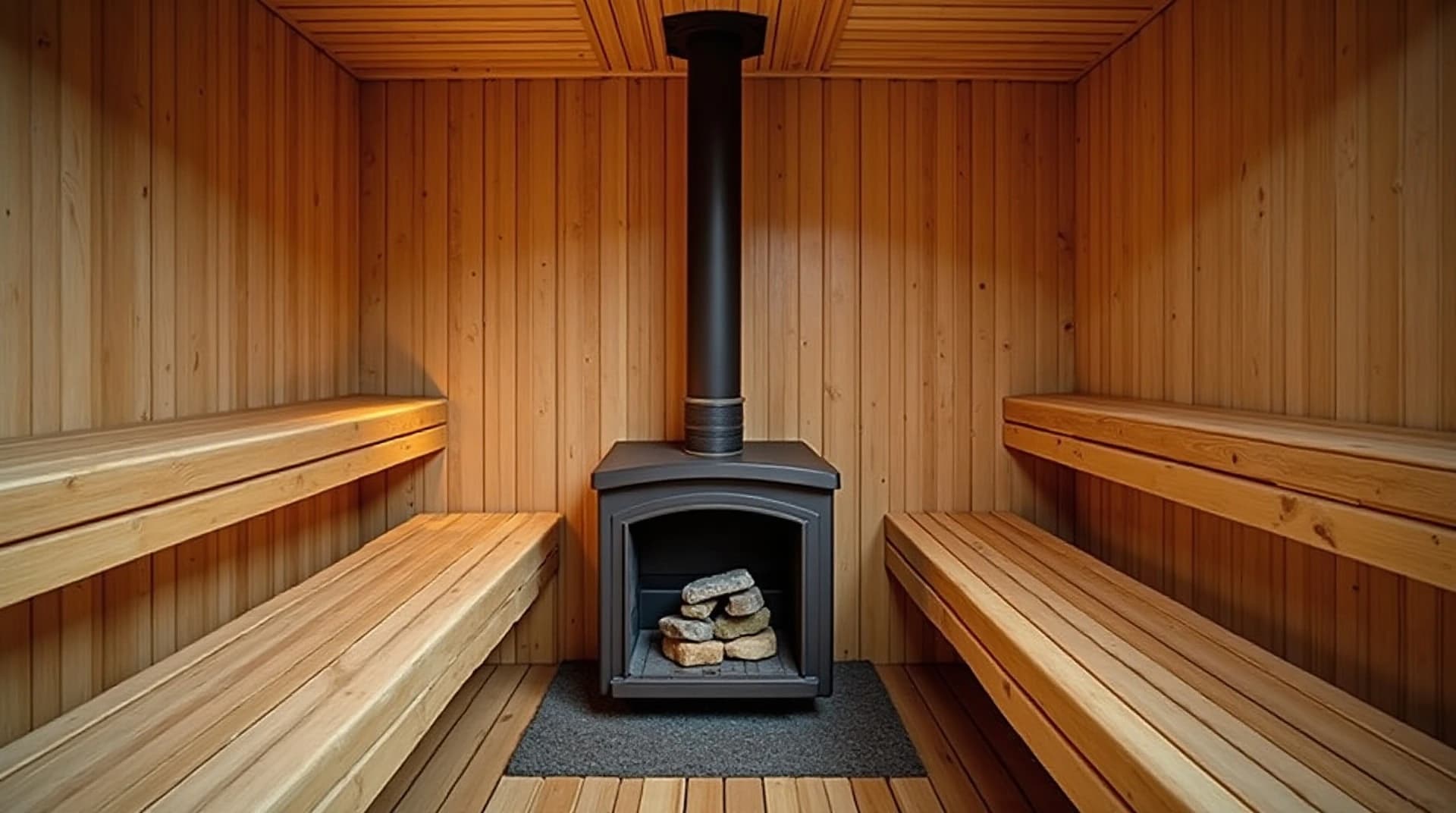
A serious sauna protocol is not what most spas are selling. The most-cited evidence for sauna use comes from a single Finnish cohort, the KIHD study, which followed more than 2,300 middle-aged men for two decades. Going to the sauna 4 to 7 times per week was associated with a 40% lower all-cause mortality compared to once per week. The cardiovascular event reductions were similarly large. For perspective, cardiorespiratory fitness (VO₂ max) is an even stronger predictor of longevity than sauna use — and the two stack well. But the popular distillation of that finding skips a lot of context. The men in the study used traditional Finnish saunas at 80 to 100 degrees Celsius for 11 to 19 minutes per session. Infrared saunas, which run cooler and shorter, don't replicate that exposure. The sauna protocol that produced those benefits is specific and repeatable. This article walks through what the study actually tested, why frequency matters more than duration, and the contraindications most wellness articles ignore. Sauna is just one lever in a broader evidence-based recovery protocol that ranks where it fits against sleep, cold, and active recovery.
⚕️ Medical Disclaimer
This article is for informational purposes only. Consult a qualified healthcare provider before changing any supplement, training, or dietary routine.What the KIHD Finnish cohort actually measured
The Kuopio Ischemic Heart Disease Risk Factor Study (KIHD) recruited 2,315 middle-aged Finnish men in the 1980s and tracked them for around 20 years. Sauna use was self-reported at baseline through a questionnaire that asked about frequency, duration, and temperature. The participants were almost entirely male, white, and Finnish — a population for whom sauna culture is the norm, not an experiment.
[The 2015 JAMA Internal Medicine paper] reported the headline numbers: 4 to 7 sauna sessions per week, compared to 1 session per week, were associated with a 40% reduction in all-cause mortality, a 50% reduction in cardiovascular mortality, and a 65% reduction in sudden cardiac death. The associations held after controlling for age, smoking, alcohol, BMI, blood pressure, and exercise.
What the study cannot prove is causation. The men who went to the sauna more often were also healthier on multiple unmeasured dimensions. They had jobs that let them go, lifestyles that included it, social networks that supported it. Observational data this strong is suggestive, not definitive.
How heat exposure affects the cardiovascular system

Sauna heat exposure produces a measurable cardiovascular workout. Within 10 minutes of entry, your core body temperature rises by about 1 to 2 degrees Celsius. Heart rate climbs to 100 to 150 beats per minute, similar to moderate-intensity exercise. Skin blood vessels dilate dramatically. Cardiac output roughly doubles.
The exercise-mimicking effect
The cardiovascular pattern in a Finnish sauna mimics low-to-moderate aerobic exercise without the muscular load. Stroke volume rises, peripheral resistance falls, and over weeks of regular exposure, resting blood pressure drops. The improvement in arterial stiffness is comparable to what you would get from a moderate aerobic training program at the same time commitment.
Heat shock proteins
Repeated heat exposure upregulates heat shock protein 70 (HSP70), a stress-response protein with documented effects on protein folding, inflammation, and metabolic health. The biological plausibility for the mortality effect rests partly on this pathway. HSP70 elevation is dose-dependent: more frequent and longer exposures produce larger increases.
The sauna protocol that produced the Finnish results
The KIHD study did not use an arbitrary 'go to a sauna' definition. The protocol the participants used was specific and consistent across the cohort.
Temperature
Traditional Finnish sauna runs at 80 to 100 degrees Celsius (175 to 210 degrees Fahrenheit) at the bench. The room is dry but löyly — water poured on hot rocks to produce a brief steam burst — is part of the practice. Below 70 degrees C, the cardiovascular response is muted. Most home and gym saunas top out at 75 to 85 degrees, which is at the lower end of the study range.
Duration
11 to 19 minutes per session showed the largest benefit. Sessions under 11 minutes had a smaller effect; sessions over 30 minutes did not show additional benefit and increased dehydration risk. Most experienced users do 15 to 20 minutes at a time.
Frequency
Four to seven sessions per week was the highest-benefit category. Two to three sessions per week showed roughly half the mortality benefit. One session per week was the reference group. The frequency effect is more important than any single session; sporadic sauna use does not produce the cumulative adaptations.
Why infrared saunas don't replicate the protocol
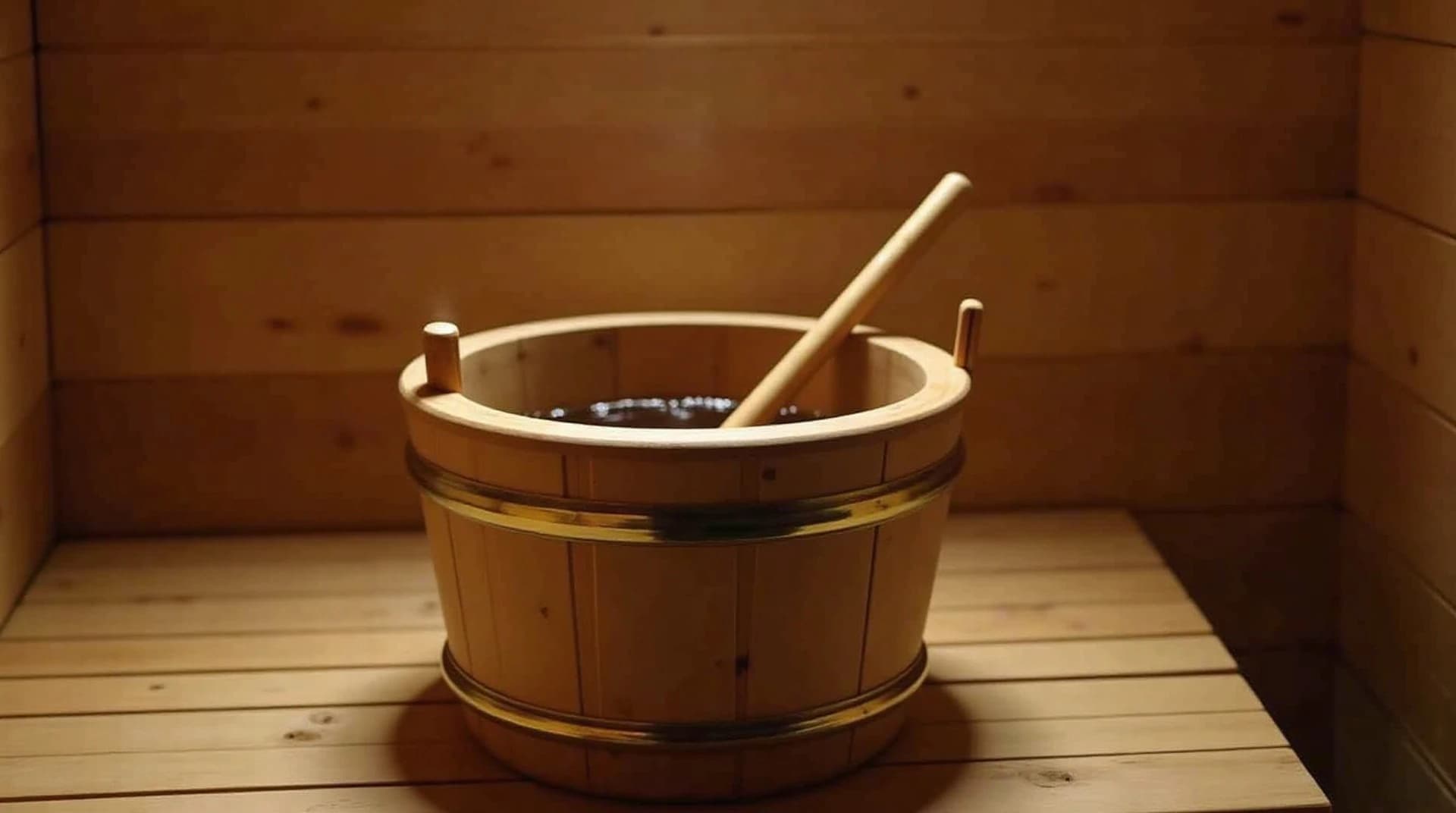
Infrared saunas became popular partly because the lower temperatures (typically 45 to 60 degrees Celsius) feel more tolerable. The marketing claims they produce the same cardiovascular benefits at lower stress. The data does not strongly support that.
What infrared actually does
Infrared heating warms tissue directly rather than warming the air. You sweat earlier and at a lower ambient temperature. But the cardiovascular load — the heart rate rise, the cardiac output increase, the core temperature climb — is smaller in an infrared session at 50 degrees C than in a traditional sauna at 90 degrees C. The hormonal and HSP70 responses are also smaller.
Where infrared has its own use case
For people who cannot tolerate traditional sauna heat — older adults, those with low cardiovascular reserve, or anyone deconditioned — infrared at 55 to 60 degrees offers a gentler entry into heat exposure. It produces some benefit. It does not produce the magnitude of benefit the Finnish protocol did. [Harvard Health] notes that the cardiovascular trial data on infrared is much thinner than the Finnish observational data on traditional saunas.
Sauna for muscle recovery and the growth-hormone claim
Beyond the longevity and cardiovascular story, sauna use is heavily marketed for muscle recovery and a growth hormone (GH) spike. The recovery claim has modest support; the GH claim is over-extrapolated.
Recovery
Post-exercise sauna sessions reduce delayed-onset muscle soreness in trained individuals and improve heat tolerance over time. The effect on actual hypertrophy or strength gains is small to nonexistent in head-to-head trials. Sauna will not make you stronger; it may help you train harder by improving recovery between sessions.
The growth hormone spike
Two studies from the 1970s found that very long sauna exposures (60 to 120 minutes spread across multiple sessions in a single day) produced GH spikes of 5 to 16 times baseline. The protocols are nothing like what most people do. A standard 15-minute session produces a smaller GH bump that returns to baseline within an hour. The metabolic significance of brief GH spikes is unclear; the marketing implications have raced ahead of the data.
What the evidence supports vs popular claims
Sauna research has both strong observational data and a lot of mechanism extrapolation that does not hold up.
Plausibly supported by current data:
- 4-7 weekly sessions in a traditional sauna are associated with reduced cardiovascular and all-cause mortality in observational cohorts
- Regular sauna use modestly lowers blood pressure and improves arterial stiffness
- Post-exercise sauna reduces delayed-onset muscle soreness
- Heat acclimation improves exercise performance in hot environments
Weakly supported or overstated:
- Infrared saunas produce equivalent benefits to traditional Finnish saunas
- Sauna sessions "detox" the body of heavy metals or environmental toxins
- A short sauna session produces a meaningful growth hormone effect
- Sauna alone (without exercise) drives meaningful fat loss
- A single weekly long session beats multiple short ones
[A 2018 review] summarized the cardiovascular data and concluded that frequency is the dominant variable, not session length.
When NOT to use the sauna: real contraindications
Sauna use is not benign for every population, and most pop-wellness articles skip the contraindications.
Cardiovascular conditions
Unstable angina, recent myocardial infarction (within 3 months), severe aortic stenosis, and uncontrolled hypertension are reasons to avoid sauna use. The cardiovascular load mimics moderate exercise and should be approached with the same caution. People taking blood pressure medications should monitor for post-sauna hypotension and stand up slowly.
Other contraindications
Pregnancy (especially first trimester), acute illness with fever, severe skin conditions, recent alcohol consumption, and untreated thyroid storm are absolute or relative contraindications. [Cleveland Clinic] recommends avoiding sauna sessions within 2 hours of alcohol consumption — alcohol amplifies dehydration and arrhythmia risk during heat exposure. Sauna also lowers sperm production transiently in men, which matters if you are trying to conceive.
Hydration
Plan to drink 500 to 750 ml of water in the hour before a session and replace fluid lost afterward. A 15-minute Finnish sauna session typically loses 0.5 to 1 liter of sweat.
How to start: a 4-week sauna ramp
If you are healthy and have access to a traditional sauna, here is a safe four-week ramp toward the 4-times-a-week target.
Week 1. Two sessions of 8 to 10 minutes at 75 to 85 degrees Celsius. Sit on the lower bench. Drink water before and after. Note how you feel for the rest of the day. Some people get a tension-headache pattern early on — usually a hydration issue.
Week 2. Three sessions of 12 minutes at 85 to 90 degrees. Move to the middle bench. Add a cool-down (cold shower or 2-minute outdoor cool) at the end of each session. The contrast amplifies the cardiovascular adaptation.
Week 3. Four sessions of 15 minutes at 85 to 95 degrees. You should be sweating freely within the first 5 minutes. If your heart rate stays above 150 beats per minute throughout, you are too hot or too dehydrated; back off.
Week 4. Hold at 4 sessions per week of 15 to 18 minutes. This is the frequency the Finnish data supports as a long-term target. Going to 5 to 7 sessions adds incremental benefit but also incremental time and dehydration risk. For most people, 4 weekly sessions is the practical sweet spot.
✅ Key Takeaway
- The Finnish KIHD cohort showed 4-7 sauna sessions per week were associated with 40% lower all-cause mortality versus 1 session per week.
- Frequency matters more than duration: 4 sessions of 15 minutes beats 1 session of an hour for cumulative adaptation.
- Traditional Finnish sauna at 80-100°C is what the mortality data is built on; infrared saunas produce a smaller cardiovascular response.
- Heat exposure mimics moderate aerobic exercise: heart rate rises to 100-150 bpm, cardiac output roughly doubles, blood pressure adapts over weeks.
- Real contraindications include unstable cardiovascular conditions, first-trimester pregnancy, acute fever, and recent alcohol consumption.
Frequently Asked Questions
How many sauna sessions per week is actually optimal?
The Finnish cohort data peaks at 4 to 7 sessions per week, with the largest mortality reduction in that range compared to 1 session per week. Two to three sessions per week shows about half the benefit. For most people, 4 sessions weekly is a practical balance of benefit, time commitment, and dehydration risk. Going from 4 to 7 adds smaller incremental gains.
Are infrared saunas as good as traditional Finnish saunas?
Probably not for the cardiovascular endpoints. Infrared saunas run at 45 to 60 degrees Celsius, which produces a smaller heart rate rise, smaller cardiac output increase, and smaller HSP70 response than a Finnish sauna at 85 to 95 degrees. Infrared has its own use case for people who cannot tolerate higher temperatures, but the magnitude of benefit appears to be smaller. The mortality data is on traditional Finnish saunas, not infrared.
How hot should the sauna actually be?
The KIHD study used traditional Finnish saunas at 80 to 100 degrees Celsius (175 to 210 Fahrenheit) measured at bench level. Below 70 degrees, the cardiovascular response is muted and benefits are smaller. Most home or gym saunas top out at 75 to 85 degrees, which is at the lower end of the study range but still useful. Above 100 degrees adds dehydration risk without proportional benefit.
Should I drink water during a sauna session?
Pre-hydrate with 500 to 750 ml of water in the hour before. During a 15-minute session you don't typically need to drink, though sips are fine if you feel like it. After the session, replace fluid based on weight change — a 0.5 kilogram drop means about 0.5 liter of fluid lost. Coffee and alcohol both worsen dehydration; avoid them in the hours around sauna use.
Who should not use the sauna?
Avoid sauna use if you have unstable angina, recent heart attack within 3 months, severe aortic stenosis, uncontrolled high blood pressure, acute illness with fever, severe skin conditions, or are in the first trimester of pregnancy. People on blood pressure medication should be cautious about post-sauna hypotension. Skip sauna within 2 hours of alcohol. If you have any cardiovascular condition, get clearance from a clinician before starting a sauna routine.
Related Reading
- VO2 Max: The Single Best Predictor of How Long You Live
- Cold Plunge Protocol: Time, Temperature and What the Research Actually Says
- Sleep Architecture: How Deep Sleep and REM Compete for Your Night
References
Rate this article
Click on a star to rate this article
Keep Reading
Cold Water Immersion Protocol: Time and Temperature
The cold water immersion protocol the research actually supports: around 11 minutes per week at 50-59 F. Time, temperature, timing, and contraindications,
Read article →
holistic wellnessThe Gut-Brain Connection: How Your Diet Affects Mental Health and Mood
Explore the science of the gut-brain axis, how microbiota influences mental health, and dietary strategies to support mood, anxiety, and cognitive function.
Read article →
holistic wellnessHow to Reduce Cortisol Levels Naturally: Science-Based Strategies
Evidence-based strategies to naturally lower cortisol levels including sleep optimization, stress management, exercise, and nutrition for improved wellness.
Read article →

Vitality & Strength Editorial Team
Independent research synthesists — not licensed clinicians
Independent health writers and research synthesists. We are not doctors or registered dietitians; every claim we publish is sourced and linked to primary research, and we take no affiliate or industry money.