10000 Steps a Day: Where the Number Actually Came From
10000 steps a day started as a 1965 Japanese marketing slogan, not research. What the actual evidence says about step counts, all-cause mortality, and the real
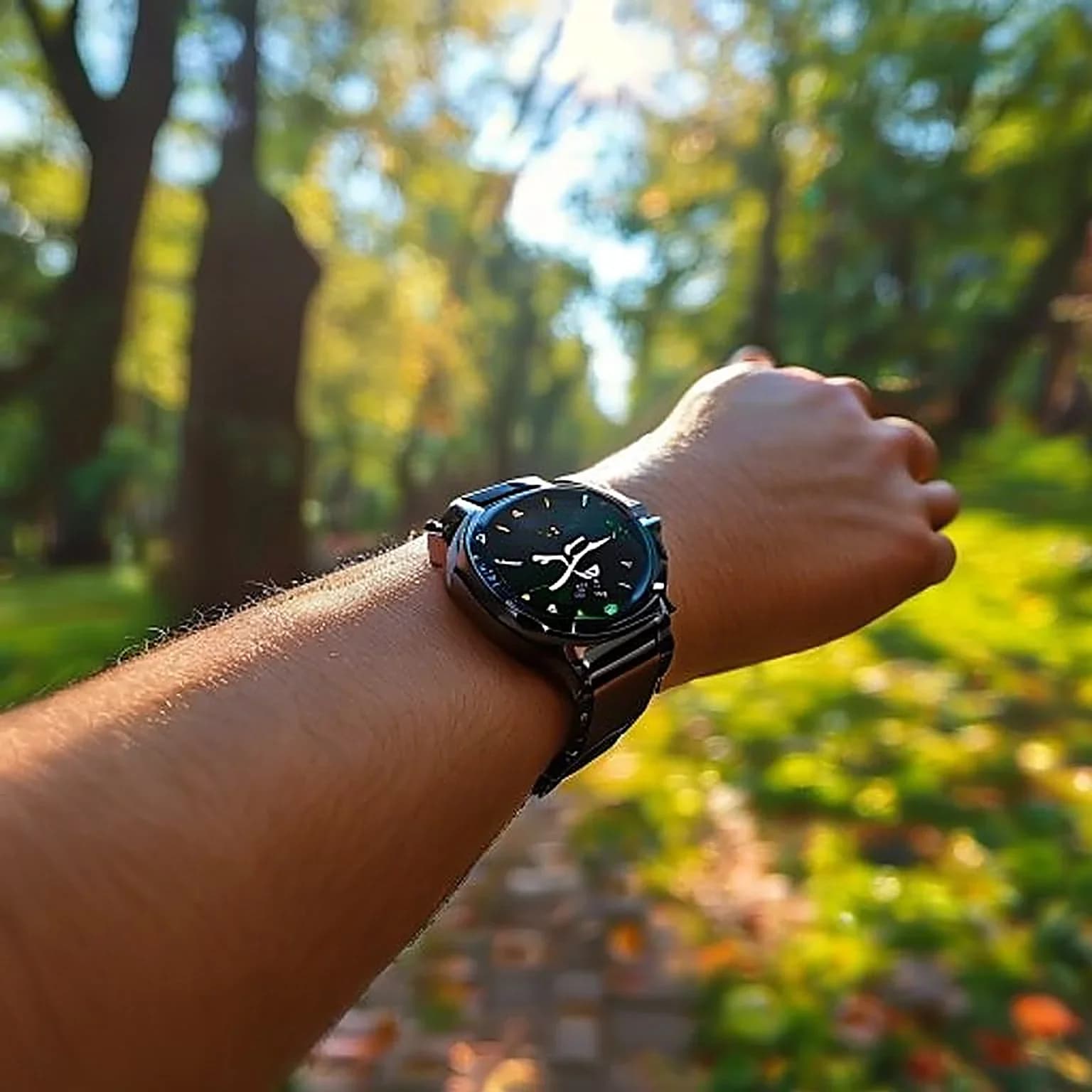
10000 steps a day is one of the most repeated numbers in modern fitness, and almost nobody who quotes it knows where it came from. It was not a research finding. It was the marketing slogan for a 1965 Japanese pedometer called the manpo-kei, which translates literally as ten-thousand-steps-meter. The actual research on step counts and health outcomes did not start producing strong evidence until the last decade, and the numbers it points to are different from 10000 in interesting ways. This guide walks you through where the slogan came from, what large prospective cohort studies actually find, why the all-cause mortality curve plateaus earlier than the 10000 mark, who benefits most from going higher, and how to set a realistic step target if you are starting from a low-baseline desk job.
⚕️ Medical Disclaimer
This article is for informational purposes only. Consult a qualified healthcare provider before changing any supplement, training, or dietary routine.What the step-count research actually shows
Two large prospective cohort studies are the strongest evidence base for daily step targets. The first followed older women across years of accelerometer-tracked walking and found that all-cause mortality risk dropped sharply between roughly 4400 and 7500 steps per day, then plateaued. The second, in middle-aged adults, found a similar plateau around 8000 to 10000 steps with the biggest mortality reduction concentrated in the gap between sedentary baselines and that 7500-8000 inflection point [CDC: Physical Activity Basics for Adults].
What you do NOT see in either dataset is a meaningful additional benefit between 10000 and 12000 steps for general health outcomes. The marginal returns above the plateau are real but small, and they require a much larger time investment per day. For most adults the dose-response curve looks more like a steep ramp from 3000 to 7500, followed by a slow flattening, not a linear climb to 10000.
Where the 10000 number actually came from

The 10000 figure traces back to a 1965 marketing campaign by a Japanese company that sold a pedometer called the manpo-kei. The name was chosen because the kanji character for 10000 happens to resemble a person walking, which made for memorable packaging. There was no clinical trial behind the choice. The number stuck because it was easy to remember, the device sold well, and decades later fitness wearables defaulted to it as their out-of-the-box goal.
Why marketing-derived numbers persist
Round numbers anchor goal-setting more strongly than any other kind. A target of 7493 steps would feel arbitrary even if it sat exactly on the inflection point of the actual mortality curve. Marketers in 1965 picked 10000 for its visual neatness, and the number's stickiness has outlived the device that birthed it by sixty years. This is not unique to step counts: similar marketing-rooted numbers run through hydration (eight glasses of water), vitamin C dosing (1000 mg colds), and cardio sessions (thirty minutes), each with weaker evidence than the round number suggests.
The real target: 10000 steps a day vs the 7500 inflection
If your goal is broad cardiovascular and all-cause mortality protection, the evidence-supported target is closer to 7500 to 8000 steps per day, not 10000. The incremental benefit between 8000 and 10000 exists but is small enough that most public health agencies have moved their messaging toward ranges rather than the round 10000 figure.
Who benefits from going above 8000
Specific populations do see additional benefit at higher counts. Adults working sedentary office jobs who spend the rest of their day sitting may need more total steps to offset cumulative stationary time. People managing metabolic conditions like prediabetes or insulin resistance get measurable glycemic control improvements from sustained walking volumes in the 9000-12000 range. And anyone whose primary cardio is walking (no running, cycling, or swimming) needs higher daily counts to hit the same weekly cardiovascular dose other modalities achieve in less time. For a recreational lifter who already hits 150 minutes of moderate intensity per week through other training, 7500-8000 daily steps is genuinely enough.
Why intensity matters as much as count

Step counters do not distinguish between a slow stroll and a brisk pace, but the body absolutely does. Two people each logging 8000 steps will have markedly different cardiovascular adaptations if one walks at 90 steps per minute (slow pace) and the other walks at 120 steps per minute (briskly).
The cadence threshold
Research on step cadence suggests that around 100 steps per minute is the threshold above which moderate-intensity physical activity benefits start to accumulate [Cleveland Clinic: Heart Rate Zones]. Walking faster than 100 steps per minute pushes most adults into the lower edge of their aerobic zone 2, which is the intensity that produces mitochondrial adaptations and improvements in fat oxidation efficiency. Below 100 steps per minute, you are accumulating step volume but missing most of the cardiovascular signal.
If your current daily total is 5000 steps at a leisurely pace, a high-leverage upgrade is not 'walk more' but 'walk briskly for 20 minutes of those steps'. Twenty minutes at 110 steps per minute adds 2200 steps AND shifts the intensity into the band where the most documented adaptations live.
Why the curve flattens beyond 8000 steps
The dose-response curve for steps and mortality is not linear; it is logarithmic-shaped. The biggest reductions happen in the climb out of true sedentary territory (under 4000 steps), and the curve flattens noticeably between 7500 and 10000.
Two mechanisms explain the plateau. First, the cardiovascular system saturates on the marginal benefit of additional walking past a certain weekly volume; additional steps mostly produce diminishing returns rather than continued linear improvement. Second, time spent walking necessarily displaces time spent doing other things, including potentially higher-intensity activities that produce steeper adaptations. Spending ninety minutes a day to push from 8000 to 12000 steps, when those ninety minutes could include twenty minutes of resistance training, is a worse trade for most adults than the larger number would suggest [American Heart Association: Adult Activity Recommendations].
How to ramp from a low-step baseline
If you are starting from a desk job with 3000-4000 steps per day, the highest-leverage path is not chasing 10000 in week one. It is sustainable accumulation across 8 to 12 weeks.
Week 1: Add 1000 steps per day to your current baseline. If you average 3500, target 4500. Use one specific habit — a 10-minute walk after lunch, or two phone calls taken pacing instead of seated.
Weeks 2-4: Add another 1000 steps per week to the target. By week 4 you should be averaging around 7500. This is already in the meaningful-benefit zone.
Weeks 5-8: Hold at 7500-8000 for a full month. Do not push higher yet. The point is consolidation: this should feel routine before adding more.
Weeks 9-12: If you genuinely want more, add intensity rather than volume. Insert two 15-minute brisk walks per day at 110+ steps per minute. This pushes total steps above 9000 naturally and introduces the cardiovascular signal that pure low-pace walking misses. The CDC's adult activity guidance lines up with this progression framing [CDC: Physical Activity Basics for Adults].
When step counts mislead: edge cases worth knowing
Step counts are useful but not foolproof. Several scenarios produce step totals that look healthy but represent very different physiology.
Wearables consistently overcount in some scenarios (arm-swing during cooking, driving on bumpy roads, pushing a stroller) and undercount in others (treadmill with handrails gripped, pushing a shopping cart). Most modern devices are accurate within 5-10 percent for free walking but can be 20-30 percent off for atypical movement patterns.
Step counts also miss intensity entirely. A construction worker logging 12000 daily steps at varying paces while carrying loads is in a different physiological state than an office worker logging 12000 steps via gentle evening strolls. Neither is wrong, but the cardiovascular adaptation profile differs sharply. If your wearable reports a high step count and you are not seeing expected fitness improvements, the gap is almost always intensity rather than volume.
When walking alone is not enough
Walking is excellent for general health and cardiovascular protection, but it is not sufficient for two outcomes many adults specifically want: muscle preservation past age 40 and improvements in absolute strength.
Adults lose roughly 3-8 percent of skeletal muscle mass per decade after 30 without resistance training, and walking does not meaningfully slow that loss. Adding two short resistance sessions per week (20-30 minutes each) preserves muscle in a way no step count can replicate. Similarly, bone mineral density responds to loaded movement; walking helps maintain hip and lower spine density modestly, but progressive resistance training is the stronger signal [American Heart Association: Adult Activity Recommendations].
If your weekly schedule has space for both, walk daily and lift twice. If you can only do one, a person under 40 with no metabolic risk factors gets more from the lifting; a person over 50 with sedentary work and untreated blood pressure usually gets more from the walking. The honest answer is rarely 'just walk more', though that is what marketing has trained the question to sound like.
✅ Key Takeaway
- 10000 steps a day came from 1965 Japanese marketing, not research; the evidence-backed target is closer to 7500-8000.
- The all-cause mortality curve drops sharply between 4000 and 7500 steps, then plateaus.
- Cadence matters: above 100 steps per minute pushes you into zone 2 and triggers the cardiovascular adaptations slow walks miss.
- Ramp gradually from a low baseline: add 1000 steps per week for 4 weeks, hold at 7500-8000 for a month, then add intensity not volume.
- Walking alone does not preserve muscle past age 40 — pair daily steps with two short resistance sessions weekly.
Frequently Asked Questions
Is 10000 steps a day actually the right target?
Not for most adults. The strongest evidence supports 7500 to 8000 steps a day as the inflection point where all-cause mortality risk reductions plateau. Going from 4000 to 7500 produces large benefits; going from 7500 to 10000 produces small additional benefits at a much higher time cost. The 10000 figure originated from a 1965 Japanese pedometer marketing campaign, not research. If you already lift and do other cardio, 7500 is genuinely enough for general health protection.
Why does walking pace matter for step counts?
Step volume and step intensity are different physiological stimuli. Walking 8000 steps at 80 steps per minute (leisurely) accumulates volume but stays below the intensity threshold where most cardiovascular adaptations happen. The same 8000 steps at 110 steps per minute pushes you into the lower edge of zone 2 and produces mitochondrial adaptations, fat oxidation improvements, and stronger cardiovascular signals. If you can only change one variable, swapping some leisurely steps for brisk steps tends to outperform adding more leisurely steps.
Where did 10000 steps a day come from originally?
The figure came from a 1965 Japanese pedometer called the manpo-kei, which translates to ten-thousand-steps-meter. The number was chosen for marketing reasons (the kanji for 10000 visually resembles a walking person and the round number was easy to remember) rather than from any clinical study. The device sold well, the slogan stuck, and decades later fitness wearables defaulted to 10000 as their out-of-the-box goal. Modern research using accelerometers and large prospective cohorts points to lower thresholds for the strongest mortality reductions.
Should I count steps if I already lift weights?
Step counting can still be useful as a sedentary-time gauge, but the daily target you need is lower if you already train. A recreational lifter who hits 150 minutes of moderate-intensity work per week through other modalities typically meets cardiovascular guidelines at 6000-7000 daily steps, not 10000. The step count then functions more as a ceiling on truly sedentary time than as a primary fitness driver. If you drop below 5000 steps consistently while lifting, you are likely sitting too much regardless of training volume.
How accurate are smartwatch step counts?
Modern wrist-based wearables are typically accurate within 5-10 percent for free outdoor walking. Accuracy drops sharply in atypical scenarios: pushing a stroller or shopping cart, gripping treadmill handrails, or doing arm-heavy work like cooking can produce 20-30 percent errors in either direction. For trend-tracking week-over-week, the absolute error matters less than consistency. If you suspect your device is overcounting, do a manual count for one minute during a typical walk and check that the device reports within 5-10 of the manual figure.
Related Reading
- Zone 2 Cardio: The Forgotten Training Zone That Builds Mitochondria
- Anti-Inflammatory Diet: 7 Foods Backed by Mechanism Studies
References
Based on 5 reviews
Rate this article
Click on a star to rate this article
Keep Reading
VO2 Max: The Best Single Predictor of How Long You Live
VO2 max is a stronger mortality predictor than smoking or diabetes. What good vs poor looks like by age, the 4x4 protocol that raises it fastest, and why HIIT
Read article →
fitness10 Benefits of Morning Walking — Science-Backed Health
Discover how morning walks transform your health. From weight management to improved mood, here are 10 science-backed benefits.
Read article →
fitnessHIIT vs Steady-State Cardio: Which Is Better?
Compare HIIT and steady-state cardio. Learn the benefits, drawbacks, and best use cases for each training approach.
Read article →

Vitality & Strength Editorial Team
Independent research synthesists — not licensed clinicians
Independent health writers and research synthesists. We are not doctors or registered dietitians; every claim we publish is sourced and linked to primary research, and we take no affiliate or industry money.