Walking Pad Benefits: What the Research Shows
Walking pad benefits explained: calories burned, steps, sitting time and blood sugar after meals, with what trials found and how to use one safely.
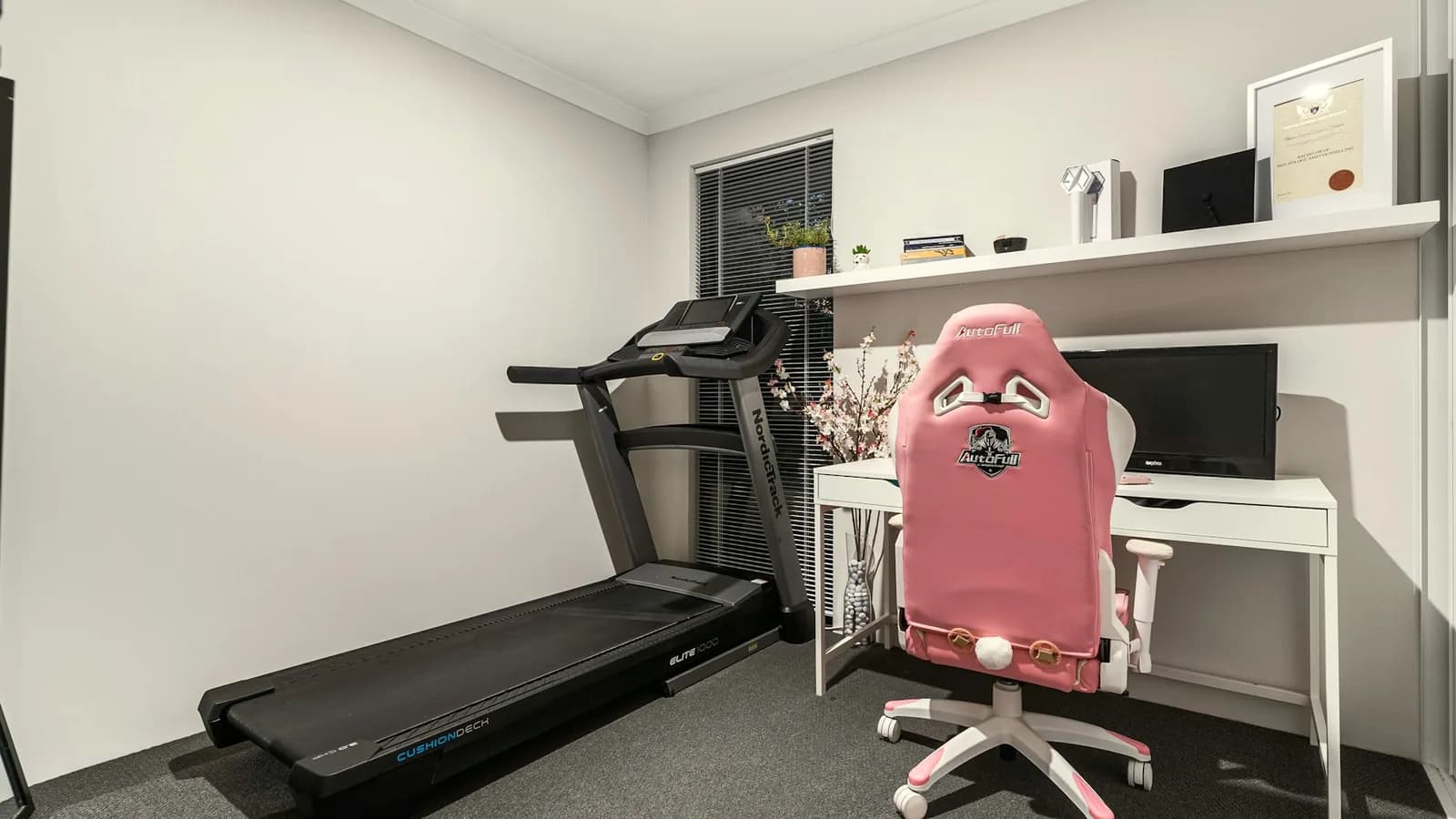
Walking pad benefits are real but modest, and the research is more interesting than the marketing. A walking pad is a compact, slow treadmill you can slide under a desk or a sofa, and the idea is simple: swap some of your sitting time for easy walking. This guide goes through what the studies on treadmill desks, walking breaks and daily step counts actually found, what they did not find, and how to decide whether a walking pad is worth the floor space.
⚕️ Medical Disclaimer
This article is general information, not medical advice. If you have heart disease, diabetes, balance problems, joint pain or any condition that affects how you walk, ask your doctor before starting a new walking routine, and stop if you feel dizzy, short of breath or unsteady.
The short version of the walking pad benefits
- Walking at a desk burns roughly 100 extra calories per hour compared with sitting. In a 2021 review of 13 studies, the lab estimate was 105 kilocalories per hour (95% CI 90 to 120).
- In workplace trials, treadmill desks cut sitting time by only a small amount, about 1.7 minutes per hour in that same review, and did not clearly change other health measures.
- In a three-month trial of 41 overweight or obese office workers, a shared treadmill desk added about 1,600 steps a day.
- Short, light walks after eating lowered blood sugar and insulin compared with sitting in a 2022 analysis of seven trials, and they beat standing still.
- Over a year, a treadmill desk was not better than a sit-stand desk in one trial, and the treadmill group actually had longer unbroken sitting spells.
- Daily steps matter most overall. In a pooled study of 47,471 adults, risk of dying during follow-up fell steadily up to roughly 6,000 to 8,000 steps a day in people aged 60 and over, and 8,000 to 10,000 in younger adults. This is observational.
What a walking pad is, and what it is not
Who the walking pad benefits are aimed at
The walking pad benefits discussed below mainly apply to desk workers and people who sit for much of the day, because that is who the studies recruited.
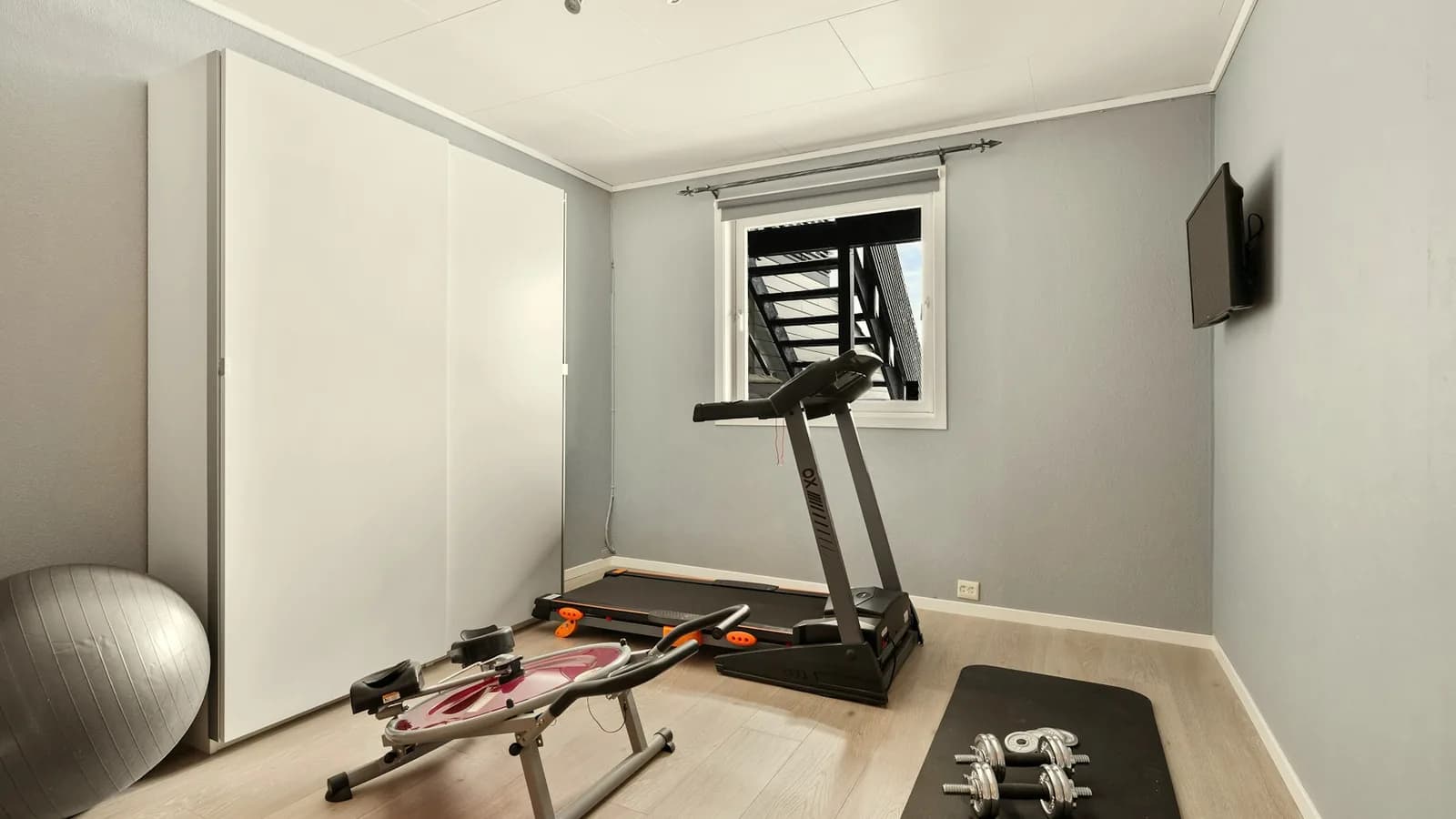
A walking pad is a flat, foldable treadmill with a low-power motor, usually without handrails, built for slow speeds. Research on "treadmill desks" used similar slow walking, typically at light intensity of roughly 40 to 99 steps a minute, while people worked at a raised desk. A walking pad is the home version of the same idea.
It is not a replacement for a proper workout. Light walking at your desk adds movement across a long day, which is a different job from a brisk walk, a run or strength training. If you want to build fitness rather than just add movement, our guides on zone 2 training and HIIT versus steady-state cardio cover that side. A walking pad targets the hours you would otherwise spend sitting.
Walking pad benefits: how many calories does desk walking burn?
A 2021 systematic review and meta-analysis in BMC Public Health pooled 13 studies with 351 participants: six in workplaces and seven in laboratories. In the lab studies, walking at a treadmill desk used about 105 more kilocalories per hour than sitting (95% confidence interval 90 to 120), and the metabolic rate rose by about 5 millilitres of oxygen per kilogram per minute.
That is useful, but put it in context. An hour of slow walking burns about as much as a small banana or a couple of biscuits. If you walk for two hours across a workday you might burn an extra 200 kilocalories, which is real but not a weight-loss plan on its own. Our guide to calorie deficits and safe weight loss explains why diet and overall activity matter more than any single gadget.
[Oye-Somefun et al., treadmill desk systematic review and meta-analysis, BMC Public Health, 2021. PMID: 34774020]Do walking pad benefits include less sitting time?
Evidence from the 2021 review
This is where the evidence is weaker than the marketing. In the same 2021 review, the workplace studies found that treadmill desks reduced sitting by about 1.73 minutes per hour over 24 hours (95% CI 0.17 to 3.3), and there were no significant changes in other metabolic outcomes. Blood pressure did not differ significantly from sitting either.
A three-month office trial
A 2014 randomised trial in the Journal of Occupational and Environmental Medicine gave a shared treadmill desk to 41 overweight or obese office workers for three months. Compared with controls, they took about 1,622 more steps a day (P = 0.013), spent 1.6 more minutes per hour in light activity and 3.6 fewer minutes per hour sitting during work hours. That is a modest but genuine shift, and it came from a desk that was shared, which probably limited how much it was used.
[Schuna et al., shared treadmill desk trial in overweight and obese office workers, J Occup Environ Med, 2014. PMID: 25479296]Walking pad versus sit-stand desk
What happened over 12 months
A 12-month cluster randomised trial in JMIR (2023) is the most sobering. It followed 66 overweight or obese office workers split between a seated control group (21 people), a sit-stand desk group (23) and a treadmill desk group (22). At 12 months, the treadmill group had longer usual sitting bouts, about 9 minutes longer per bout, alongside more prolonged standing and stepping. The authors concluded that sit-stand desks may produce more favourable sitting patterns than treadmill desks.
The lesson is not that walking pad benefits are imaginary. People who have one may walk for a while, then sit for a long unbroken stretch because they have "done their walking". If you buy one, the most helpful habit is probably to break up sitting often rather than to stack your walking into one block.
The strongest walking pad benefits: short walks after meals
Seven trials on blood sugar and insulin
The best-supported benefit is not about calories at all. A 2022 systematic review and meta-analysis in Sports Medicine pooled seven acute one-day crossover trials, mostly in adults with overweight or obesity. Light-intensity walking breaks lowered blood sugar after eating (standardised effect -0.72, 95% CI -1.03 to -0.41) and insulin (-0.83, 95% CI -1.18 to -0.48) compared with sitting. Walking also beat standing: effects were -0.30 for glucose and -0.54 for insulin. There was no effect on systolic blood pressure.
A five-hour sitting experiment
An earlier crossover study of 19 overweight or obese adults aged 45 to 65 had people walk lightly or moderately for two minutes every 20 minutes for five hours after a test drink. Blood sugar response (incremental area under the curve) was 5.2 with light walking versus 6.9 with uninterrupted sitting, and the insulin response was 633.6 versus 828.6.
These were short experiments, so they show an acute effect on blood sugar after a meal, not long-term disease outcomes. A walking pad is one convenient way to get these short walks on a rainy day, but a stroll around the block or the kitchen does the same job. If you like the idea, see our guide to the benefits of morning walking.
[Buffey et al., light-intensity walking breaks and postprandial glucose and insulin, Sports Med, 2022. PMID: 35147898] [Dunstan et al., breaking up prolonged sitting and postprandial glucose and insulin, Diabetes Care, 2012. PMID: 22374636]How many steps matter most for walking pad benefits?
A walking pad is one way to add steps, so it helps to know how many are worth chasing. A 2022 pooled analysis in The
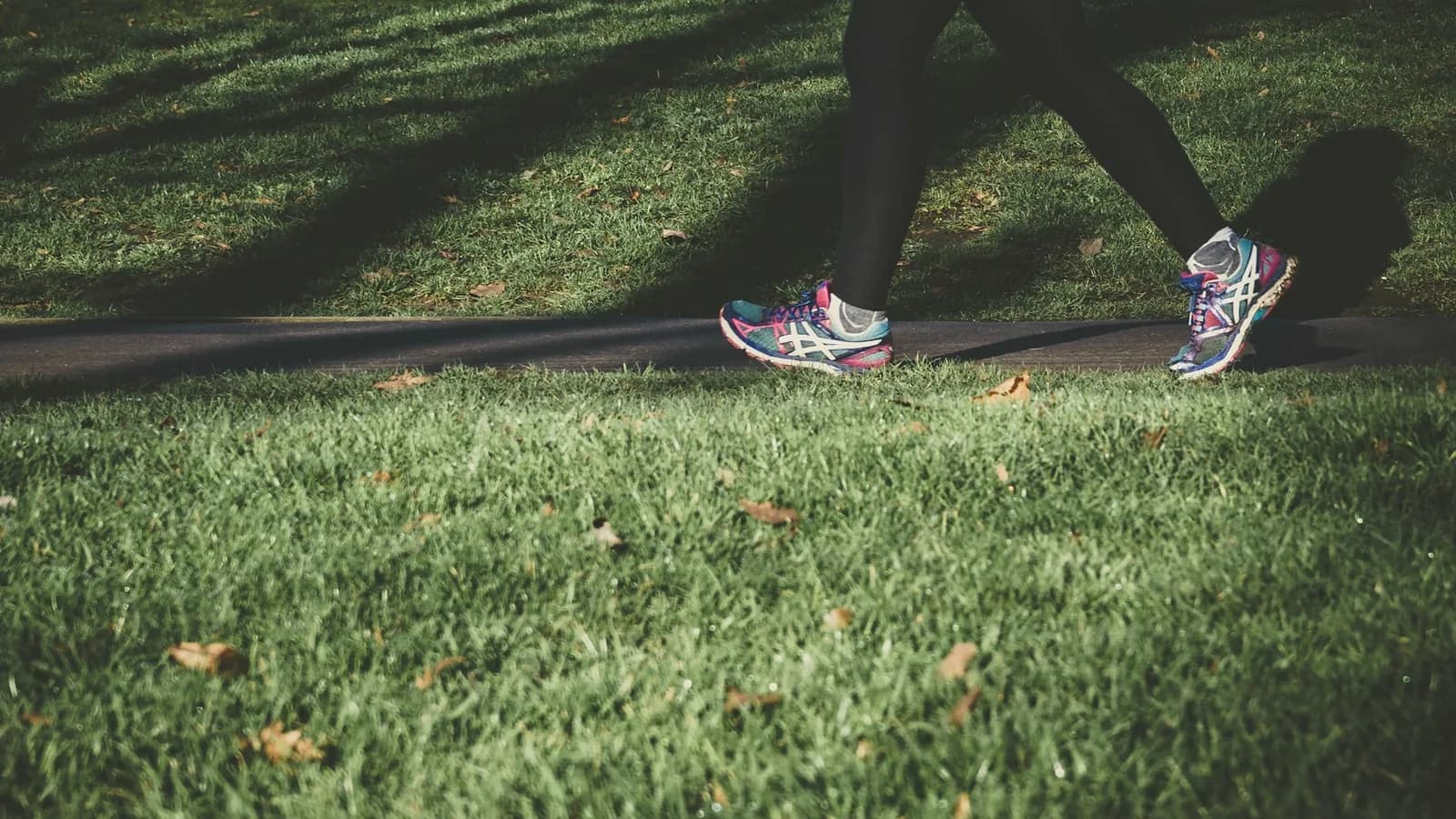
Lancet Public Health combined 15 cohorts with 47,471 adults and 3,013 deaths over a median 7.1 years. Compared with the lowest quarter of walkers (median about 3,553 steps a day), the next three quarters (about 5,801, 7,842 and 10,901 steps) had a hazard ratio for death of 0.60, 0.55 and 0.47. Risk fell steadily up to about 6,000 to 8,000 steps a day in people aged 60 and over, and about 8,000 to 10,000 in younger adults.
Because this was observational, healthier people may simply walk more, so it cannot prove that steps cause the lower risk. It does suggest the useful range is not extreme. If your daily total is stuck below 4,000, a walking pad could plausibly add a few thousand steps on its own.
[Paluch et al., steps per day and all-cause mortality, Lancet Public Health, 2022. PMID: 35247352]How to use a walking pad sensibly
- Start slow. The research used light walking. Begin at a comfortable pace and build up in short sessions of about five to ten minutes before trying longer ones.
- Break up sitting often. Given the 12-month trial, aim to stand or step every 30 to 60 minutes rather than one long walk.
- Try a post-meal walk. Ten to fifteen light minutes after eating is a simple habit with the best evidence behind it.
- Check the setup. Use a stable, uncluttered space, keep your screen at eye level, and wear flat, supportive shoes. Many pads have no handrails, so be careful with balance.
- Keep real exercise too. Light walking does not replace strength training or harder cardio.
The studies summarised here focused on activity, blood sugar and blood pressure, so they cannot tell you how likely falls are on a home walking pad. Take the same care you would on any treadmill.
Who might get the most walking pad benefits
The walking pad benefits are largest for people who work at a desk for hours, have space at home, and find it hard to get outside. It is less obviously useful if you already walk plenty, if you have no room to leave it set up, or if you tend to buy equipment that ends up unused. A cheaper starting point is to set a phone timer to stand up every half hour and take a short walk after each meal. If that works, a pad may add convenience; if it does not, the equipment is unlikely to fix the habit.
What the research does not show about walking pad benefits
- It does not show that walking pads cause weight loss. The studies measured small changes in calories burned, steps and sitting time.
- It does not show a clear blood pressure benefit from treadmill desks.
- The post-meal glucose trials were short, mostly in adults with overweight or obesity, so results may differ in other groups.
- The step count study is observational, so it cannot prove that more steps cause lower mortality.
- Evidence that treadmill desks beat sit-stand desks over a year is lacking, and one 12-month trial pointed the other way.
Frequently Asked Questions
Are walking pad benefits enough for weight loss?
They help a little, but not much on their own. A 2021 review found treadmill desks used about 105 more kilocalories per hour than sitting. Over a couple of hours that is a small boost, so food intake and overall activity still decide the result.
How long should I use a walking pad each day?
There is no proven minimum. Trials used light walking spread through the workday, and one found about 1,600 extra steps a day over three months. A sensible start is five to ten minutes at a time, a few times a day, building up as it feels comfortable.
Do walking pad benefits beat a standing desk?
Not necessarily. In a 12-month trial of 66 office workers, the sit-stand desk group seemed to have more favourable sitting patterns than the treadmill desk group, who had longer unbroken sitting spells. The best choice is the one that gets you moving often.
Does walking after a meal really lower blood sugar?
In short experiments, yes. A 2022 analysis of seven trials found light walking breaks lowered blood sugar and insulin after eating compared with sitting, and did better than standing. Those were acute effects, and they do not show long-term disease prevention.
How many steps a day do I need?
In a pooled study of 47,471 adults, the risk of dying during follow-up kept falling until about 6,000 to 8,000 steps a day in people aged 60 and over, and 8,000 to 10,000 in younger adults. That is observational, so treat it as a guide rather than a guarantee.
Can I use a walking pad while working at my desk?
Yes, many people do, and research on treadmill desks used slow, light walking. Start slowly, keep a clear space, wear flat shoes and be careful with balance, especially on pads without handrails. Stop if you feel unsteady, dizzy or short of breath.
Rate this article
Click on a star to rate this article
Keep Reading
Walking After Meals: What the Research Shows
Walking after meals explained: what trials found for blood sugar, how soon and how long to walk, who benefits, and what the studies cannot yet show.
Read article →
fitnessDead Hang Benefits: What the Evidence Supports and What It Does Not
Dead hang benefits, examined honestly: what the grip-strength research actually shows, why the shoulder claim does not hold up, and how to start properly.
Read article →
fitnessRucking for Beginners: How Much Weight, and What the Evidence Shows
Rucking for beginners — how to start, how much weight to carry, and which benefits the research supports. An honest guide to walking with weight.
Read article →

Vitality & Strength Editorial Team
Independent research synthesists — not licensed clinicians
Independent health writers and research synthesists. We are not doctors or registered dietitians; every claim we publish is sourced and linked to primary research, and we take no affiliate or industry money.