Rucking for Beginners: How Much Weight, and What the Evidence Shows
Rucking for beginners — how to start, how much weight to carry, and which benefits the research supports. An honest guide to walking with weight.
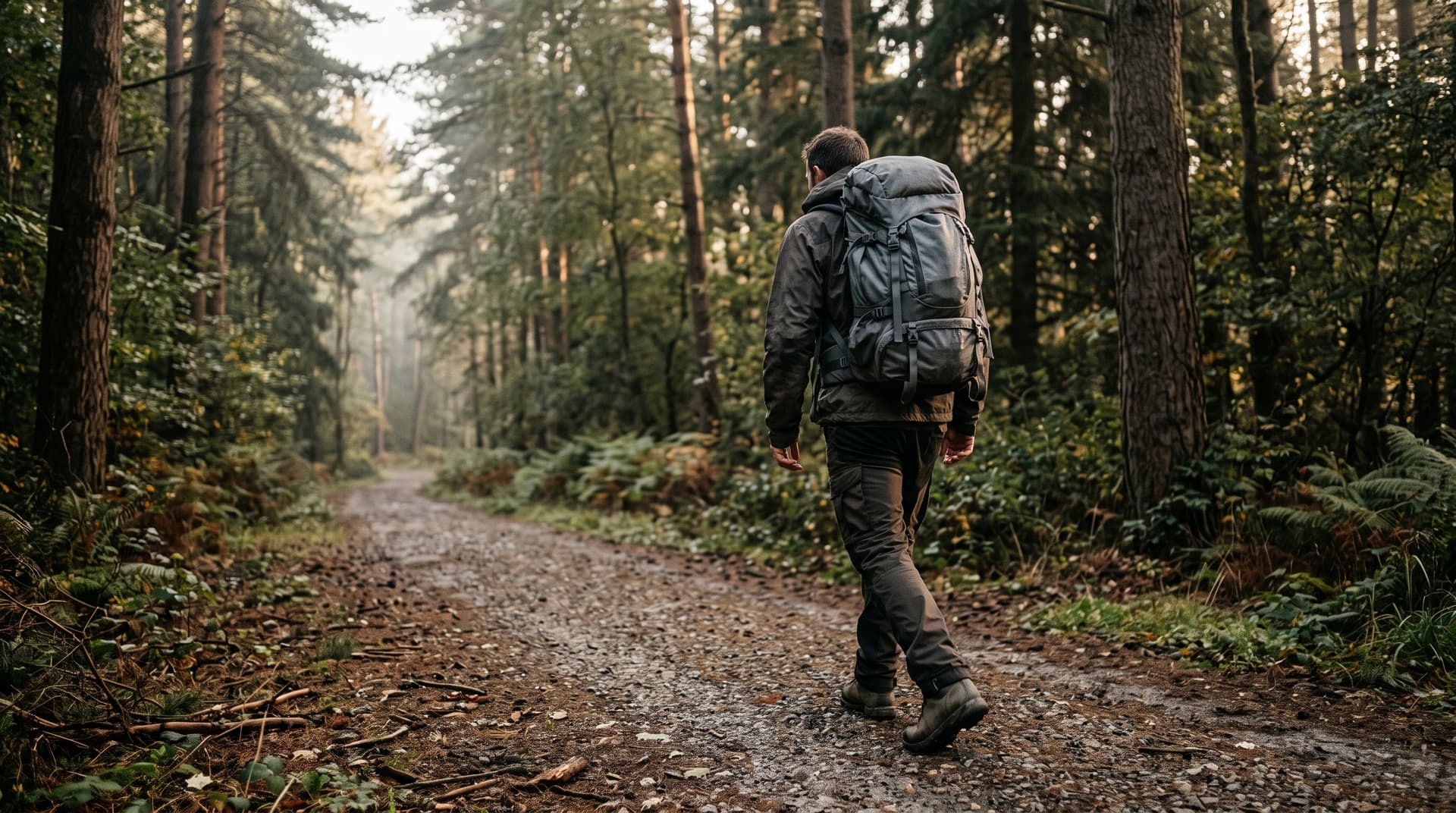
Rucking for beginners sounds more technical than it is: rucking is walking with weight on your back. That is the whole idea, and it is why the internet fell in love with it — no gym, no technique to learn, no barrier beyond owning a backpack and something heavy to put in it.
It is also why rucking attracts some of the most inflated claims in fitness. You will read that it burns three times the calories of walking, that it builds muscle, that it reverses bone loss. Some of that has research behind it. Some of it is extrapolated from military studies that were asking a different question entirely.
This guide to rucking for beginners gives you a starting protocol you can use this week, and it is explicit about which parts rest on evidence and which parts are simply sensible convention. Those are not the same thing, and most guides do not tell you which is which.
What rucking actually is
Load carriage has been studied seriously for decades, but almost entirely in a military context — how far a soldier can march, carrying how much, before performance degrades or injuries appear. [Knapik, Reynolds and Harman's review in Military Medicine] traces how soldier loads have grown since the eighteenth century, when foot soldiers "seldom carried more than 15 kg while on the march."
That heritage matters, because it is the source of most rucking advice circulating today. The research was designed to answer "how much can a soldier carry and still fight?" — not "what is the optimal load for a 45-year-old who wants better cardiovascular fitness?" When you see a precise-sounding rule about rucking weight, it has usually been lifted from that literature and reframed.
Mechanically, rucking sits between walking and resistance training without being either. You are doing sustained, low-intensity work, but with more load through the hips, knees and spine than walking alone. That changes the demand, and it changes the injury profile. In training terms it lands close to Zone 2 cardio — conversational effort you can sustain — with an added structural load that ordinary walking does not provide.
What's a good beginner weight?
Here is where I have to be blunt, because almost everyone else gets this wrong.
There is no research-backed rucking weight expressed as a percentage of body weight. The figure you will see repeated — usually "10% to 30% of bodyweight" — is not in the primary load-carriage review. Knapik and colleagues give no such recommendation. The only load figure in that abstract is the historical 15 kg note above.
That does not make the advice useless. It makes it convention rather than evidence, and you deserve to know the difference.
So: start with 10 to 15 lb. That is light enough that your first ruck feels like a walk with a slightly annoying backpack, which is exactly right. If you finish and feel you could have carried double, good — you have a baseline and somewhere to go. If your shoulders ache for two days, you started too heavy.
Weight plates designed for rucksacks sit flat against your back and do not shift. Dumbbells, books and water bottles move around and change your gait. If you are using household objects, wrap them so they sit still and high against your spine.
How far should you ruck as a beginner?
Start with a distance you already walk comfortably, and add the weight to that. If a two-mile walk is routine for you, make your first ruck two miles with 10 lb in the pack — not four miles, and not 30 lb.
The reason to hold distance constant is that you are changing one variable at a time. Add weight or add distance in a given week, never both. This is ordinary progressive-overload logic rather than anything specific to rucking, but it is the single mistake that ends most people's rucking in week two with a sore back.
Two to three rucks a week is plenty alongside whatever else you do.
Where the weight sits matters more than how much
This is the most useful finding in the entire load-carriage literature, and it almost never appears in beginner guides.
[Knapik's review] reports that each kilogram added to the foot increases energy expenditure by 7% to 10%, while each kilogram added to the thigh increases it by about 4%. Weight carried low on the limbs is disproportionately expensive, because you accelerate and decelerate it with every stride. Weight carried high and close to your spine costs far less.
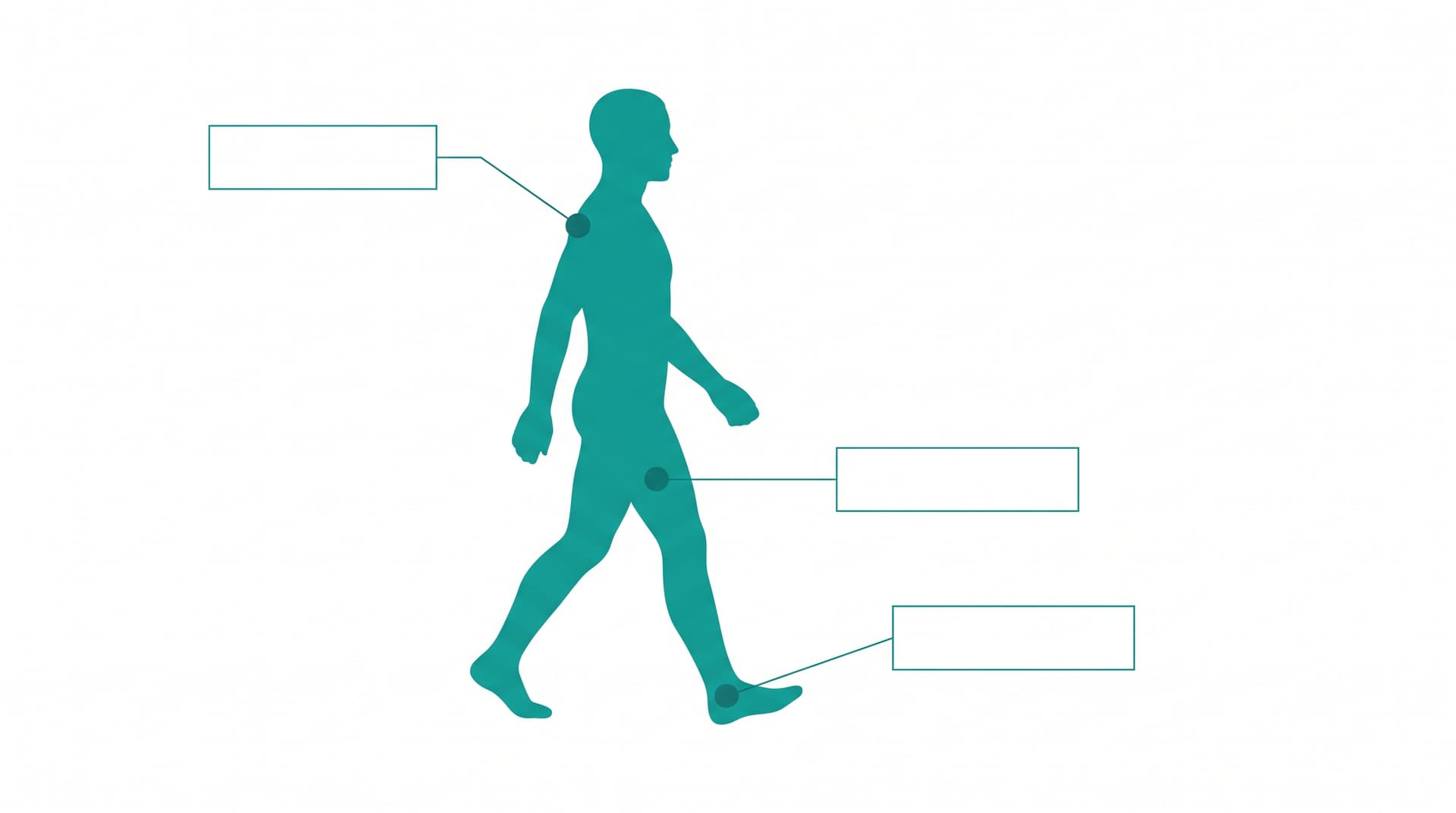
Three practical consequences:
Ankle weights are the worst possible way to add load. They cost you enormously in energy for very little useful training stimulus, and they alter your gait.
Heavy boots are a hidden load. If you are moving from trainers to boots and adding pack weight in the same week, you have made two changes, and the one on your feet is the costlier one per kilogram.
Pack position is not cosmetic. Load riding high and tight against your upper back is meaningfully easier to carry than the same load sagging at your lumbar spine. Tighten the shoulder straps until the pack stops moving independently of you.
Does rucking build bone or muscle? What the trials found
This is where the claims outrun the evidence, so it is worth going carefully.
The most relevant body of research is on weighted vests rather than rucksacks. A [2026 systematic review and meta-analysis in Osteoporosis International] pooled nine randomised controlled trials covering 368 middle-aged and older adults. Two findings matter, and they point in different directions.
Compared with usual activity, weighted-vest work plus exercise improved bone density. Femoral neck bone mineral density improved with a standardised mean difference of 0.59 (95% CI 0.05 to 1.13, P = 0.03), and lumbar spine BMD by 0.73 (95% CI 0.29 to 1.16, P = 0.001). Body fat fell by about 2.67 kg.
Added on top of exercise people were already doing, the bone benefit did not hold up. The vest produced further fat loss — about 0.73 kg — but what the authors describe as no confirmed skeletal benefit, and that comparison rested on a single study. The review rated the body-fat evidence as high certainty and the bone outcomes as low to moderate.
Read those together and the honest conclusion is narrower than the headlines: if you are currently inactive, loaded walking is likely to help your bones and your body composition. If you already lift and train, adding a pack will probably help your waistline and may do nothing measurable for your skeleton.
There is a further wrinkle. An analysis from the [INVEST in Bone Health trial, reported by Wake Forest], looked at older adults who wore a weighted vest at least eight hours a day for a year during weight loss. The bone benefit appeared only in people who spent more of that time standing and stepping. Participants who wore the vest but stayed seated did not get it. As lead author Jason Fanning put it: "A vest can be a great tool. But, like any tool, it's not going to do the work for you."
If your goal is cardiorespiratory fitness rather than bone or body composition, note that rucking is sustained low-intensity work — useful, but not the stimulus that moves VO2 max much on its own.
On muscle: loaded walking is endurance work. It is demanding, it will make your legs and trunk feel worked, and none of the trials above measured it as a hypertrophy intervention. If building muscle is your goal, rucking is not the tool.
Rucking for beginners: a four-week progression
This is a structure, not a prescription validated in a trial. It applies the one-variable-at-a-time principle to a conservative starting point.
IMAGE 2 GOES HERE - put the cursor on this line, click Add image in the toolbar, then delete this line.
Week 1 — establish the baseline
Two rucks at your usual comfortable walking distance, 10 lb. If you are not already walking regularly, build that habit first; the 10,000 steps post covers why the round number matters less than consistency.
Week 2 — add a little distance
Two rucks, same weight, add roughly half a mile to one of them.
Week 3 — add frequency, not load
Three rucks at the week-2 distance, still 10 lb.
Week 4 — add the first weight increase
Three rucks. Add 5 lb to one of them and leave the other two alone.
From there, keep alternating: a month where distance creeps up, a month where weight does. If anything hurts in a joint rather than aching in a muscle, stop adding and hold where you are.
Who should be cautious
The load-carriage literature catalogues what goes wrong. [Knapik's review] names foot blisters, stress fractures, back strains, metatarsalgia, rucksack palsy and knee pain among the injuries associated with prolonged load carriage.
Rucksack palsy deserves a mention because nobody warns beginners about it. It is a compression injury to the nerves around the shoulder from pack straps, and it presents as numbness, tingling or weakness in the arm or hand. If you get persistent pins and needles in a hand while rucking, that is a signal to take the pack off and reassess how it is loaded and strapped, not something to push through.
Be conservative, and talk to a clinician first, if you have existing knee, hip or lower-back problems, a diagnosis of osteoporosis or osteopenia, are pregnant, or are returning from a lower-limb injury. The military research describes healthy young adults under supervision; it does not transfer automatically.
Gear: what you need and what you don't
Genuinely needed: a pack that sits tight and high, with straps that hold it still. Shoes or boots you have already walked distance in.
Worth having: purpose-made ruck plates, because they sit flat and do not shift.
Skip: ankle and wrist weights, for the reason above. Anything marketed as a rucking-specific shoe before you know whether you will stick with this.
Walk your first few rucks in footwear you have already tested. New boots plus new load is how you collect blisters, and blisters end more rucking habits than anything in the research.
The honest summary
For anyone approaching rucking for beginners, the summary is this. Rucking is a good, cheap way to make walking harder, and if you are not currently training it is likely to improve your body composition and probably your bone density. Those are real benefits with real trials behind them.
What it is not: a resistance-training substitute, a reliable bone-building intervention for people who already exercise, or a practice with a research-validated weight formula.
✅ Key Takeaway
Start at 10–15 lb, change one variable a week, keep the load high and tight against your spine, and pay attention to any numbness in your hands. If you are currently inactive, loaded walking is one of the better returns available for the effort. If you already train, expect help with body composition and nothing proven for your bones.
Frequently Asked Questions
How far should I ruck as a beginner?
Start with the distance you already walk comfortably and add weight rather than mileage — two to three miles is plenty for a first ruck. Add distance or weight, never both in the same week.
What's a good beginner weight for rucking?
There is no research-backed limit expressed as a percentage of body weight, despite how often "30% of bodyweight" is repeated online. Knapik and colleagues' review of military load carriage gives no such figure. In practice, 10–15 lb is a sensible start — that is convention, not evidence.
Does rucking build muscle?
Carrying load raises the metabolic cost of walking, but walking under load is endurance work, not resistance training. A 2026 meta-analysis of nine trials found weighted-vest work plus exercise reduced body fat by about 2.7 kg compared with usual activity — a fat-loss effect, not a muscle-building one.
Do weighted vests actually work?
For people who are otherwise inactive, yes: that meta-analysis found improved bone density at the femoral neck and lumbar spine versus usual activity. Added on top of exercise you already do, it produced extra fat loss but no confirmed bone benefit — and that came from a single study.
How heavy should a walking vest be?
Weight matters less than where it sits and whether you are actually moving. Knapik's review found each kilogram added at the foot raises energy cost 7–10%, versus about 4% at the thigh. And in the INVEST trial, the bone benefit appeared only in people who spent more time standing and stepping while wearing the vest.
⚕️ Medical Disclaimer
This article is for informational purposes only and does not constitute medical advice. Speak to a qualified healthcare provider before starting loaded walking if you have any bone, joint or cardiovascular condition, are pregnant, or are returning from injury.
References
- Knapik JJ, Reynolds KL, Harman E. Soldier load carriage: historical, physiological, biomechanical, and medical aspects. Military Medicine. 2004;169(1):45-56
- Wang X, Zhou L, Shi T, et al. Effects of weighted vest on bone health and body fat in middle-aged and older adults: a systematic review and meta-analysis. Osteoporosis International. 2026
- Fanning J, et al. Does time spent upright moderate the influence of a weighted vest on change in bone mineral density during weight loss among older adults. Frontiers in Aging, reported by Wake Forest University, March 2026
Rate this article
Click on a star to rate this article
Keep Reading
10000 Steps a Day: Where the Number Actually Came From
10000 steps a day started as a 1965 Japanese marketing slogan, not research. What the actual evidence says about step counts, all-cause mortality, and the real
Read article →
fitness10 Benefits of Morning Walking — Science-Backed Health
Discover how morning walks transform your health. From weight management to improved mood, here are 10 science-backed benefits.
Read article →
fitnessThe Evidence-Based Recovery Protocol Guide
Recovery ranked by evidence: sleep first, then sauna, cold, and Zone 2 - plus the popular tools that don't work (and the ice bath that backfires).
Read article →

Vitality & Strength Editorial Team
Independent research synthesists — not licensed clinicians
Independent health writers and research synthesists. We are not doctors or registered dietitians; every claim we publish is sourced and linked to primary research, and we take no affiliate or industry money.