16:8 vs 14:10 vs OMAD: Which Fasting Window Wins?
16:8 intermittent fasting vs 14:10 and OMAD: what the trials actually show on fat loss, autophagy, insulin, and which schedule fits which goal.
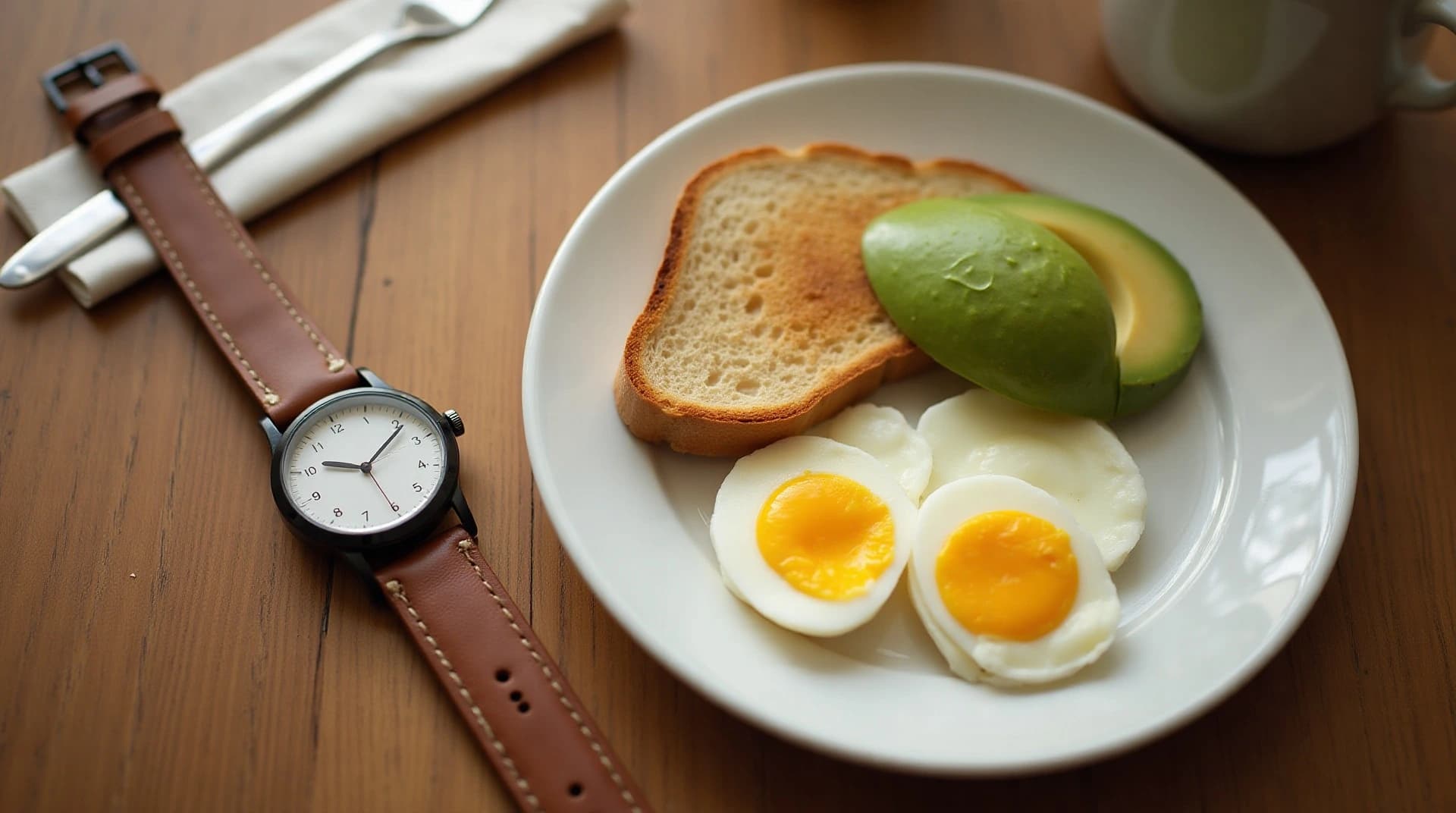
Time-restricted eating gets sold as a fat-loss shortcut, a longevity hack, and an autophagy switch all in one. The randomized trial data is more boring than the YouTube claims. 16:8 intermittent fasting and standard daily caloric restriction produce almost identical body composition changes when calories are matched. Going from 16:8 to 14:10 changes very little. Going to OMAD adds genuine risks without a proportional benefit. The autophagy talking points cited everywhere are mostly extrapolated from rodent studies that don't replicate in humans at the timeframes people actually fast. This article compares the three most common time-restricted eating protocols, what each one does to insulin and metabolism, where the evidence actually lands on fat loss, and which schedule makes sense for which goal.
⚕️ Medical Disclaimer
This article is for informational purposes only. Consult a qualified healthcare provider before changing any supplement, training, or dietary routine.What time-restricted eating actually means
Time-restricted eating (TRE) is a subset of intermittent fasting where you compress all your calories into a daily window of fixed length. 16:8 means 16 hours fasting, 8 hours eating. 14:10 stretches the window to 10 hours. OMAD — one meal a day — collapses the window to roughly an hour. The shared claim is that the timing matters as much as the calories.
[A 2020 review in Cell Metabolism] documented the three primary mechanisms TRE is supposed to engage: aligning food intake with circadian-controlled metabolism, lowering insulin between meals, and triggering cellular cleanup processes during the fasting window. Each of those mechanisms has supporting data in animal models. The translation to humans is partial.
Critically, all three TRE protocols are tools to manage calorie intake. None of them suspend the rules of energy balance. Whether the timing adds anything beyond what the calorie reduction achieves is the actual research question.
What insulin and circadian metabolism do during a fast

Insulin levels track recent food intake closely. When you stop eating, insulin falls within an hour or two and stays low until the next meal. Lower insulin shifts your body toward fat oxidation rather than fat storage. That much is uncontroversial.
How long the insulin benefit lasts
Insulin sensitivity improves modestly with consistent fasting windows of 14 hours or more, particularly in people who were eating across a 14-hour-plus window before. Beyond about 16 hours, the additional improvement is small. Going to OMAD produces a long stretch of low insulin but also a single very large meal that produces a large insulin spike — which partially negates the benefit.
Circadian metabolism
Your liver, muscles, and pancreas all show circadian patterns of insulin sensitivity. Insulin sensitivity is highest in the morning and falls through the afternoon and evening. This is why eating most of your calories late at night tends to produce worse glucose responses than eating the same calories earlier. TRE protocols that finish eating before 7 PM tend to outperform those that finish at 10 PM, even with identical fasting hours.
16:8 intermittent fasting: what the trials actually show
The most popular protocol — 16:8 intermittent fasting — has the most trial data and the least exciting results. [A 2020 randomized trial in JAMA Internal Medicine] compared 16:8 with consistent meal timing across 116 overweight adults. After 12 weeks, the 16:8 group lost about 2 pounds more than the control group, but body composition showed the loss was disproportionately lean mass — not the fat-only outcome that the marketing implies.
Why the trial data is so muted
The leading explanation is straightforward: when people skip breakfast under 16:8, they don't necessarily compensate by eating less the rest of the day. They compensate enough to leave total intake roughly the same. The window changes; the calories don't. Studies that successfully produce meaningful fat loss with 16:8 are studies where the participants also tracked calories and ran a deficit.
Where 16:8 does help
For people who have a habit of late-night snacking, 16:8 with a window from noon to 8 PM removes those calories more or less automatically. That is a real behavioral change that produces real fat loss. The mechanism is the eliminated snacking, not the fast itself.
14:10 vs 16:8 vs OMAD: where the practical differences sit

Once you understand that the calories matter most, the differences between protocols are mostly about adherence and side effects.
14:10 — the easiest entry point
A 14-hour fast (8 PM to 10 AM) is what most people do naturally if they don't eat after dinner. It captures most of the insulin and circadian benefit at almost no behavioral cost. For people new to TRE, this is usually the right starting point.
16:8 — the most studied middle ground
Compressing the window to 8 hours requires skipping either breakfast or dinner. Most people skip breakfast. The 16:8 window is studied enough that the data is trustworthy: modest fat loss when paired with calorie attention, minor changes without it.
OMAD — risks accumulate fast
Eating one large meal a day causes a large glucose and insulin spike, makes it extremely difficult to hit protein targets (most people max out around 60 to 80g in a single meal), and is associated with increased lean mass loss in the few head-to-head trials available. [Cleveland Clinic] recommends against OMAD for routine use because the risk-to-benefit profile gets worse, not better, as the eating window shrinks below 4 hours.
The autophagy claim that does not replicate at human timeframes
The most-shared talking point in fasting circles is that 16 to 24 hours triggers autophagy — the cellular cleanup process where cells digest damaged components. The trouble is the data behind that claim is mostly from yeast and rodent studies where the metabolism runs much faster than in humans.
What the human data actually shows
Autophagy markers in humans are difficult to measure non-invasively. The few studies that have measured them in muscle and blood samples suggest meaningful autophagy upregulation requires fasts of 36 to 48 hours, not 16. At 16 hours, you may get some upregulation in some tissues, but the magnitude is small compared to what gets cited.
Why this matters
If your reason for fasting is the autophagy claim, the evidence at typical TRE windows is much weaker than the claim implies. If your reason is fat loss or insulin sensitivity, the protocol still works to the extent it changes your calorie intake. Pick your protocol for what it actually does, not for the extrapolated mechanism.
What the evidence supports vs popular claims
Time-restricted eating accumulated a lot of claims faster than the trials could test them. Here is the rough ladder.
Plausibly supported by current data:
- 14- to 16-hour fasting windows modestly improve insulin sensitivity in adults with metabolic dysfunction
- Earlier eating windows (finishing by 7 PM) outperform later ones at matched hours
- TRE produces fat loss when it produces a calorie deficit, not otherwise
- Removing late-night snacking is a real behavioral lever for many people
Not well supported:
- Time-restricted eating produces fat loss without calorie attention
- 16-hour fasts trigger meaningful autophagy in humans
- OMAD is healthier than 16:8 because the fast is longer
- Coffee with cream "breaks the fast" in any practically meaningful way for fat loss
- The window matters more than what you eat inside it
[Harvard Health] updated their stance in 2020 to reflect that the JAMA trial data was less impressive than earlier observational findings suggested.
When NOT to do time-restricted eating: contraindications
TRE is not for everyone, and pushing it on the wrong people produces real harm.
Don't try TRE if you have a history of disordered eating
The structure of TRE — long stretches of not eating, a compressed window, tracking — overlaps closely with restrictive eating patterns. People with a history of anorexia, bulimia, or binge eating disorder should not use TRE without clinician oversight. The protocol can amplify exactly the patterns recovery is trying to soften.
Other groups where TRE is risky
Pregnant or breastfeeding women, people with type 1 diabetes or on insulin, people with active GI conditions, those with very low body weight, and adolescents should generally avoid TRE or do it only under clinical supervision. Athletes training at high volume usually do worse on 16:8 than on a more spread-out eating pattern because they need the protein and carbohydrate timing around training.
How to start: a 4-week TRE protocol
If you are healthy, not pregnant, and have no history of disordered eating, here is a sensible four-week ramp into TRE.
Week 1. Move dinner to before 8 PM and don't eat after. Don't change anything else. Most people are now at 12 to 13 hours fasting between dinner and breakfast. Note how you feel. Hunger settles within 3 to 5 days.
Week 2. Push breakfast to 9 or 10 AM. You are now at roughly a 14:10 window. If hunger is loud in the morning, drink water or black coffee. Do not jump to 16:8 in week 2 — give the new pattern time to settle.
Week 3. If 14:10 is comfortable, push breakfast to 11 AM. You are now at 16:8. Keep dinner before 8 PM. Watch protein intake — splitting your daily protein across two solid meals (lunch and dinner) is harder than across three but doable with planning.
Week 4. Stay at 16:8. Track calories for the week. If you are not in a deficit, the protocol is not producing fat loss regardless of the eating window. TRE is a tool for managing eating volume, not a substitute for matching calories to your goal.
✅ Key Takeaway
- 16:8 intermittent fasting and matched-calorie standard eating produce nearly identical fat loss in randomized trials.
- The fasting window is a tool to manage calorie intake; it does not override energy balance or replace tracking when fat loss has stalled.
- Earlier eating windows (finish by 7 PM) outperform later windows of identical length on glucose and insulin metrics.
- Autophagy claims at typical TRE windows are extrapolated from animal data; meaningful autophagy upregulation in humans requires 36+ hour fasts.
- OMAD adds risk without proportional benefit and is not recommended for routine use; 14:10 captures most of the benefit at much lower behavioral cost.
Frequently Asked Questions
Is 16:8 actually better than 14:10?
For fat loss specifically, the evidence shows little additional benefit from 16:8 over 14:10 if calorie intake is the same. 14:10 captures most of the insulin and circadian benefit at much lower behavioral cost. 16:8 may help if it removes a habitual late-night snacking pattern. If 14:10 is sustainable and 16:8 is not, the longer-window protocol you actually follow beats the shorter one you abandon.
Does 16:8 intermittent fasting actually burn more fat?
Only when it produces a calorie deficit. Trials that match calorie intake between 16:8 and standard meal timing show similar fat loss in both groups. The fat loss seen in real-world TRE comes mostly from people unintentionally eating less because they skipped a meal. If you compensate at lunch and dinner for the breakfast you skipped, the fat loss does not happen. Calories first, window second.
Is OMAD safe for long-term use?
Most clinicians recommend against routine OMAD. The downsides — large insulin and glucose spikes, difficulty hitting protein targets, increased lean mass loss in head-to-head studies, social inflexibility — accumulate without proportional benefit over 16:8 or 14:10. Some people use OMAD short-term for specific weight goals; sustained daily use raises risks that the literature does not support.
Can I work out during the fasting window?
Light to moderate cardio in a fasted state is fine for most people once adapted. Heavy strength work and high-intensity intervals during the fast tend to produce worse performance and more lean mass loss over time. If your training is serious, eat a small protein-and-carb meal before lifting, even if it shortens your fasting window. The training stimulus matters more than the fasting hours for body composition.
Does coffee break a fast?
Black coffee, plain tea, and water do not break a fast in any practically meaningful sense for fat loss or insulin sensitivity. They do not raise insulin or interrupt the metabolic state. Adding cream, sugar, or sweeteners with caloric content does break the fast technically. Small amounts of cream (under 50 calories) probably do not derail the benefit at the population level, though purists disagree.
Related Reading
- Zone 2 Cardio: The Forgotten Training Zone That Builds Mitochondria
- Cold Plunge Protocol: Time, Temperature and What the Research Actually Says
- Cortisol and Belly Fat: What the Research Actually Links
References
Rate this article
Click on a star to rate this article
Keep Reading
Calorie Deficit Explained: How to Calculate and Maintain Safe Weight Loss
Understand calorie deficit science, calculate your personalized deficit, and learn safe implementation strategies for sustainable weight loss results.
Read article →
weight managementBoost Your Metabolism Naturally: 12 Methods
Discover 12 proven ways to naturally boost your metabolism. Learn about thermogenic foods, strength training, sleep optimization, and NEAT for lasting weight management.
Read article →
nutritionGlycemic Variability: Why Energy Crashes at 3pm
Your 3pm slump is glycemic variability, not just fatigue. See what CGM data reveals and the 4-step plate that flattens your blood sugar curve.
Read article →

Vitality & Strength Editorial Team
Independent research synthesists — not licensed clinicians
Independent health writers and research synthesists. We are not doctors or registered dietitians; every claim we publish is sourced and linked to primary research, and we take no affiliate or industry money.