Sustainable Weight Loss Strategies That Actually Work: Evidence-Based Approaches
Evidence-based weight loss methods: behavioral strategies, mindset shifts, and realistic timelines that support lasting results.

Introduction
The weight loss industry generates over $70 billion annually selling quick fixes, extreme diets, and unrealistic promises. Yet approximately 95% of people who lose weight regain it within 5 years—not because they lack willpower, but because the approaches themselves are fundamentally unsustainable.
The challenge isn't understanding weight loss (calories in versus calories out is well-established), but rather how to create sustainable behavior change that becomes automatic rather than requiring constant willpower. Research from the National Weight Control Registry—which tracks individuals who have lost an average of 66 pounds and kept it off for 5+ years—reveals common patterns among successful weight loss maintainers.
This guide focuses on evidence-based strategies used by people who lose weight and keep it off, replacing quick-fix thinking with sustainable approaches.
Understanding Weight Loss Fundamentals
Energy Balance
Weight loss fundamentally requires a caloric deficit—consuming fewer calories than you expend. This isn't about any particular diet; it's physics. A 500-calorie daily deficit produces approximately 1 pound of weight loss weekly (3,500 calories = 1 pound of fat tissue).
However, this simple equation ignores crucial variables:
- Metabolic adaptation (your body adjusts metabolism to calorie restriction)
- Nutrient density (different foods affect satiety and hormones differently)
- Behavioral factors (stress, sleep, and consistency matter enormously)
- Composition (you lose fat, muscle, and water—loss isn't purely fat)
Successful weight loss accounts for all these factors rather than fixating solely on calorie numbers.
The Myth of Willpower
Willpower isn't an unlimited resource. Research shows that relying on willpower for weight loss typically fails because it depletes through daily decision-making. Instead, successful approaches remove decision requirements through:
- Environmental design (making healthy choices the default)
- Habit formation (making good choices automatic)
- Structural support (systems that work with, not against, human nature)
Evidence-Based Behavioral Strategies
1. Food Tracking and Awareness
Multiple studies in the Journal of the Academy of Nutrition and Dietetics find that people who track food intake lose more weight. However, the mechanism isn't the calorie-counting itself—it's the awareness it creates.
When you record what you eat, you become conscious of portions, hidden calories, and patterns. This awareness drives behavioral change more than any other factor.
Practical approach: Track intake for 2-3 weeks to build awareness, then decide whether continued tracking helps you or feels burdensome. Many successful maintainers track periodically (1 week monthly) to ensure they haven't drifted, rather than tracking obsessively long-term.
2. Consistent Breakfast
Research in the Journal of Nutrition found that breakfast eaters lose more weight and maintain loss better than those who skip breakfast. The mechanism: breakfast stabilizes blood sugar and hunger hormones, preventing excessive hunger and overeating later.
However, the specific breakfast doesn't matter as much as:
- Consistency (eating breakfast at the same time daily)
- Adequate protein and fiber (these promote satiety)
- Reasonable portion size
A consistent 300-400 calorie breakfast with 15-25g protein works better than skipping breakfast and overeating later.
3. Increased Protein Intake
Protein is the most satiating macronutrient—meaning it produces greater fullness than equivalent calories from carbs or fat. A meta-analysis in the American Journal of Clinical Nutrition found that higher protein intake (1.2-1.6g per pound of body weight) enhances weight loss and preserves muscle during calorie restriction.
Benefits of adequate protein:
- Reduced hunger and appetite
- Preserved muscle mass during weight loss
- Higher diet-induced thermogenesis (your body burns more calories processing protein)
- Better compliance to calorie restriction (you're naturally less hungry)
Aim for protein at each meal and snack.
4. Vegetable and Fiber Emphasis
Vegetables and fiber are almost universally associated with weight loss success. Why? They're high-volume, low-calorie foods that create fullness through stomach distension and soluble fiber effects on satiety hormones.
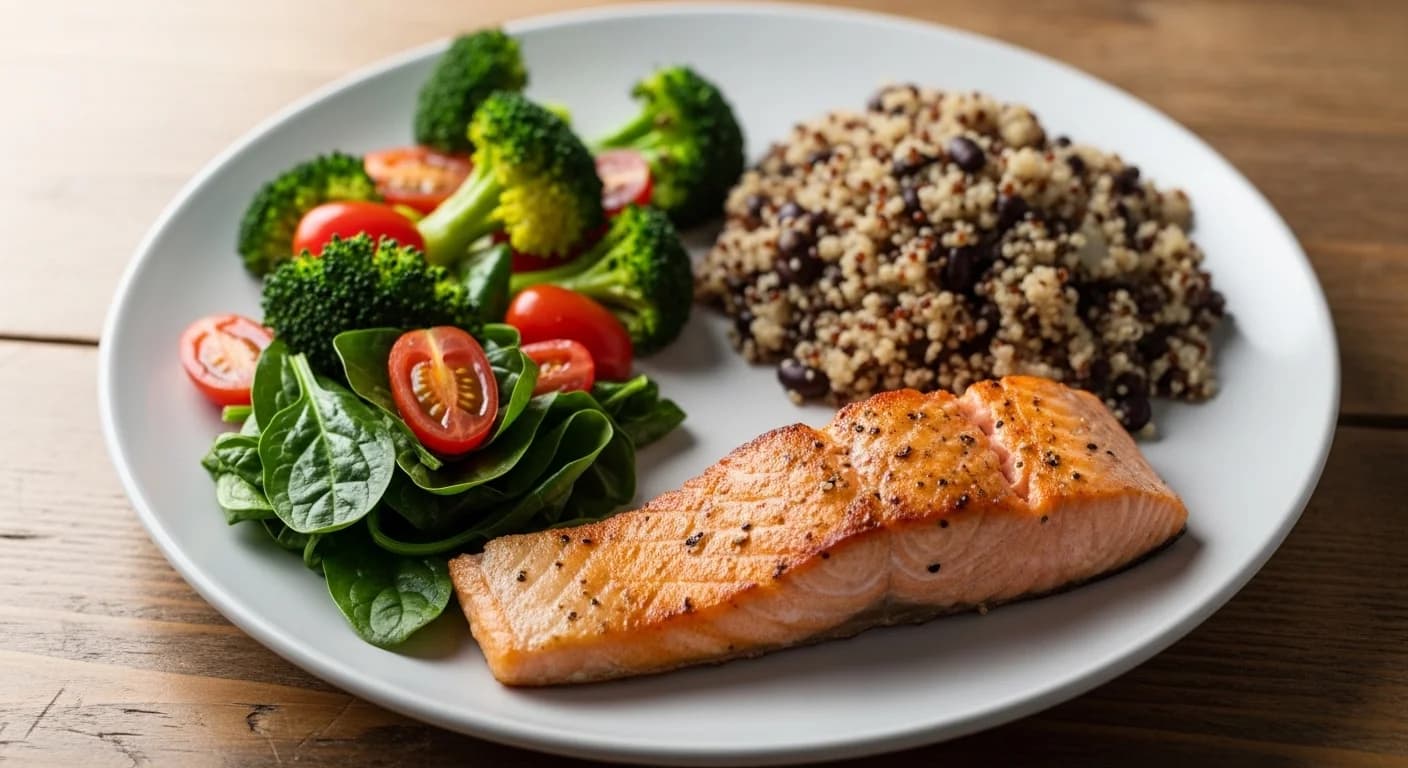
A practical strategy: Make vegetables 50% of your plate volume. This creates fullness on fewer calories and crowds out less healthy options. Fiber intake of 25-35g daily supports weight loss and metabolic health.
5. Structured Eating and Elimination of Grazing
Research comparing structured meal eating (eating at designated times) versus grazing (eating continuously throughout the day) consistently shows that structured eating promotes weight loss. The mechanism: structured eating prevents unconscious overconsumption and creates clearer hunger/satiety cues.
For most people, three meals and one snack works better than constant availability and "eating when hungry."
6. Sleep Optimization
Sleep deprivation sabotages weight loss through multiple mechanisms:
- Increases hunger hormone (ghrelin) and decreases satiety hormone (leptin)
- Impairs decision-making, leading to poor food choices
- Reduces physical activity
Research in Sleep journal found that sleep-restricted individuals gained more weight despite similar calorie intake. Conversely, improved sleep supports weight loss even without dietary changes.
Prioritize 7-9 hours nightly.
7. Stress Management
Chronic stress elevates cortisol, which promotes fat deposition (particularly abdominal fat) and impairs appetite regulation. Stress also triggers emotional eating and reduces physical activity motivation.
Stress management techniques—meditation, exercise, time in nature—support weight loss independent of diet changes.
8. Strength Training
Aerobic exercise burns calories during the activity, but strength training provides longer-term benefits:
- Increases muscle mass, which increases resting metabolic rate
- Preserves muscle during weight loss (you lose fat, not muscle)
- Improves insulin sensitivity and glucose control
- Provides metabolic benefits lasting hours post-workout
Research in Obesity journal found that adding strength training to a weight loss program preserves three times more muscle mass than diet alone.
Dietary Approaches: Comparing Evidence

Multiple dietary patterns support weight loss—the best diet is the one you'll maintain. Here's how major approaches compare:
Low-Carb Diets
Evidence: Effective for initial weight loss and appetite suppression. Meta-analysis shows modest long-term advantage over low-fat diets, primarily through appetite suppression.
Considerations: May be challenging to maintain long-term; lacks evidence advantage if calories are equated; individual response varies.
Low-Fat Diets
Evidence: Effective for weight loss. The low-fat approach has decades of research support.
Considerations: May be less satiating than higher-protein, higher-fat approaches; requires careful food choices (low-fat processed foods often have added sugar).
Mediterranean Diet
Evidence: Strong support for long-term adherence and health markers beyond weight loss. Supports cardiovascular health, brain health, and sustainable weight maintenance.
Considerations: Requires cooking skills; moderate caloric deficit needed for weight loss.
High-Protein Diets
Evidence: Enhanced satiety and appetite suppression. Strongest evidence for weight loss adherence.
Considerations: Requires adequate protein consumption and careful carbohydrate choices; individual preferences matter.
The meta-conclusion: All dietary approaches work if they create a caloric deficit and have high adherence. Choose based on:
- Your food preferences
- Cultural fit
- Sustainability long-term
- Whether it supports your health markers
Weight Loss Timeline Expectations
Weeks 1-2
- Initial weight loss (much is water and glycogen)
- Average 3-5 lbs for those starting with significant weight to lose
- Energy may dip as body adapts

Weeks 3-8
- More stable fat loss (1-2 lbs weekly)
- Energy stabilizes
- Initial dietary adaptations occur
- Motivation remains high (visible progress)
Weeks 8-12
- Continued steady loss (1-2 lbs weekly)
- Possible first plateau as body adapts
- Motivation may decline as novelty fades
- Behavioral changes consolidate into habits
Months 4-6
- Continued loss (1-2 lbs weekly, possibly slower)
- Plateaus more common as metabolic adaptation increases
- Motivation maintenance critical—this is when most people quit
- Habit adherence becomes crucial
Beyond 6 Months
- Loss may slow further due to metabolic adaptation
- Transition to maintenance becomes relevant
- Long-term adherence determines permanent success
- Focus shifts to behavior maintenance rather than continued loss
Common Obstacles and Solutions
"I've Hit a Plateau"
This is normal. Your body's metabolic rate decreases as you lose weight. Solutions:
- Increase activity (add 1000-2000 steps daily)
- Reduce calories slightly (100-150 calorie decrease)
- Ensure adequate sleep and stress management
- Consider that muscle gain may offset fat loss on the scale
- Plateaus typically last 2-4 weeks before resuming loss
"I Can't Sustain This Long-Term"
This indicates the approach is too extreme. Adjustments:
- Increase calories slightly (the goal is sustainable, not minimal)
- Focus on adding good foods rather than restriction
- Incorporate favorite foods in moderation
- Ensure adequate protein and vegetables for satiety without constant hunger
"I Have No Energy"
Often indicates insufficient calories or poor nutrient timing:
- Ensure adequate carbohydrates pre-workout
- Verify total calorie deficit isn't too aggressive
- Check protein and micronutrient intake
- Ensure adequate sleep
"I Experience Intense Cravings"
Likely causes:
- Blood sugar instability (eat more balanced meals)
- Undereating (increase calories slightly)
- Insufficient fiber or protein (enhance satiety)
- Emotional triggers (address non-hunger eating)
Transitioning to Maintenance
Successful weight maintenance requires fundamentally different mindset than weight loss. Rather than "losing weight," you're establishing sustainable long-term patterns.
Research from the National Weight Control Registry identified common characteristics of successful maintainers:
- Continued monitoring of weight and intake
- Regular physical activity (averaging 1 hour daily)
- Eating breakfast consistently
- High-protein intake
- Emotional awareness (identifying emotional versus physical hunger)
- Strong support systems
Rather than viewing maintenance as boring, successful maintainers view it as the actual goal—not the weight loss itself, but the sustainable lifestyle supporting that weight.

⚕️ Medical Disclaimer
This article is for educational purposes only. Individual weight loss needs vary based on health status, medical conditions, medications, and personal factors. Consult a healthcare provider or registered dietitian before beginning any weight loss program, especially if you have existing health conditions, take medications, or have a history of eating disorders. Rapid weight loss can have health consequences and should only be pursued under medical supervision.How much weight should I aim to lose per week? Safe, sustainable weight loss is typically 1-2 pounds per week. This pace is aggressive enough to see meaningful progress while slow enough to preserve muscle mass, maintain energy, and avoid gallstones or metabolic adaptation. Faster loss often leads to muscle loss, nutritional deficiencies, and rebound weight gain.
Why does weight loss seem harder after initial progress? Your body adapts to calorie restriction through metabolic adaptation—your basal metabolic rate decreases slightly as you lose weight. Additionally, early weight loss includes water and glycogen loss, while later loss is primarily fat. This is normal physiology, not failure. Adjusting calorie intake downward and increasing activity can help overcome plateaus.
Is it possible to lose weight without exercise? Yes, weight loss is primarily determined by calorie balance, and diet is the primary driver. However, exercise provides numerous health benefits beyond weight loss including cardiovascular health, muscle preservation, mood improvement, and metabolic support. Combining modest calorie reduction with regular activity produces superior outcomes to diet alone.
References
- Look AHEAD Research Group. "Long-Term Effects of Lifestyle Intervention on Weight and Cardiovascular Outcomes." New England Journal of Medicine, vol. 368, no. 19, 2013, pp. 1797-1806.
- Wing, R. R., & Phelan, S. "Long-Term Weight Loss Maintenance." American Journal of Clinical Nutrition, vol. 82, no. 1, 2005, pp. 222S-225S.
- National Heart, Lung, and Blood Institute. "Obesity: Breaking the Cycle." NHLBI.
- Mayo Clinic. "Weight Loss." Mayo Clinic.
Based on 20 reviews
Rate this article
Click on a star to rate this article
Keep Reading
Calorie Deficit Explained: How to Calculate and Maintain Safe Weight Loss
Understand calorie deficit science, calculate your personalized deficit, and learn safe implementation strategies for sustainable weight loss results.
Read article →
weight management16:8 Intermittent Fasting — 16:8 vs 14:10 vs OMAD:
16:8 intermittent fasting vs 14:10 and OMAD: what the trials actually show on fat loss, autophagy, insulin, and which schedule fits which goal.
Read article →
weight managementHow to Boost Your Metabolism Naturally
Discover 12 proven ways to naturally boost your metabolism. Learn about thermogenic foods, strength training, sleep optimization, and NEAT for lasting weight management.
Read article →

Vitality & Strength Editorial Team
Certified Health & Wellness Writers
Our editorial team consists of health writers, certified nutritionists, and wellness experts dedicated to bringing you evidence-based health information. Every article is thoroughly researched and reviewed for accuracy.