Creatine for Women: What the Research Shows
Creatine for women: what studies show on strength, menopause and bone, the dose that works (3 to 5 g a day), side effects and who should avoid it.

Creatine for women has gone from a niche gym topic to one of the most searched supplement questions, and the honest answer is more interesting than the marketing. Creatine is one of the most studied supplements there is, and research in women shows small but real gains in strength and lean mass when it is paired with resistance training. What it does not do, at least not yet in the best trials, is build bone density on its own.
⚕️ Medical Disclaimer
This article is general information, not medical advice. If you are pregnant, breastfeeding, have kidney disease, or take regular medication, speak to your doctor before starting creatine or any other supplement.
The short version
- Creatine monohydrate at about 3 to 5 grams a day is the form and dose with the most research behind it.
- In women, the clearest benefits show up when creatine is combined with regular resistance training.
- A 2026 meta-analysis in postmenopausal women found modest gains in lean mass and leg strength, mainly at 5 grams a day or more with training.
- Two long, well-run two-year trials found no change in bone mineral density compared with placebo.
- Creatine is generally well tolerated. A small rise in body weight, mostly water inside the muscle, is common in the first weeks.
What creatine does in the body
Creatine is a compound your body makes from amino acids and also gets from meat and fish. Most of it is stored in muscle as phosphocreatine, which helps recycle energy (ATP) during short, hard efforts such as lifting, sprinting or climbing stairs quickly. Supplementing tops up those stores, which can let you squeeze out a little more work in each training session. Over weeks, that extra work is what drives most of the strength and muscle benefit.
Women tend to have lower creatine stores than men, partly because they often eat less red meat and have less total muscle. Vegetarians and vegans start lower again. That is one reason researchers have argued that creatine for women deserves its own body of evidence rather than borrowing every conclusion from studies in young men.
[Smith-Ryan et al., "Creatine Supplementation in Women's Health: A Lifespan Perspective," Nutrients, 2021. PMID: 33800439]Creatine for women: what the research shows on muscle and strength
Younger and active women
Studies in women who train show improvements in strength, power and repeated high-intensity work that are broadly similar to those seen in men. The 2021 lifespan review by Smith-Ryan and colleagues, written by researchers who study women specifically, concluded that the performance benefits appear to apply across the female lifespan, while noting that many early studies did not account for the menstrual cycle.
Postmenopausal women
This is where the newest evidence sits. After menopause, women lose muscle and strength faster, so any safe tool that helps matters. A 2026 systematic review and meta-analysis pooled seven randomized, placebo-controlled trials with 608 postmenopausal women, average age around 62, followed for 12 to 104 weeks.
- Lean mass: creatine added about 0.37 kg more lean mass than placebo on average.
- Leg strength: leg-press one-repetition maximum improved by about 7.5 kg more than placebo.
- Dose and training mattered: the benefits appeared when creatine at 5 grams a day or more was combined with resistance training. Trials using 3 grams a day or less without training showed no measurable effect.
- Safety: side effects were mild and similar to placebo, and kidney markers did not change.
These are modest numbers, not a transformation. The authors rated most trials as having "some concerns" for bias, and several of them have ties to creatine research groups, which they disclosed. Still, the direction is consistent: creatine helps a little more when you are already lifting.
[Naddafha et al., "Creatine monohydrate for lean mass, strength, and bone density in postmenopausal women: a systematic review and meta-analysis," Journal of the International Society of Sports Nutrition, 2026. PMID: 42141930]
Photo: woman lifting a dumbbell, Pixabay, Pixabay Content License. Colour-graded.
If you are new to lifting, our beginner's guide to strength training is the place to start. Creatine adds to training; it does not replace it.
Does creatine help bone density in women?
Many articles say creatine "protects bones." The best evidence is more cautious.
The largest trial so far, published in Medicine & Science in Sports & Exercise in 2023, randomized 237 postmenopausal women (average age 59) to creatine or placebo for two full years, while all of them did resistance training three days a week and walked six days a week. Creatine made no difference to bone mineral density at the hip or spine. It did help keep some measures of bone shape at the narrow part of the thigh bone, which are linked to bending strength, and it slightly improved walking speed. Lean mass rose more with creatine only in the women who stuck to the program.
[Chilibeck et al., "A 2-yr Randomized Controlled Trial on Creatine Supplementation during Exercise for Postmenopausal Bone Health," Medicine & Science in Sports & Exercise, 2023. PMID: 37144634]A second two-year trial in Brazil gave 200 postmenopausal women with low bone density 3 grams of creatine a day or placebo, without a training program. Bone density, falls, fractures, lean mass and strength did not differ between groups.
[Sales et al., "Creatine Supplementation (3 g/d) and Bone Health in Older Women: A 2-Year, Randomized, Placebo-Controlled Trial," Journals of Gerontology Series A, 2020. PMID: 31257405]So the fair summary is this: creatine is not a bone treatment. If you have osteopenia or osteoporosis, the proven tools are the ones your doctor discusses with you, plus regular strength training and enough protein, calcium and vitamin D.
How much creatine should women take?
The research points to a simple routine.
- Form: creatine monohydrate. It is the form used in almost all of the studies and is usually the cheapest.
- Dose: 3 to 5 grams a day. The postmenopausal data suggest 5 grams a day works better than 3 when paired with training.
- Loading: optional. Taking about 20 grams a day split into four doses for five to seven days fills muscle stores faster, but a steady daily dose gets you to the same place in about three to four weeks. We compare both approaches in creatine 3 g vs 5 g and the loading phase myth.
- Timing: whatever you will remember. Total daily intake matters far more than the clock, the same principle we cover in protein timing.
- Quality: choose a product with third-party testing for purity, since supplements are not checked before sale in most countries.
Gummies have become popular, but almost all of the research above used plain powder, and the amount of creatine in each gummy is harder to check. Powder or capsules from a third-party tested brand are the safer bet.
[Antonio et al., "Common questions and misconceptions about creatine supplementation: what does the scientific evidence really show?" Journal of the International Society of Sports Nutrition, 2021. PMID: 33557850]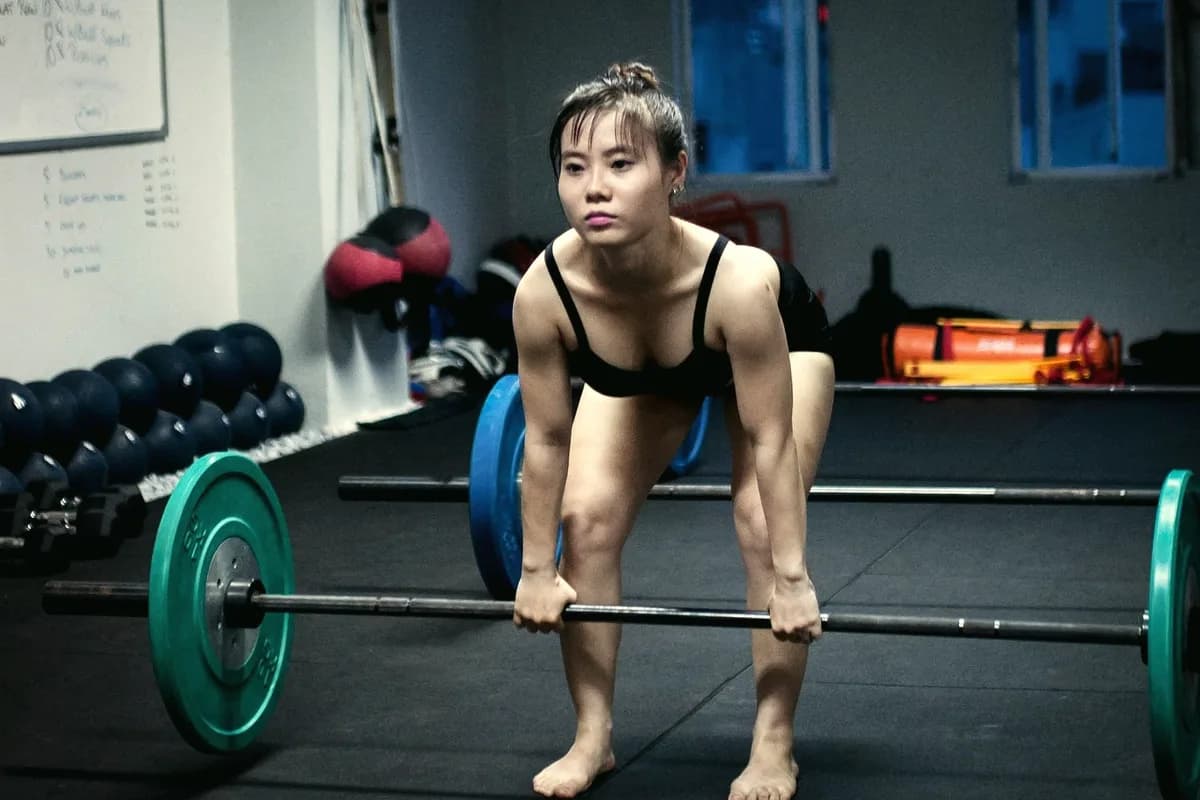
Photo: deadlift, Pixabay, Pixabay Content License. Colour-graded.
Side effects and who should be careful
Water weight and bloating
Creatine pulls water into muscle cells, so a gain of about 0.5 to 1.5 kg in the first weeks is common. This is not fat. Splitting a large loading dose, or skipping loading, makes stomach upset less likely.
Kidneys, hair and hormones
The International Society of Sports Nutrition position stand concludes that creatine is safe for healthy people at recommended doses, and its 2021 review of common myths found no good evidence that creatine damages healthy kidneys or causes hair loss. People with existing kidney disease are a different case and should only use creatine with medical advice. Creatine can slightly raise blood creatinine on a lab test, so tell your doctor you take it.
[Kreider et al., "International Society of Sports Nutrition position stand: safety and efficacy of creatine supplementation in exercise, sport, and medicine," Journal of the International Society of Sports Nutrition, 2017. PMID: 28615996]Pregnancy and breastfeeding
There is early interest in creatine during pregnancy, but there are no large safety trials. Until there are, it is sensible not to start creatine while pregnant or breastfeeding unless your doctor recommends it.
What the research does not show yet
- Whether creatine changes mood or memory in healthy women. Some small studies are promising, but they are too few and too short to rely on.
- Whether the menstrual cycle or hormonal contraception changes how well creatine works.
- Long-term effects of creatine during perimenopause specifically.
For a broader look at which supplements have solid evidence, see our guide to performance supplements that actually work and our full creatine guide.
Frequently Asked Questions
Is creatine safe for women?
For healthy women, creatine monohydrate at 3 to 5 grams a day has a strong safety record. Trials in postmenopausal women lasting up to two years found side effects similar to placebo and no change in kidney markers. Avoid it, or ask your doctor first, if you have kidney disease or are pregnant or breastfeeding.
Will creatine make women look bulky?
No. Creatine adds a little water to muscle and can help you train slightly harder, but muscle growth in women is gradual and depends mostly on training and protein. Any early scale change is usually water, not fat.
How much creatine should a woman take a day?
Most research uses 3 to 5 grams of creatine monohydrate a day. In postmenopausal women, benefits were clearest at 5 grams a day combined with resistance training. A loading phase is optional.
Does creatine help with menopause?
It may help with the muscle and strength loss that speeds up after menopause, when combined with strength training. A 2026 meta-analysis found modest gains in lean mass and leg strength. It does not treat other menopause symptoms such as hot flushes.
Does creatine increase bone density in women?
Not on its own, based on the best trials. Two two-year randomized trials in postmenopausal women found no difference in bone mineral density versus placebo, although one found small benefits in bone shape measures linked to strength.
When is the best time to take creatine?
Any time of day you will remember. Daily consistency matters more than timing. Many people take it with a meal or after training for convenience.
Rate this article
Click on a star to rate this article
Keep Reading
Performance Supplements That Actually Work: The Short List
The IOC names only four categories with good evidence: caffeine, creatine, buffering agents and nitrate. What that leaves out, and what it includes.
Read article →
supplementsCreatine: 3g Daily — Skip the Loading Phase
Learn why creatine loading is unnecessary. 3g daily saturates muscle in 28 days. Evidence-based dosing strategy from sports nutrition experts.
Read article →
supplementsCreatine Supplements: Benefits, Dosage and Safety Guide
Comprehensive guide to creatine supplementation including mechanisms, proven benefits, optimal dosing, safety profile, and myths debunked with research.
Read article →

Vitality & Strength Editorial Team
Independent research synthesists — not licensed clinicians
Independent health writers and research synthesists. We are not doctors or registered dietitians; every claim we publish is sourced and linked to primary research, and we take no affiliate or industry money.