Performance Supplements That Actually Work
The short list of supplements with real, replicated evidence - creatine, caffeine, L-theanine, magnesium, omega-3 - the doses, and what to skip.
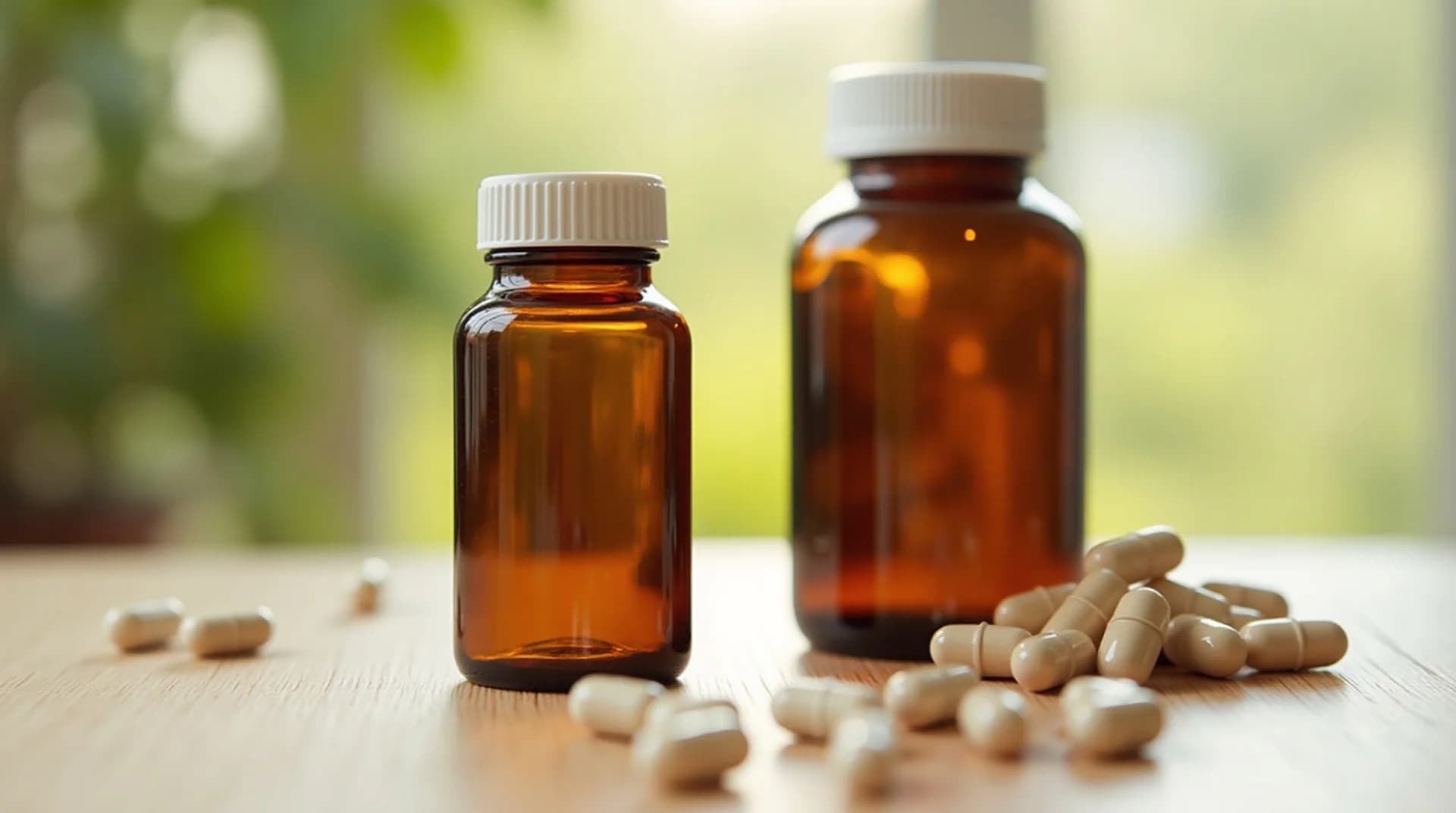
The supplement aisle sells certainty. The research offers something narrower: a short list of compounds with real, replicated effects, surrounded by a much longer list of expensive maybes. This guide is the short list — what the evidence actually supports, at what dose, for whom — and an honest accounting of what to skip.
How we evaluate · Last reviewed June 2026 Every recommendation here is cited inline to human randomized controlled trials or professional position stands — not cell studies, not testimonials. We flag what doesn't work as readily as what does, and we hold no affiliate relationships with any product named. Written and maintained by the Vitality & Strength editorial team — evidence-led, not sponsored.
How to judge a supplement (the bar)
Before any product earns a place in your routine, it should clear three questions. Is there human randomized-controlled-trial evidence — not cell cultures or rodent studies? Is the effect size meaningful, not merely statistically significant? And do you specifically need it, given that most supplements only help if you have a deficiency or a performance ceiling they actually address?
Almost everything below is judged against that bar. Most of the aisle never clears it. The compounds that do tend to share a profile: decades of trials, professional bodies willing to put their name on a position stand, and effects you can measure rather than merely feel. Keep that profile in mind as a filter every time a new "breakthrough" supplement is marketed to you — the burden of proof sits with the product, not with your skepticism.
The compounds that actually work
Creatine monohydrate — the most evidence-backed supplement in sport. Decades of trials and the International Society of Sports Nutrition position stand support creatine for strength, power, and lean mass, with an exceptional safety record [1]. The practical questions — how much, and whether to "load" — are where most people overcomplicate things. The short version: a steady daily dose saturates muscle within a few weeks, and the loading phase is optional rather than necessary. The full breakdown is in our deep dive on creatine dosing: 3g vs 5g per day.
Caffeine — the best-studied legal ergogenic aid. The ISSN position stand documents reliable improvements in endurance, power output, and alertness across a wide range of doses and contexts [2]. The catch isn't whether it works — it's timing. Caffeine's long half-life means a mid-afternoon dose is still meaningfully circulating at bedtime, quietly taxing the sleep that drives your training. The mechanics, and the cutoff time that protects your sleep, are in caffeine's half-life math.
L-theanine — caffeine's best partner. On its own, the effects are modest. Paired with caffeine, the combination improves cognitive performance and attention while blunting the jitter and the crash, a synergy demonstrated in controlled trials [3]. If the downside of caffeine is the part you dislike, this is the evidence-based fix rather than a marketing one — see pairing L-theanine with caffeine.
Protein — a supplement only in convenience, not in magic. Meta-analyses confirm that protein supplementation augments the gains from resistance training [4], but the lever is total daily intake, not any particular powder or a 30-minute "anabolic window" [5]. Whey is simply a convenient way to hit your daily number; it is not doing anything a chicken breast or a serving of Greek yogurt wouldn't. The timing myth is dismantled in total daily protein beats the 30g window.
Magnesium — worth it if you're genuinely short on it. Many adults under-consume magnesium, and supplementation shows benefits for sleep quality in deficient older adults [6] and for subjective measures of anxiety and stress [7]. Form matters for both absorption and gastrointestinal side effects — the details are in magnesium for sleep and recovery and the form-by-form comparison in glycinate vs citrate vs threonate.
Omega-3 (EPA/DHA) — for the inflammation and recovery angle. Omega-3 fatty acids measurably modulate inflammatory processes [8], which underpins their use for recovery and joint comfort. They are most useful if your diet is genuinely low in fatty fish; if you eat salmon or sardines several times a week, a capsule adds little. See the omega-3 guide.
Ashwagandha — a real but modest stress lever. Randomized, placebo-controlled work shows reductions in perceived stress and cortisol [9]. It is not transformative, and it will not fix a chaotic schedule, but the signal is real and reasonably consistent — covered in ashwagandha: benefits, dosage, and side effects.
What's not worth your money (the honest part)
This is where most supplement guides go quiet, because the "doesn't work" list is bad for affiliate revenue. It is also where the real value to you sits.
BCAAs. The marketing claims branched-chain amino acids build muscle. In people eating adequate protein, they don't meaningfully drive muscle protein synthesis — you need the full set of essential amino acids, which complete protein already provides. The claim that BCAAs build muscle is, in the words of one review, closer to myth than reality [10]. If you eat enough protein, BCAAs are expensive flavored water.
Testosterone "boosters." The category is built on rodent data and proprietary blends. Human evidence for meaningful testosterone or performance increases in healthy men is thin to absent, and the few ingredients with any signal are better obtained from correcting sleep, body composition, and training.
Fat burners. Most are caffeine plus a handful of unproven additives. The caffeine does a little; the rest mostly does nothing you can feel, and the stimulant load can wreck the sleep that actually governs fat loss.
Most "recovery" and "greens" powders. These sell convenience and color, not efficacy. Real food and sleep outperform them, and the dose of any active ingredient is usually far below what a trial would use.
The pattern is consistent: if a supplement needs a proprietary blend, a loading ritual, and a wall of testimonials to sell itself, that is usually because the trial data cannot do the selling for it.
How to think about a stack
Start from deficiency and goal, not from a shopping list. For most people training seriously, the evidence-backed core is short: creatine daily, caffeine timed before key sessions, enough total protein, and magnesium if your intake runs low. Add omega-3 or ashwagandha only for their specific targets — inflammation and recovery, or stress and cortisol. Everything else is optional at best, and a great deal of it is optional at worst.
The honest summary is almost anticlimactic: a handful of cheap, well-studied compounds cover the vast majority of the real-world benefit, and the rest of the aisle is competing for the money those four leave on the table.
Dosing & timing quick-reference
A bookmarkable summary of everything above. Doses reflect the position stands and trials cited throughout — start at the low end and adjust.
| Supplement | Dose | When | Who needs it |
|---|---|---|---|
| Creatine monohydrate | 3–5 g daily | Any time | Anyone training hard |
| Caffeine | 3–6 mg/kg | 30–60 min pre-session | Most — mind the half-life |
| L-theanine | 100–200 mg | With caffeine | Jitter-prone caffeine users |
| Protein (total) | 1.6–2.2 g/kg daily | Across meals | Anyone building muscle |
| Magnesium | 200–400 mg | Evening | Low dietary intake |
| Omega-3 (EPA+DHA) | 1–2 g daily | With a meal | Low-fish diets |
| Ashwagandha | 300–600 mg daily | Consistent daily | High stress |
That's the whole guide in one screen: a handful of cheap, well-studied compounds at unglamorous doses. If a product can't fit on a row like this with a real number and a real reason, that's usually a sign.
What "third-party tested" actually means
Supplements aren't pre-approved by the FDA — manufacturers self-certify quality, and the agency only acts after problems surface. That makes independent third-party certification the real quality signal, not price or brand story. Look for NSF Certified for Sport and Informed Sport (both verify label accuracy and screen for banned substances — important for anyone drug-tested) and USP (verifies identity, potency, and purity). A seal means an outside lab confirmed that what's on the label is what's in the bottle.
The flip side is the proprietary blend, which lists a combined weight without disclosing each ingredient's dose — conveniently hiding whether any active is present in a meaningful amount. Treat proprietary blends as a reason for less trust, not more. For single-ingredient staples like creatine or magnesium, a certified generic beats a premium label every time.
Do I need supplements to build muscle? No. Muscle comes from progressive resistance training and adequate total protein — both achievable with food. Creatine adds a small real edge and protein powder is convenient, but neither rescues poor training, protein, or sleep. For most people, whole-food protein like a Greek yogurt bowl should come before any powder.
Is creatine safe long-term? It has one of the strongest safety records of any supplement: long-term use in healthy people shows no harm to kidney or liver function, per the ISSN position stand [1]. People with existing kidney disease should consult a clinician; the "creatine wrecks your kidneys" claim isn't supported in healthy users.
Are expensive supplement brands better? Rarely. For single-ingredient staples like creatine monohydrate or magnesium, the molecule is the molecule — price mostly buys branding. What matters is third-party testing (NSF or Informed Sport) for purity, not a premium label. A proprietary "blend" is a reason for less trust, not more.
Which supplements are a waste of money? For most people: BCAAs (you need complete protein, not branched-chain amino acids [10]), testosterone "boosters" (no meaningful human evidence in healthy men), most fat burners (caffeine plus filler), and greens or recovery powders (convenience, not efficacy).
References
- International Society of Sports Nutrition position stand: creatine supplementation
- International Society of Sports Nutrition position stand: caffeine and performance
- The combined effects of L-theanine and caffeine on cognitive performance and mood
- Protein supplementation and resistance-training adaptations: a systematic review and meta-analysis
- The effect of protein timing on muscle strength and hypertrophy: a meta-analysis
- The effect of magnesium supplementation on primary insomnia in the elderly: a double-blind RCT
- The effects of magnesium supplementation on subjective anxiety and stress: a systematic review
- Omega-3 polyunsaturated fatty acids and inflammatory processes
- A randomized, double-blind, placebo-controlled study of ashwagandha for stress
- Branched-chain amino acids and muscle protein synthesis in humans: myth or reality?
Rate this article
Click on a star to rate this article
Keep Reading
L-Theanine and Caffeine: The Stack That Kills Jitters
Pair l-theanine and caffeine to keep the focus and drop the jitters. Here is the research-backed ratio, dosing, timing, and why green tea already does it.
Read article →
supplementsMagnesium for Sleep: Glycinate vs Citrate vs Threonate
Compare magnesium for sleep across glycinate, citrate, and threonate forms: absorption rates, dose ranges, side effects, and which form fits your goals.
Read article →
supplementsMagnesium: The Most Overlooked Mineral for Sleep
Discover how magnesium improves sleep quality, reduces muscle tension, and supports athletic recovery. Learn dosage, sources, and forms.
Read article →

Vitality & Strength Editorial Team
Independent research synthesists — not licensed clinicians
Independent health writers and research synthesists. We are not doctors or registered dietitians; every claim we publish is sourced and linked to primary research, and we take no affiliate or industry money.