GLP-1 Supplements: What the Trials Actually Show
GLP-1 supplements promise natural Ozempic, but what do trials show? Compare berberine, Akkermansia and plant membranes with semaglutide.

GLP-1 supplements are marketed as a natural version of Ozempic, but the trials behind them measure something very different from what the drugs do. GLP-1 is a gut hormone that slows digestion and tells the brain you are full, and prescription drugs copy it at high doses. Supplements such as berberine, Akkermansia and plant membrane extracts are only claimed to nudge your own GLP-1 upwards. This guide goes through what the human trials found, how big the effects were next to the real drugs, and what the evidence says about stopping them.
⚕️ Medical Disclaimer
This article is general information, not medical advice. Do not stop, skip or replace a prescribed medicine such as semaglutide or tirzepatide with a supplement. Berberine and other supplements can interact with medicines, so check with a doctor or pharmacist first, especially if you have diabetes, are pregnant or take other drugs.
The short version
- In the STEP 1 trial, 1,961 adults on semaglutide 2.4 mg lost a mean of 14.9% of body weight over 68 weeks, against 2.4% on placebo.
- A 2026 meta-analysis of 23 berberine trials found an average weight difference of -0.88 kg, which is statistically significant but small.
- A 2019 pilot trial of pasteurized Akkermansia found better insulin sensitivity, but the weight change of -2.27 kg did not reach statistical significance (P = 0.091).
- In a 2014 trial of 38 women, a plant membrane supplement was linked to 5.0 kg of weight loss versus 3.5 kg on placebo, alongside a higher post-meal GLP-1 release.
- No GLP-1 supplement has matched a GLP-1 drug in a head-to-head trial, and the supplement trials are small and short.

What GLP-1 drugs actually do
The STEP 1 trial randomized 1,961 adults with obesity, or overweight with a weight-related condition, and no diabetes to once-weekly semaglutide 2.4 mg or placebo for 68 weeks, both alongside a lifestyle programme. Mean weight change was -14.9% on semaglutide and -2.4% on placebo, a difference of -12.4 percentage points (95% CI -13.4 to -11.5). In kilograms that was -15.3 kg versus -2.6 kg. A loss of 5% or more was reached by 86.4% of the semaglutide group and 31.5% of the placebo group, and a loss of 15% or more by 50.5% versus 4.9%.
The drug also has costs. Nausea and diarrhea were the most common side effects, usually mild to moderate, and 4.5% of the semaglutide group stopped treatment because of gut symptoms compared with 0.8% on placebo. Our post on the Ozempic vision loss warning covers a rarer safety signal that regulators have been reviewing.
That is the benchmark. Any of the GLP-1 supplements described as "natural Ozempic" should be judged against a roughly 15% average loss, not against zero.
What GLP-1 supplements actually are
No GLP-1 supplement is a GLP-1 drug. The drugs are receptor agonists given at pharmacological doses. A supplement can at most influence how much GLP-1 your own gut cells release after a meal, through effects on the microbiome, on gut sensing or on digestion. So the real questions are whether any of them raises GLP-1 in people, and whether that translates into weight loss that matters.
Berberine as a GLP-1 supplement
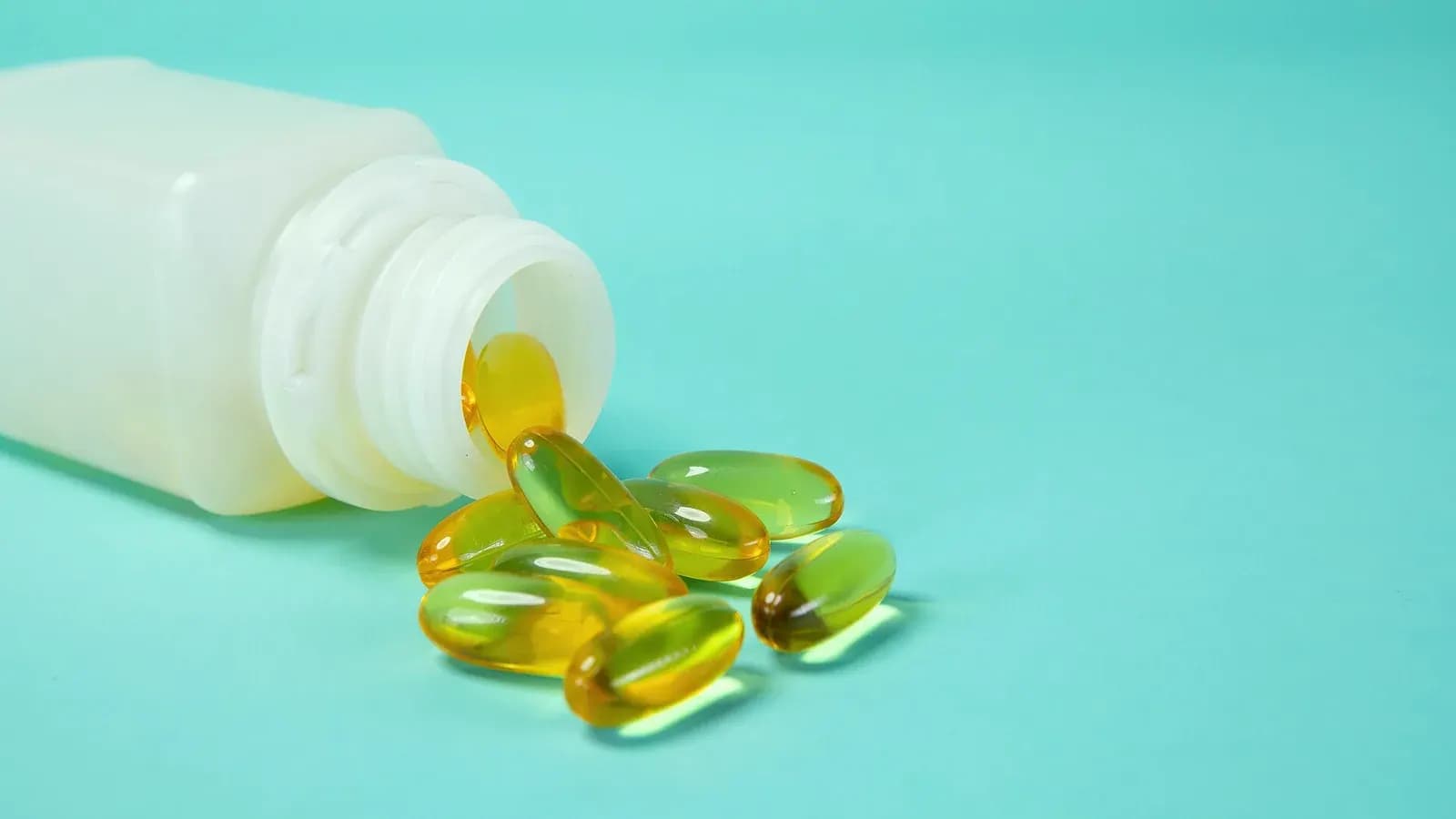
Berberine is a plant alkaloid that gets most of the "natural Ozempic" attention among GLP-1 supplements. The human evidence is mixed. A 2020 meta-analysis of 12 trials with 849 participants found no significant change in body weight (-0.11 kg) or BMI, though waist-to-hip ratio fell significantly. A newer 2026 meta-analysis in the International Journal of Obesity pooled 23 trials and found small but significant reductions: body weight -0.88 kg (95% CI -1.36 to -0.39), BMI -0.48 kg/m2 and waist circumference -1.32 cm, with no significant change in waist-to-hip ratio. The authors call for better reporting of purity, potency and dose, and for fewer biases such as lack of blinding.
The GLP-1 link comes mainly from animal work. A 2014 study in diabetic rats found that berberine lowered blood glucose and increased post-meal GLP-1, and suggested the ileum may be where it acts. Rats are not people, and berberine is poorly absorbed, with a 2025 review putting its bioavailability below 1%. Our full guide to berberine benefits goes through blood sugar results and the side effects.
Akkermansia as a GLP-1 supplement
Akkermansia muciniphila is a gut bacterium that is often lower in people with obesity. A 2019 randomized, double-blind pilot study in Nature Medicine enrolled 40 overweight or obese insulin-resistant volunteers (32 completed) and gave them 10^10 bacteria a day, live or pasteurized, for three months. It was safe and well tolerated. Compared with placebo, the pasteurized form improved insulin sensitivity (+28.62%, P = 0.002), lowered insulin levels (-34.08%) and total cholesterol (-8.68%). Weight fell by 2.27 kg versus placebo, but that was not statistically significant (P = 0.091), and the overall gut microbiome structure did not change.
A larger 2026 randomized trial in Nature Medicine tested pasteurized Akkermansia MucT after weight loss. At the end of the maintenance period the MucT group had regained 1.2 kg and the placebo group 3.2 kg (P = 0.012), and net weight loss from baseline was 3.1 kg greater with MucT. The study ran for a relatively short time, and several authors are linked to the company that makes the strain, which is worth knowing when reading the result. It points toward a maintenance role, not a dramatic weight-loss one.
Plant membranes (thylakoids) as GLP-1 supplements
A 2014 randomized trial gave 38 women aged 40 to 65 either 5 g of green-plant membranes or placebo before breakfast for 12 weeks, alongside advice to eat three meals and be more active. Weight loss was 5.0 kg versus 3.5 kg (P < 0.01), LDL and total cholesterol fell more, urge for sweet food dropped, and post-breakfast GLP-1 release was higher in the supplement group. Waist circumference, body fat and leptin did not differ between groups. It is one small trial, and 1.5 kg of extra loss over 12 weeks is nowhere near a drug effect.
What is missing from the GLP-1 supplements headlines
Three gaps matter more than any single result when judging GLP-1 supplements.
- Size. The best signals from GLP-1 supplements are one to four kilograms, while semaglutide averaged 15 kg in STEP 1.
- Duration and numbers. Most supplement trials last 12 weeks or less and enroll dozens of people, not thousands.
- Head-to-head data. We did not find a trial comparing a supplement directly with a GLP-1 drug, so any claim of equivalence is unsupported.
Fibre-rich eating is the most practical food-based habit with a plausible link to fullness. Our guides on psyllium husk and cholesterol and fiber math explain what those trials measured, and walking after meals covers a free habit for post-meal glucose.
If you are stopping a GLP-1 drug
A 2026 systematic review of 18 reports found that weight regain is frequent after stopping GLP-1 based drugs. In the STEP 4 withdrawal trial, people switched from semaglutide to placebo gained 6.9% over 48 weeks, and in SURMOUNT-4 people switched from tirzepatide to placebo gained 14.0% over 52 weeks. In the STEP 1 extension, participants regained about two-thirds of their earlier loss within a year. The review found one randomized study supporting supervised exercise, where the exercise plus liraglutide group kept an additional 5.1 kg of loss a year after treatment ended, and it noted that no eligible controlled trial isolated a specific diet after stopping. GLP-1 supplements were not shown to prevent regain, other than the single Akkermansia trial above, which tested people after ordinary diet-based weight loss, not after a drug.
Our post on protein timing and total daily intake is relevant for anyone trying to hold on to muscle while losing weight.
Key takeaway
GLP-1 supplements can be judged by their trials, and the trials show small effects: under a kilogram to a few kilograms, over weeks to months. Berberine has the most data and the smallest average weight change. Akkermansia and plant membranes have interesting results from small studies, some with industry links. None of these GLP-1 supplements replaces a prescribed drug. If you want to lose weight, a doctor can discuss all options, and the habits with the best support are boring ones: fibre, protein, movement and sleep.
Frequently Asked Questions
Do GLP-1 supplements work like Ozempic?
No. Ozempic is semaglutide, a drug that activates GLP-1 receptors at high doses. In STEP 1 it produced an average loss of 14.9% of body weight over 68 weeks. Supplements are only claimed to influence your own GLP-1 release, and the best-studied one, berberine, averaged about 0.88 kg of weight loss in a 2026 meta-analysis of 23 trials.
Does berberine raise GLP-1?
The evidence for raising GLP-1 comes mainly from a 2014 rat study, where berberine increased post-meal GLP-1 in diabetic rats. We did not find a human trial in this review that shows berberine reliably raises GLP-1 and that this explains weight loss. Berberine is also poorly absorbed, with bioavailability reported below 1%.
Does Akkermansia help with weight loss?
Results are early. A 2019 pilot of 40 volunteers found better insulin sensitivity with pasteurized Akkermansia, but the weight change of 2.27 kg was not statistically significant. A 2026 trial found less weight regain after weight loss (1.2 kg versus 3.2 kg), but several authors are linked to the strain's manufacturer.
Can supplements stop weight regain after stopping Ozempic?
There is no good evidence that they can. A 2026 systematic review found weight regain is frequent after stopping GLP-1 drugs, for example +6.9% over 48 weeks after stopping semaglutide in STEP 4. The only randomized strategy it found with support was supervised exercise, and it found no controlled trial of a specific diet after stopping.
Are GLP-1 supplements safe to take?
Short trials of Akkermansia and plant membranes reported them as well tolerated, but the studies are small. Supplements are not tested like medicines, and berberine can interact with other drugs. Ask a doctor or pharmacist before starting one, and never replace a prescribed medicine with a supplement.
References
[Wilding et al., "Once-Weekly Semaglutide in Adults with Overweight or Obesity" (STEP 1), New England Journal of Medicine, 2021. PMID 33567185] [Elahi Vahed et al., "The effect of berberine on obesity indices: a systematic review and meta-analysis," International Journal of Obesity, 2026. PMID 41310257] [Amini et al., "Effects of berberine and barberry on anthropometric measures: A systematic review and meta-analysis of randomized controlled trials," Complementary Therapies in Medicine, 2020. PMID 32147051] ["Berberine moderates glucose metabolism through the GnRH-GLP-1 and MAPK pathways in the intestine," 2014. PMID 24912407] ["Berberine as a multi-target therapeutic agent for obesity: from pharmacological mechanisms to clinical evidence," 2025. PMID 40506769] [Depommier et al., "Supplementation with Akkermansia muciniphila in overweight and obese human volunteers: a proof-of-concept exploratory study," Nature Medicine, 2019. PMID 31263284] [Mount et al., "Pasteurized Akkermansia muciniphila Muc(T) for weight loss maintenance in people with overweight and obesity: a controlled randomized trial," Nature Medicine, 2026. PMID 42120725] ["Body weight loss, reduced urge for palatable food and increased release of GLP-1 through daily supplementation with green-plant membranes for three months in overweight women," 2014. PMID 24993695] ["Weight Regain After Discontinuation of GLP-1 and GIP/GLP-1 Receptor Agonists: A Systematic Review," 2026. PMID 42941232] [Photo: Jernej Furman, CC BY 2.0, via Wikimedia Commons (modified)]Rate this article
Click on a star to rate this article
Keep Reading
Ozempic and Vision Loss: What the New FDA NAION Warning Means
Ozempic vision loss: the FDA now requires an eye-risk warning on Ozempic, Wegovy, Zepbound and other GLP-1 drugs. What NAION is, its signs and what to do.
Read article →
weight managementApple Cider Vinegar: What the Research Shows
Apple cider vinegar for blood sugar and weight: what recent meta-analyses found, a retracted trial, and the risks to teeth, throat and medicines.
Read article →
weight managementHow to Boost Your Metabolism: What Works and What's a Rounding Error
Muscle burns 13 kcal/kg/day, not 50 per pound. Green tea moved weight by 0.04 kg. NEAT is worth up to 2,000. The numbers, in order.
Read article →

Vitality & Strength Editorial Team
Independent research synthesists — not licensed clinicians
Independent health writers and research synthesists. We are not doctors or registered dietitians; every claim we publish is sourced and linked to primary research, and we take no affiliate or industry money.