Vitamin K2 for Bones: What the Research Shows
Vitamin K2 and bone health: what meta-analyses found for bone density and fractures, how it interacts with warfarin, and who should ask a doctor first.

Vitamin K2 has become a popular add-on to calcium and vitamin D for people worried about bone loss after menopause. The idea is simple: vitamin K2 helps a bone protein called osteocalcin work properly. Whether that translates into stronger bones and fewer fractures is less simple. This guide explains what the best recent meta-analyses and trials found, where the results disagree, and who should speak to a doctor before taking it.
⚕️ Medical Disclaimer
This article is general information, not medical advice. Vitamin K affects blood clotting, so anyone taking warfarin or another vitamin K antagonist must speak to their doctor or pharmacist before starting a vitamin K2 supplement. Do not stop or change osteoporosis treatment because of what you read here. A broken bone, new back pain after a minor fall, or a sudden loss of height needs medical assessment.
The short version
- Vitamin K2 helps activate osteocalcin, a protein that binds calcium in bone. Trials reliably show that K2 supplements change the blood markers linked to this process.
- A 2022 meta-analysis of 16 randomised trials with 6,425 participants found that K2 improved lumbar spine bone mineral density in postmenopausal women.
- Fracture results are less clear. Two meta-analyses found no statistically significant overall reduction in fractures.
- A three-year trial of 180 micrograms of menaquinone-7 a day slowed the loss of bone density in healthy postmenopausal women, but a trial in early menopausal women found no effect on bone loss.
- Vitamin K2 is not a replacement for osteoporosis treatment, and it needs a doctor's input if you take warfarin.
What is vitamin K2?
Vitamin K is a family of fat-soluble vitamins. Vitamin K1, called phylloquinone, comes mainly from leafy green vegetables such as kale and spinach. Vitamin K2 is a group of related compounds called menaquinones, written MK-4, MK-7 and so on. Some are made by bacteria, which is why fermented foods such as natto, a Japanese dish of fermented soybeans, are a well-known source of K2.

Vitamin K acts as a helper for an enzyme that adds a chemical group to certain proteins, a step called carboxylation. One of those proteins is osteocalcin, made by bone-building cells. Carboxylated osteocalcin can bind to the mineral in bone, while the uncarboxylated form (ucOC) cannot. A high share of uncarboxylated osteocalcin is therefore used as a marker of low vitamin K status in bone.
How vitamin K2 affects bone markers
The most consistent finding is on these markers. A 2025 systematic review and meta-analysis in Frontiers in Endocrinology pooled nine randomised trials with 2,570 postmenopausal women with osteoporosis. Vitamin K2 raised osteocalcin and bone-specific alkaline phosphatase, and it lowered undercarboxylated osteocalcin. It also produced a small, statistically significant drop in CTX, a marker of bone breakdown, although the authors described its clinical relevance as uncertain. The review concluded that long-term studies are still needed to confirm benefits such as higher bone density.
[Zhang Z et al., Front Endocrinol, 2025, effect of vitamin K2 supplementation on bone turnover biochemical markers in postmenopausal osteoporosis patients: a systematic review and meta-analysis.]A change in a blood marker is not the same as a stronger skeleton. The next question is whether bone density and fractures actually change.
Vitamin K2 and bone density: what the trials found
The 2022 meta-analysis of 16 trials
A 2022 meta-analysis in Frontiers in Public Health pooled 16 randomised trials with 6,425 participants. Vitamin K2 was linked with a significant improvement in lumbar spine bone mineral density, and the effect was also seen when K2 was combined with other treatments. K2 lowered undercarboxylated osteocalcin as well. The review reported no significant difference in adverse reactions between the vitamin K2 and control groups.
[Ma ML et al., Front Public Health, 2022, efficacy of vitamin K2 in the prevention and treatment of postmenopausal osteoporosis: a systematic review and meta-analysis of randomized controlled trials.]The 2019 review of menatetrenone
A 2019 review in Osteoporosis International looked at menatetrenone, the MK-4 form of K2 used in Japan as an osteoporosis medicine. It included 18 randomised trials with 8,882 patients. Compared with placebo, menatetrenone improved lumbar bone density by an average of 0.05 g/cm2 in five studies with 658 patients, and it lowered the ucOC to osteocalcin ratio. However, the authors noted that its benefit for fracture risk was uncertain.
[Su S et al., Osteoporos Int, 2019, the efficacy and safety of menatetrenone in the management of osteoporosis: a systematic review and meta-analysis of randomized controlled trials.]The three-year menaquinone-7 trial
One of the most cited single trials gave 244 healthy postmenopausal women either a placebo or 180 micrograms of MK-7 a day for three years. Bone mineral density was measured by DXA scan. MK-7 improved vitamin K status and reduced the age-related decline in bone mineral content and bone density at the lumbar spine and femoral neck, but not at the total hip. It also reduced the loss of height in the lower thoracic vertebrae. The authors concluded that low-dose MK-7 may help postmenopausal women prevent bone loss, and noted that the results may not apply to men or children.
[Knapen MH et al., Osteoporos Int, 2013, three-year low-dose menaquinone-7 supplementation helps decrease bone loss in healthy postmenopausal women.]A trial with a different result
Not every trial agrees. A randomised, double-blind, placebo-controlled trial in early menopausal women, published in Osteoporosis International in 2010, reported that vitamin K2 supplementation did not influence bone loss. This is one reason the overall picture is described as promising but not settled.
[Emaus N et al., Osteoporos Int, 2010, vitamin K2 supplementation does not influence bone loss in early menopausal women: a randomised double-blind placebo-controlled trial.]Does vitamin K2 prevent fractures?
Fractures are the outcome that matters most, and the evidence here is weaker. In the 2022 meta-analysis, six trials found no significant difference in fracture incidence between K2 and control groups (risk ratio 0.96). When the authors removed one trial that was very different from the others, the pooled result showed a lower fracture rate (risk ratio 0.43), but that kind of post hoc exclusion should be treated carefully. The 2019 menatetrenone review found a non-significant lower risk of vertebral fracture (risk ratio 0.87, 95% confidence interval 0.64 to 1.20).
In plain terms, vitamin K2 may modestly help bone density, but no meta-analysis here proved that it prevents fractures. Strong proven options for people at risk, such as prescribed osteoporosis medicines, vitamin D and calcium when intake is low, and resistance exercise, remain the first line.

Vitamin K2 and blood vessels
Vitamin K also activates a protein that helps stop calcium building up in artery walls, called matrix Gla protein. A 2025 post hoc analysis of a one-year trial gave 165 women with low vitamin K status either 180 micrograms of MK-7 a day or a placebo. In post-menopausal women, MK-7 significantly reduced the rise in vascular stiffness compared with placebo, and it lowered a marker of poorly activated matrix Gla protein. Women who started with higher stiffness also had improved blood pressure measures. The authors said more research is needed, so this is an interesting signal rather than proof that K2 protects the heart.
[de Vries F et al., Nutrients, 2025, effects of one-year menaquinone-7 supplementation on vascular stiffness and blood pressure in post-menopausal women.]Safety and interactions
In the 2022 meta-analysis, adverse reactions did not differ between the K2 and control groups. The 2019 menatetrenone review was less reassuring: it found more adverse events than placebo (risk ratio 1.47) and more adverse drug reactions (risk ratio 1.29), although serious adverse events did not differ significantly. The doses used in Japan are much higher than those in most supplements, so the figures are not directly comparable.
The main safety issue is medication. Vitamin K is what warfarin works against, so a change in vitamin K intake can change how well warfarin works. A 2016 systematic review of dietary vitamin K and warfarin found conflicting evidence and concluded that restricting vitamin K-rich foods is not a good way to improve anticoagulation. It suggested that keeping eating habits stable matters more than avoiding greens. That review excluded studies of vitamin K supplements, so it does not make supplements safe for people on warfarin. If you take any blood thinner, talk to your doctor or pharmacist before starting K2.
[Violi F et al., Medicine (Baltimore), 2016, interaction between dietary vitamin K intake and anticoagulation by vitamin K antagonists: is it really true? A systematic review.]What to do first for bone health
For most people, the foundations come before any supplement: regular resistance exercise, enough protein, enough vitamin D, not smoking and limiting alcohol. Our guide to strength training for beginners is a practical start, and a daily walk, covered in the benefits of morning walking, adds load to the bones of the legs. If you are unsure whether your vitamin D level is adequate, read vitamin D deficiency signs and solutions and our look at vitamin D dosage. Another popular bone and joint supplement is reviewed in collagen peptides: what the research shows.
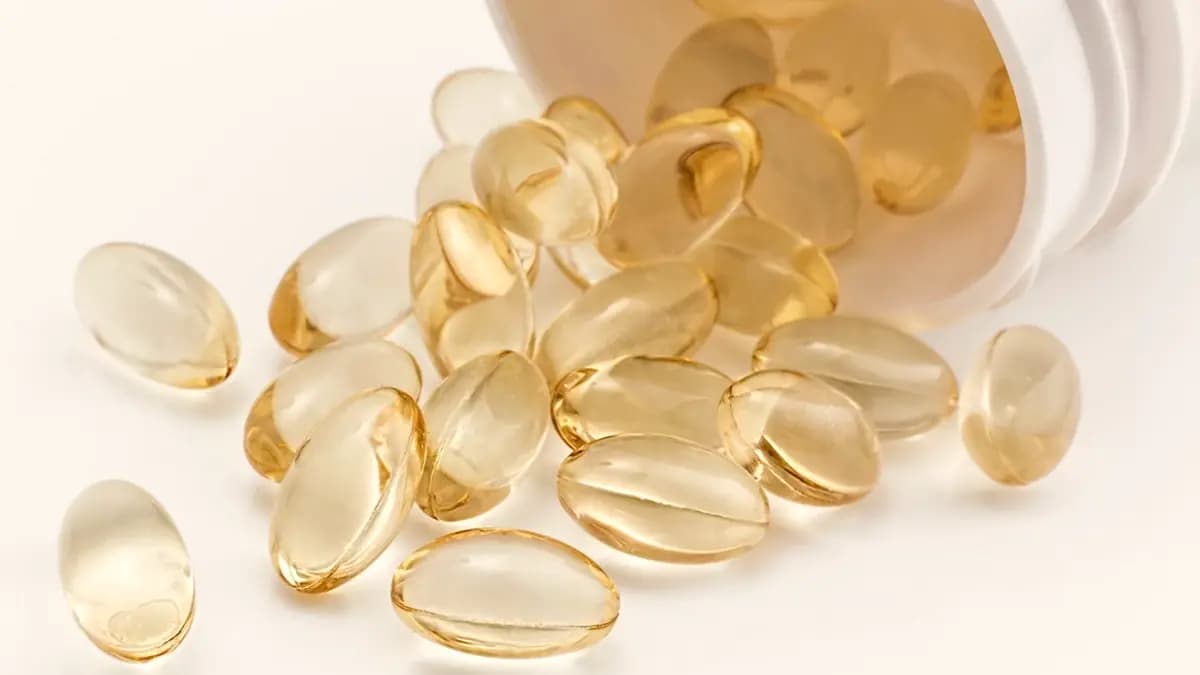
If you do want to try vitamin K2, the 3-year trial used 180 micrograms of MK-7 a day. Because the vitamin is fat-soluble, it is usually taken with a meal that contains some fat. Ask a doctor or pharmacist first if you take blood thinners, have a clotting disorder, or are pregnant or breastfeeding.
Frequently Asked Questions
Does vitamin K2 improve bone density?
It may help modestly. A 2022 meta-analysis of 16 randomised trials found a significant improvement in lumbar spine bone mineral density in postmenopausal women, and a 2019 review found an average gain of 0.05 g/cm2 with menatetrenone. However, a trial in early menopausal women found no effect on bone loss, so the evidence is not unanimous.
Does vitamin K2 prevent fractures?
This has not been shown clearly. A 2022 meta-analysis of six trials found no significant overall difference in fracture rates, and a 2019 review found a non-significant lower risk of vertebral fracture. Do not rely on K2 alone if you have been told you are at high risk of fractures.
What is the difference between vitamin K1 and vitamin K2?
Vitamin K1 (phylloquinone) comes mainly from leafy green vegetables. Vitamin K2 is a group of compounds called menaquinones, such as MK-4 and MK-7, found in some fermented foods like natto and made by gut bacteria. Both are forms of vitamin K, but trials of K2 supplements are what this article reviews.
How much vitamin K2 should I take?
There is no single proven dose. The three-year trial in postmenopausal women used 180 micrograms of MK-7 a day, while the Japanese menatetrenone studies used much higher doses of MK-4. Ask a doctor or pharmacist for advice, especially if you take regular medicines.
Can I take vitamin K2 with warfarin?
Only on medical advice. Vitamin K is what warfarin works against, so a supplement can change how well it works. A 2016 review found that stable dietary habits matter more than avoiding vitamin K-rich foods, but it did not cover supplements. Speak to your doctor or pharmacist before starting K2.
Does vitamin K2 help the heart and arteries?
There is early evidence only. A 2025 analysis of a one-year trial found that 180 micrograms of MK-7 a day reduced the rise in vascular stiffness in post-menopausal women compared with placebo. The authors said more research is needed, so it should not be treated as a heart protection supplement.
Rate this article
Click on a star to rate this article
Keep Reading
Creatine for Women: What the Research Shows
Creatine for women: what studies show on strength, menopause and bone, the dose that works (3 to 5 g a day), side effects and who should avoid it.
Read article →
supplementsCoenzyme Q10 (CoQ10): What the Research Shows
Coenzyme Q10: what meta-analyses found for statin muscle pain and heart failure, what the trials did not show, and who should ask a doctor first.
Read article →
supplementsGinger and Nausea: What the Research Shows
Does ginger help nausea? Two 2026 reviews on chemotherapy and pregnancy found promising but inconclusive evidence. What they show and when to see a doctor.
Read article →

Vitality & Strength Editorial Team
Independent research synthesists — not licensed clinicians
Independent health writers and research synthesists. We are not doctors or registered dietitians; every claim we publish is sourced and linked to primary research, and we take no affiliate or industry money.