Beta-Alanine Supplements: What the Research Shows
Does beta-alanine work? A review of meta-analyses on performance, repeated sprints, strength, women, older adults, dosing, tingling and safety.
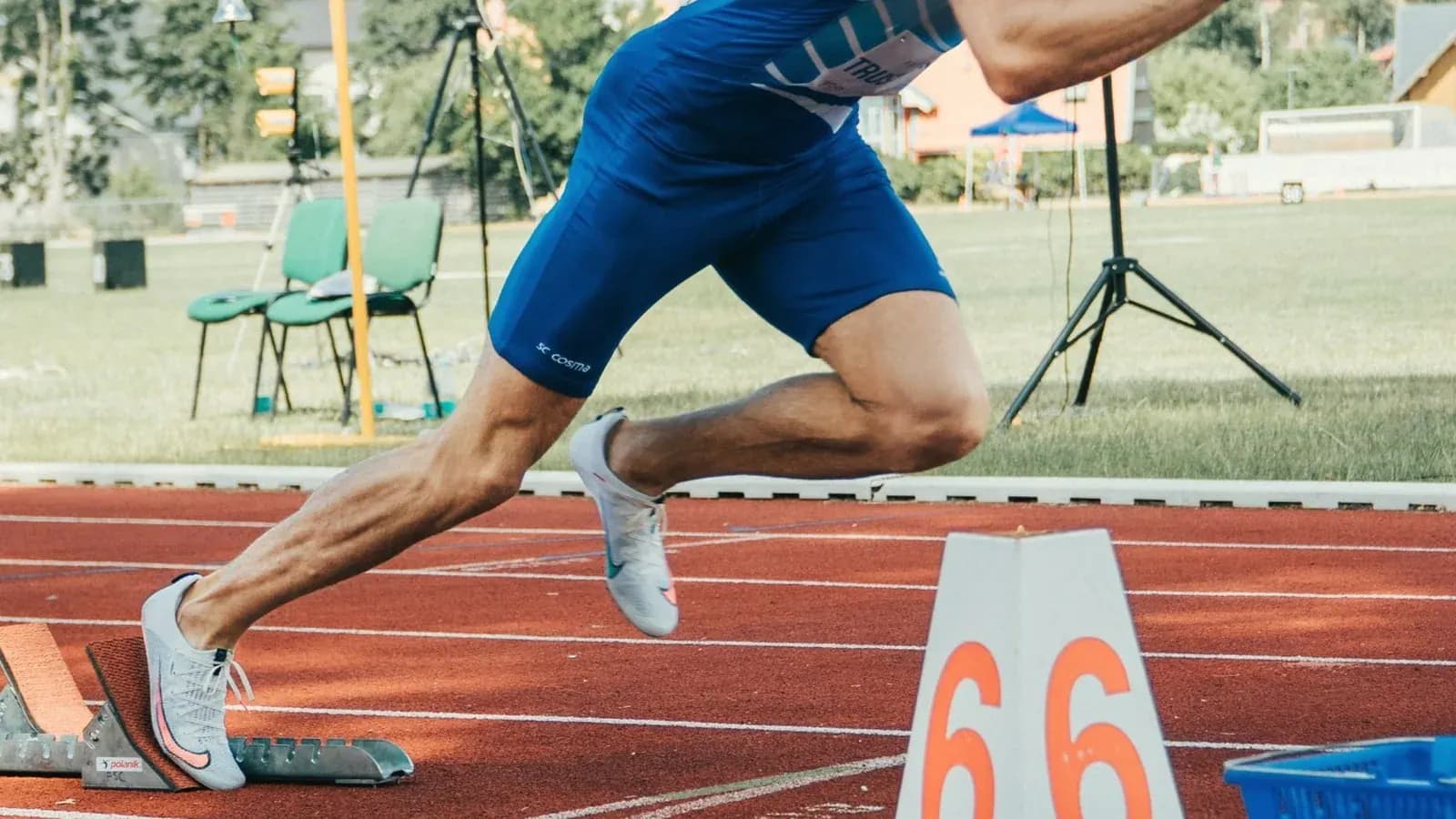
Beta-alanine is one of the most popular pre-workout ingredients, and it is also the one that makes your skin tingle. The claim is that it helps you push through hard efforts by buffering acid in your muscles. This guide goes through recent meta-analyses and reviews to show where beta-alanine seems to help, where it does not, and what the research says about dose and safety.
⚕️ Medical Disclaimer
This article is general information, not medical advice. Ask a doctor or pharmacist before taking beta-alanine if you are pregnant or breastfeeding, have a medical condition, take regular medicines, or are under 18. Supplements are not a substitute for training, sleep and a balanced diet.
The short version
- A 2024 meta-analysis of 18 studies in trained young men found a small to moderate benefit for efforts lasting 0.5 to 10 minutes (overall effect size 0.39), with the clearest effects for 4 to 10 minutes of maximal effort.
- A 2026 meta-analysis of 17 trials found no improvement in repeated sprint ability, including mean performance, peak performance and fatigue decrement.
- A 2026 meta-analysis in women found a benefit for time to exhaustion, but the certainty of evidence was very low for all outcomes.
- A 2025 review in older adults found that exercise capacity may improve, while muscle strength and functional performance do not seem to.
- The International Society of Sports Nutrition says the only reported side effect is paraesthesia, a tingling sensation, which can be reduced with smaller divided doses or a sustained-release form.
What is beta-alanine?
Beta-alanine is a non-essential amino acid. Your body combines it with histidine to make carnosine, a compound stored in muscle that helps buffer the hydrogen ions produced during intense exercise. In theory, more carnosine means you can tolerate high-intensity effort a little longer before fatigue sets in. The International Society of Sports Nutrition position stand reports that four weeks of beta-alanine supplementation at 4 to 6 g daily significantly raises muscle carnosine concentrations.

Does beta-alanine improve performance?
The best evidence is for hard efforts that last a few minutes. A 2024 systematic review and meta-analysis in the International Journal of Sport Nutrition and Exercise Metabolism by Georgiou and colleagues analysed 18 randomised, placebo-controlled trials in 331 trained young men. Beta-alanine produced a significant overall effect size of 0.39 (95% CI 0.09 to 0.69). The effect was clearer after 4 weeks of supplementation (0.34), for efforts lasting 4 to 10 minutes (0.55) and at a high daily dose of 5.6 to 6.4 g (0.35).
The International Society of Sports Nutrition reached a similar conclusion, saying that 4 to 6 g a day for at least 2 to 4 weeks improves exercise performance, with more pronounced effects in tasks of 1 to 4 minutes. The same position stand says more research is needed on strength and on endurance beyond 25 minutes.
What about repeated sprints?
Here the evidence is negative. A 2026 systematic review and multilevel meta-analysis in Frontiers in Nutrition by Liang and colleagues pooled 17 randomised controlled trials of at least two weeks of beta-alanine versus placebo in healthy people. There were no significant improvements in mean repeated sprint performance (SMD -0.018), peak performance (SMD 0.205) or fatigue decrement (SMD -0.020), and the results were not meaningfully changed by dose, duration, exercise type or training status. The authors suggest that very short sprints depend more on phosphocreatine and oxidative recovery than on the acid buffering that carnosine provides.
Does it help strength training, and how should it be dosed?
The results for strength and power are less consistent. A 2025 systematic review in the Journal of the International Society of Sports Nutrition by Ong and colleagues looked at nine studies with 197 resistance-trained people, focusing on dosing. Daily doses of 4 to 6.4 g, especially when split into small servings such as 0.8 g several times a day, were more likely to improve strength and power outcomes. Studies that used sustained-release products, single large servings or low-stress training often failed to show improvements. The authors concluded that divided doses of 4 to 6.4 g a day over 5 to 8 weeks may work best, particularly during high-volume training with short rests. This is a review of nine studies, not a recommendation for any individual.
What about women and older adults?
Most research has been done in men. A 2026 systematic review and meta-analysis in Frontiers in Nutrition by Gu and colleagues pooled 11 randomised trials in 312 women. Beta-alanine improved time to exhaustion (SMD 0.49, 95% CI 0.20 to 0.79), but it did not show clear pooled effects on peak power, anaerobic performance, VO2max or body fat percentage. The authors rated the certainty of evidence as very low for all outcomes because of risk of bias, imprecision and publication bias.
In older adults, a 2025 systematic review in the Journal of Aging and Physical Activity by de Camargo and Brigatto included only five studies with 163 people averaging 69 years. Exercise capacity may improve with 2.4 to 3.2 g a day, but muscle strength and functional performance do not seem to improve. With so few studies, these conclusions are tentative.
Is beta-alanine safe?
The International Society of Sports Nutrition says beta-alanine appears to be safe in healthy people at recommended doses. The only reported side effect is paraesthesia, a tingling sensation that is harmless but can be unpleasant. Studies indicate that it can be reduced by using divided lower doses of around 1.6 g or a sustained-release formula. These conclusions come from a 2015 position stand, and long-term safety in other groups is less well studied, so people with medical conditions should check with a professional.
What should you do?
Beta-alanine is best suited to hard efforts of roughly one to ten minutes, such as rowing, middle-distance running or high-rep sets, and it needs weeks of loading to work, so it is not a pre-workout stimulant. It is unlikely to help short repeated sprints, and the evidence for strength is mixed. Compare it with other supplements: see creatine monohydrate and creatine for women, citrulline and performance supplements that actually work.
The bottom line
Beta-alanine has a small but real benefit for hard efforts lasting one to ten minutes in trained people, mainly after several weeks of divided daily doses. It does not help repeated sprints, the evidence in women and older adults is thin, and the main side effect is tingling. If you try it, treat it as a minor extra on top of training, not a shortcut.
References
[Georgiou GD et al., "Effect of Beta-Alanine Supplementation on Maximal Intensity Exercise in Trained Young Male Individuals: A Systematic Review and Meta-Analysis," International Journal of Sport Nutrition and Exercise Metabolism, 2024. PMID: 39032921] [Liang W et al., "No ergogenic effect of beta-alanine on repeated sprint ability: a systematic review and multilevel meta-analysis of randomized controlled trials," Frontiers in Nutrition, 2026. PMID: 41971372] [Ong SW et al., "Dosing strategies for beta-alanine supplementation in strength and power performance: a systematic review," Journal of the International Society of Sports Nutrition, 2025. PMID: 40995761] [Gu J et al., "Effects of beta-alanine supplementation on exercise performance and related physiological outcomes in women: a systematic review and meta-analysis," Frontiers in Nutrition, 2026. PMID: 42370349] [de Camargo JBB, Brigatto FA, "Beta-Alanine for Improving Exercise Capacity, Muscle Strength, and Functional Performance of Older Adults: A Systematic Review," Journal of Aging and Physical Activity, 2025. PMID: 39724872] [Trexler ET et al., "International society of sports nutrition position stand: Beta-Alanine," Journal of the International Society of Sports Nutrition, 2015. PMID: 26175657]Frequently Asked Questions
Does beta-alanine improve performance?
For hard efforts lasting about one to ten minutes, yes, modestly. A 2024 meta-analysis of 18 trials in trained young men found an overall effect size of 0.39, with the clearest effect for 4 to 10 minutes of maximal effort.
Does beta-alanine help repeated sprints?
Not according to a 2026 meta-analysis of 17 trials, which found no significant improvement in mean performance, peak performance or fatigue decrement during repeated sprints.
Why does beta-alanine make my skin tingle?
The tingling is called paraesthesia and is the only side effect reported by the International Society of Sports Nutrition. Studies indicate it can be reduced with smaller divided doses or a sustained-release formula.
How long does beta-alanine take to work?
It builds up over weeks rather than hours. The International Society of Sports Nutrition says 4 to 6 g daily for at least 2 to 4 weeks raises muscle carnosine and can improve performance.
Does beta-alanine work for women?
A 2026 meta-analysis of 11 trials in 312 women found improved time to exhaustion but no clear pooled effect on peak power, anaerobic performance or VO2max. The certainty of the evidence was very low.
Does beta-alanine build muscle strength?
The evidence is mixed. A 2025 dosing review suggests divided doses of 4 to 6.4 g a day over 5 to 8 weeks may help in high-volume training, while a 2025 review in older adults found no clear improvement in strength.
Rate this article
Click on a star to rate this article
Keep Reading
Citrulline Supplements: What the Research Shows
Citrulline supplements: what meta-analyses found for exercise, blood pressure and weight, how strong the evidence is, and who should ask a doctor first.
Read article →
supplementsTaurine Supplements: What the Research Shows
Taurine supplements: what meta-analyses found for blood pressure, blood sugar and exercise, what did not work, safe dose and who should ask a doctor.
Read article →
supplementsVitamin A Supplements: What the Research Shows
Do vitamin A supplements work? What research shows for children, beta-carotene and lung cancer, bones, eyes and pregnancy, and who should ask a doctor first.
Read article →

Vitality & Strength Editorial Team
Independent research synthesists — not licensed clinicians
Independent health writers and research synthesists. We are not doctors or registered dietitians; every claim we publish is sourced and linked to primary research, and we take no affiliate or industry money.