Choline Supplements: What the Research Shows
Do choline supplements work? What research shows on pregnancy, memory and heart risk, which foods contain choline, and who should ask a doctor.

Choline is an essential nutrient that most people have never heard of, and surveys suggest many adults and pregnant women do not get enough of it. Choline supplements are now marketed for brain health, pregnancy and the liver. This guide looks at what the research actually shows, where it is thin, and why a food-first approach makes sense for most people.
⚕️ Medical Disclaimer
This article is general information, not medical advice. Ask your doctor before taking choline supplements, especially if you are pregnant or breastfeeding, have kidney or liver disease, have a history of heart disease, or take regular medicines. Do not use a supplement to replace prenatal care.
The short version
- Choline supplements are sold widely, but choline itself is classed as an essential nutrient. It was recognised by the US Institute of Medicine in 1998, and it is needed for cell membranes, the neurotransmitter acetylcholine and methyl group metabolism.
- Intakes are low. In a survey of 2,796 US adults aged 60 and over, the average dietary intake was about 308 mg a day, below the Adequate Intake level.
- Pregnancy is where the best-known trials sit. In one controlled feeding study, mothers who took 930 mg a day in the third trimester had babies with faster information processing than those on 480 mg a day, but the trial had only 26 women.
- A 2025 systematic review found that most neurodevelopmental results in trials and observational studies were null, and concluded the evidence cannot support or refute a benefit.
- Higher blood levels of TMAO, a compound the gut makes from choline, were linked with more heart events in one large study, which is a reason for caution with high-dose supplements rather than food.
What is choline and what does it do?
Choline is used to build phosphatidylcholine and sphingomyelin, the fats in cell membranes. It is also needed to make acetylcholine, a messenger in the nervous system, and betaine, which helps with methyl group metabolism. A 2009 review in Nutrition Reviews by Zeisel and da Costa notes that choline needs vary between people because of common genetic differences, and that deficiency has been linked in theory to liver disease, atherosclerosis and possibly neurological disorders.

Where choline comes from
According to the same review, eggs and meats are rich sources in the North American diet, providing up to 430 mg per 100 g. Choline is also found in fish, dairy, some vegetables, beans and nuts, in smaller amounts. A 2018 review in Nutrients by Wiedeman and colleagues describes how the forms of choline change across life: in human milk most of it is water-soluble, while in later life more comes from fat-soluble forms such as phosphatidylcholine.
Plant-based diets tend to be lower in choline. A 2025 review of pregnancy and lactation expects the gap between intakes and recommendations to widen as more people move to plant-based eating.
How low is typical intake?
The numbers are consistently below the targets. Zeisel and da Costa reported that mean intakes for older children, men, women and pregnant women were far below the Adequate Intake set by the Institute of Medicine. The more recent survey of older adults (An and colleagues, 2023) found an average of 307.5 mg a day from food and 330.9 mg a day including supplements.
Those same researchers found no link between choline intake and scores on memory and thinking tests. The odds ratios were 0.94 for dietary intake and 0.87 for total intake, with confidence intervals that included no effect. If you want another example of a supplement whose hype outran its trials, our piece on NAC supplement benefits covers one. It was a cross-sectional survey, so it cannot prove cause either way.
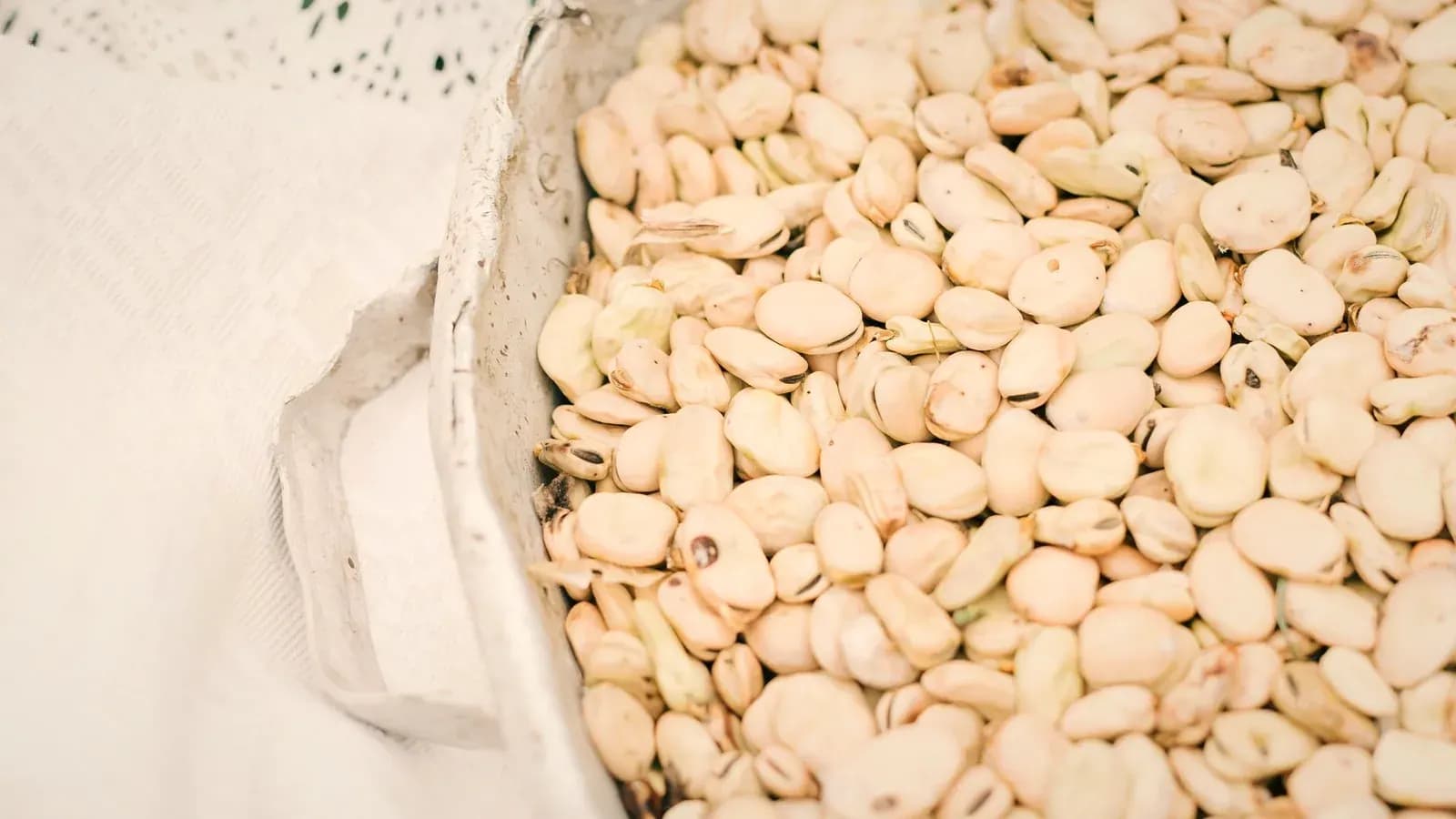
Choline supplements in pregnancy: what the trials found
The most cited human trial is a controlled feeding study from Cornell University. Women in their third trimester were randomly assigned to 480 mg of choline a day, about the Adequate Intake, or 930 mg a day. Babies of the 930 mg group had faster average reaction times at 4, 7, 10 and 13 months. The authors said this suggested that about twice the recommended amount improves infant information processing speed.
The 7-year follow-up
A 7-year follow-up found that children in the 930 mg group did better on a sustained attention task (p = 0.02). In the briefest signals, the 480 mg group had a 22.9 percent decline in correct hits across the session, against a 1.5 percent increase in the 930 mg group. Only 20 children were followed up.
What the 2025 reviews concluded
These are small trials. A 2025 systematic review in Nutrients by Gould and colleagues found four randomised trials and five observational studies across 20 publications. Most outcomes did not support a benefit, trials measured many outcomes and most were null, and the authors concluded that current evidence is insufficient to support or refute the idea that more choline in pregnancy improves child neurodevelopment.
A separate 2025 narrative review by Derbyshire is more positive. It points to promising roles in brain and liver function and possibly neural tube defect risk, and argues that choline should be considered alongside folic acid in pregnancy and lactation. It also notes that most pregnant and lactating women do not reach the Adequate Intake. A 2020 systematic review in the first 1,000 days also found choline linked with normal brain development, though much of that evidence came from animal studies.
The honest reading
The honest reading is that low intake is common in pregnancy and getting enough is sensible, but whether high-dose supplements improve a child's thinking is not proven. If you are pregnant, ask your midwife or doctor before adding a supplement, and check whether your prenatal vitamin already contains choline.

Do choline supplements help the adult brain?
Evidence in healthy adults is thin. The older-adult survey above found no link between intake and cognitive scores. A 2023 meta-analysis of choline alphoscerate, a prescription-style form used in some countries, included seven randomised trials and one cohort in patients with adult-onset cognitive impairment. It found better cognition when it was combined with donepezil (mean difference 1.72 points, 95 percent CI 0.20 to 3.25 across 4 trials). That is a medicine for people with neurological disease, so it does not show a benefit for healthy people buying a supplement.
The TMAO question
Gut bacteria turn choline from food, including phosphatidylcholine in eggs, into trimethylamine, which the liver converts to TMAO. In a 2013 New England Journal of Medicine study by Tang and colleagues, plasma TMAO rose after people ate two hard-boiled eggs and labelled phosphatidylcholine, and was suppressed by antibiotics, showing that gut bacteria are needed.
Among 4,007 patients having elective coronary angiography, those in the highest quartile of TMAO had a hazard ratio of 2.54 (95 percent CI 1.96 to 3.28) for major adverse cardiovascular events over 3 years compared with the lowest quartile. This is an association in patients with suspected heart disease, not proof that choline from food causes heart events. But it is a reason not to assume that more is always better, particularly with high-dose supplements and a history of heart disease.
Should you take choline supplements?
For most healthy adults, choline supplements are not needed and the evidence points to food first. Eggs, fish, meat, dairy, beans and nuts all contribute, and a varied diet gets you closer to the Adequate Intake than a capsule does, with other nutrients included.
Who might discuss choline supplements with a doctor
A supplement may be worth discussing if you are pregnant or breastfeeding, follow a strict plant-based diet, or have a medical reason to have low intake. Talk to a doctor or dietitian, because doses in the trials above were controlled and supervised, and a product label may not match them.
Choline supplements often appear as an ingredient in multivitamins and brain-health blends. Many antioxidant and brain-health products work the same way, so see our guides to vitamin E supplements and taurine supplements for how to read the evidence. Check the label for the amount and the form, and skip any choline supplements that promise to improve memory or prevent dementia, because the research above does not support that.
Frequently Asked Questions
Is choline a vitamin?
Not strictly, but it is classed as an essential nutrient. The US Institute of Medicine recognised it in 1998. Your body makes a little, but not enough, so you need to get it from food.
What foods are high in choline?
Eggs and meats are rich sources in the North American diet, providing up to 430 mg per 100 g according to a 2009 review. Fish, dairy, beans and nuts also contribute.
Do choline supplements improve memory?
There is no good evidence that they do in healthy adults. A survey of 2,796 older US adults found no link between choline intake and cognitive test scores. Trials of a prescription-style form in patients with neurological disease found benefits, but that does not apply to healthy people.
Should pregnant women take choline?
Most pregnant women eat less than the Adequate Intake, and small controlled trials found some benefits at about twice that amount. However, a 2025 systematic review found the evidence insufficient to support or refute a benefit for child development. Ask your midwife or doctor before supplementing.
Does choline raise heart disease risk?
Gut bacteria turn choline into TMAO, and high TMAO was linked with more heart events in a study of 4,007 patients. That is an association, not proof that choline from food causes heart disease, but it is a reason to be careful with high-dose supplements.
Can you get enough choline on a plant-based diet?
It is harder. A 2025 review notes that plant-based diets tend to be lower in choline. Beans, nuts and some vegetables contribute, and anyone on a strict plant-based diet or pregnant should ask a dietitian about it.
Sources
[Zeisel SH, da Costa KA. Choline: an essential nutrient for public health. Nutr Rev. 2009. PMID: 19906248] [Caudill MA et al. Maternal choline supplementation during the third trimester of pregnancy improves infant information processing speed. FASEB J. 2018. PMID: 29217669] [Bahnfleth CL et al. Prenatal choline supplementation improves child sustained attention: a 7-year follow-up. FASEB J. 2022. PMID: 34962672] [Gould JF et al. Choline during pregnancy and child neurodevelopment: a systematic review. Nutrients. 2025. PMID: 40077755] [Derbyshire EJ. Choline in pregnancy and lactation: essential knowledge for clinical practice. Nutrients. 2025. PMID: 40362867] [Derbyshire E, Obeid R. Choline, neurological development and brain function: a systematic review focusing on the first 1000 days. Nutrients. 2020. PMID: 32531929] [An R et al. Choline intake and cognitive function among US older adults. J Nutr Gerontol Geriatr. 2023. PMID: 36803181] [Sagaro GG et al. Activity of choline alphoscerate on adult-onset cognitive dysfunctions: a systematic review and meta-analysis. J Alzheimers Dis. 2023. PMID: 36683513] [Tang WH et al. Intestinal microbial metabolism of phosphatidylcholine and cardiovascular risk. N Engl J Med. 2013. PMID: 23614584] [Wiedeman AM et al. Dietary choline intake: current state of knowledge across the life cycle. Nutrients. 2018. PMID: 30332744]Rate this article
Click on a star to rate this article
Keep Reading
Vitamin A Supplements: What the Research Shows
Do vitamin A supplements work? What research shows for children, beta-carotene and lung cancer, bones, eyes and pregnancy, and who should ask a doctor first.
Read article →
supplementsVitamin B12 Deficiency Symptoms: What the Evidence Shows
Vitamin B12 deficiency symptoms from tingling feet to low mood, who is at risk, how testing works, and what trials say about tablets versus injections.
Read article →
supplementsOmega-3 Supplements: Complete Guide to Benefits and Selection
Learn about omega-3 supplements, including types, health benefits, dosing, and how to choose quality products.
Read article →

Vitality & Strength Editorial Team
Independent research synthesists — not licensed clinicians
Independent health writers and research synthesists. We are not doctors or registered dietitians; every claim we publish is sourced and linked to primary research, and we take no affiliate or industry money.