L-Theanine for Sleep and Focus: What the Research Shows
L-theanine for sleep and focus: what 2024-2026 meta-analyses found for attention, sleep quality and safety, and what to know before trying it.

L-theanine for sleep and focus is a popular supplement use, but the compound itself is an amino acid found mainly in tea leaves. People often take it on its own or with caffeine, because a cup of tea contains a small amount of both. The research suggests a measured answer. L-theanine shows a fairly consistent short-term benefit on attention, a small benefit on some sleep measures, and no serious safety signal in the trials, but many effects are modest and several reviews flag low-quality studies. This guide explains what the main reviews found and what to check before trying it.
⚕️ Medical Disclaimer
This article is general information, not medical advice. L-theanine is not a treatment for insomnia, anxiety or depression, and it should not replace care from a doctor. If you have persistent sleep problems, low mood or anxiety that affects daily life, speak to a doctor. People taking regular medicines, especially blood pressure medicines, sedatives or antidepressants, and anyone who is pregnant or breastfeeding, should ask a doctor or pharmacist before starting a supplement.
The short version
- A 2026 meta-analysis of 31 randomised trials with 1,168 people found that a single 200 mg dose of L-theanine, taken 30 to 60 minutes before testing, improved choice reaction time (standardised mean difference 0.51), a measure of attention.
- In the same review, the reduction in acute stress was modest (0.31) and largely driven by studies with a high risk of bias, and there was no significant effect on fatigue.
- For L-theanine for sleep, a 2025 meta-analysis of 19 trials with 897 people found small improvements in subjective sleep onset latency, daytime dysfunction and overall sleep quality.
- A 2025 review of 13 trials with 550 people suggested 200 to 450 mg a day may support sleep in adults, though several authors work for companies with an interest in the product.
- No serious adverse events were reported in the main reviews, but long-term safety data are limited.
What is L-theanine and where is it found?
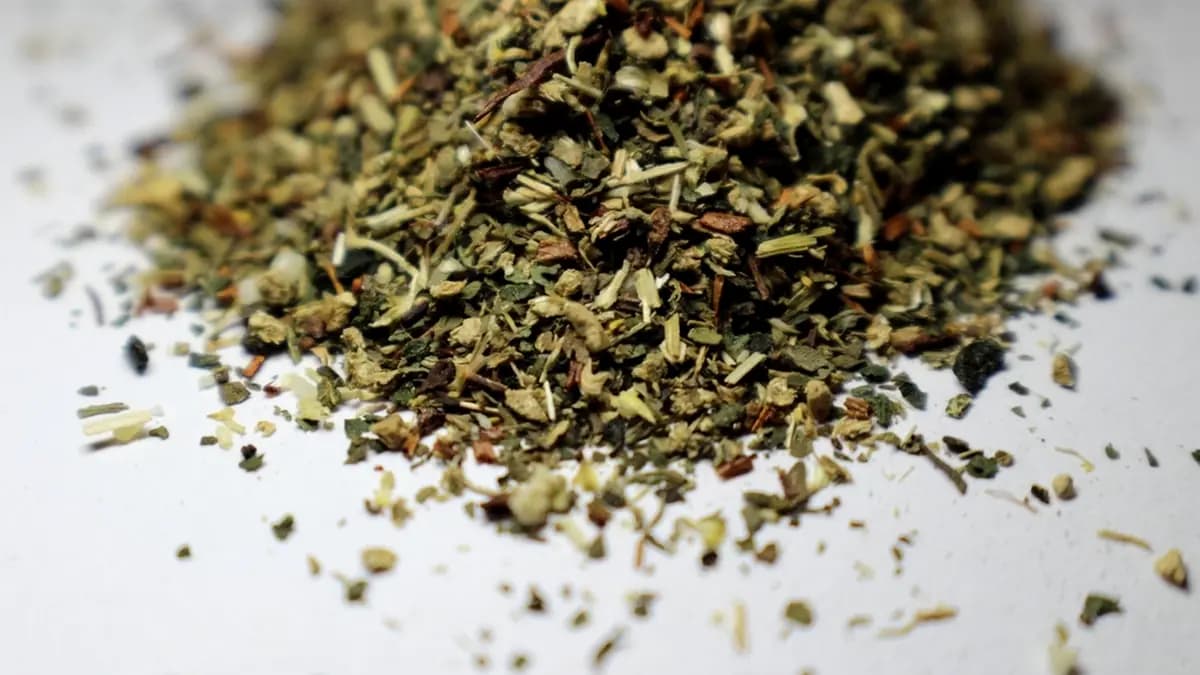
L-theanine is an amino acid that occurs almost only in the tea plant, Camellia sinensis, so green, black and white tea all contain some. A cup of tea typically provides a small fraction of the 200 mg used in many trials, which is why studies tend to use supplements or extracts. It is thought to act on brain signalling involved in relaxation without causing drowsiness, although the exact mechanism in people is not settled. Because tea also contains caffeine, some trials test L-theanine together with caffeine, and those results should not be read as the effect of L-theanine alone.
What the reviews found
The 2026 meta-analysis of cognitive and mood effects
The most recent large overview was published in Molecular Psychiatry in 2026. It pooled 31 randomised controlled trials with 1,168 participants who took oral L-theanine or placebo, in both healthy and clinical groups. A single 200 mg dose taken 30 to 60 minutes before cognitive testing improved choice reaction time (standardised mean difference 0.51, 95% confidence interval 0.25 to 0.77), which the authors read as better attention. The effect on acute stress was smaller (0.31) and depended heavily on trials at high risk of bias. After excluding one outlier, a single dose was linked with fewer depressive symptoms in healthy people (0.69, 0.13 to 1.25), but the interval is wide. Anxiety results were inconsistent and mostly not significant, and there was no clear effect on fatigue. No serious adverse events were reported. One author founded a company that sells dietary supplements, so the authors declared a competing interest.
[Gerolymos et al., Molecular Psychiatry, 2026, cognitive and affective effects of L-theanine: systematic review and meta-analysis of 31 randomised trials.]Tea, L-theanine and caffeine in healthy people
A 2025 review in Nutrition Reviews looked at tea, L-theanine alone, and L-theanine plus caffeine in healthy participants. It included 50 randomised trials, and 15 were suitable for at least one meta-analysis. L-theanine alone favoured better choice reaction time in the first hour compared with placebo (standardised mean difference -0.35, 95% confidence interval -0.61 to -0.10), and L-theanine plus caffeine gave small to moderate improvements in some attention and mood tasks. The authors stressed that many confidence intervals were wide, so the size and direction of the effects remain uncertain. Two authors work for tea companies. The takeaway is that L-theanine, with or without caffeine, may give a short-lived lift in attention, not a lasting change.
[Payne et al., Nutrition Reviews, 2025, tea, L-theanine and L-theanine plus caffeine on cognition, sleep and mood in healthy participants.]
What the reviews of L-theanine for sleep found
A 2025 meta-analysis in Sleep Medicine Reviews pooled randomised trials of L-theanine for sleep in people of all ages and health status. It identified 19 articles with 897 participants, and 18 went into the analysis. L-theanine significantly improved subjective sleep onset latency (standardised mean difference 0.15, 95% confidence interval 0.01 to 0.29), subjective daytime dysfunction (0.33, 0.16 to 0.49) and overall subjective sleep quality (0.43, 0.04 to 0.83). The authors noted a lack of studies of pure L-theanine and called for work on the right dose and duration. These are small effects measured mostly by questionnaires, not sleep lab recordings.
[Bulman et al., Sleep Medicine Reviews, 2025, the effects of L-theanine consumption on sleep outcomes: systematic review and meta-analysis.]A separate 2026 systematic review in Nutritional Neuroscience covered 13 trials with 550 people, mostly randomised, using 50 to 900 mg a day. It concluded that 200 to 450 mg a day appears to be a safe way to support healthy sleep in adults, with benefits reported for sleep latency, efficiency and feeling refreshed. This was not a meta-analysis, and the authors are employed by companies in the tobacco and consumer health field, which is a reason to read the conclusion with some caution.
[Cotter et al., Nutritional Neuroscience, 2026, examining the effect of L-theanine on sleep: systematic review of dietary supplementation trials.]People with mental health conditions
A 2024 systematic review in BMC Psychiatry included 11 randomised trials in people with conditions such as schizophrenia, ADHD, anxiety disorders, depression, obsessive-compulsive disorder and sleep disorders. It found that L-theanine reduced psychiatric symptoms more than control conditions in schizophrenia, anxiety disorders and ADHD, although the trials were small and varied, and the authors called for more research. These studies used L-theanine as an add-on to usual care, so they do not show that it can replace medicine.
[Systematic review of L-theanine supplementation in patients with mental disorders, BMC Psychiatry, 2024.]
L-theanine for sleep: how much do studies use?
The main reviews cluster around 200 mg for single-dose attention studies and 200 to 450 mg a day for sleep, with trials ranging from 50 to 900 mg a day. Some trials gave L-theanine alone and some combined it with caffeine or other ingredients, so the dose that works for one goal may not apply to another. There is no agreed best dose or timing, and the trials of L-theanine for sleep do not show how long to continue. If you try it, a product that lists the amount of L-theanine per serving makes it easier to compare with the trials.
Is L-theanine safe?
In the 2026 meta-analysis no serious adverse events were reported, and dropout rates were compared between L-theanine and placebo groups. Trial durations were mostly short, so long-term safety is less clear. Supplements vary in quality, and some products combine L-theanine with caffeine, herbs or sedating ingredients. Because L-theanine may lower blood pressure slightly in some people, it makes sense to ask a doctor if you take blood pressure medicine. Pregnant and breastfeeding women should check with a doctor first.
What this means in practice
If your main problem is poor sleep, the best-supported steps are regular sleep and wake times, limiting caffeine and alcohol late in the day, and treating any underlying cause. L-theanine for sleep may help a little with satisfaction, and it may help focus, for some people, but the effects are small and the studies are uneven. A cup of tea is a reasonable way to get a smaller amount together with a calming routine. If low mood, anxiety or insomnia persists, speak to a doctor rather than relying on supplements. You can also read our guides to glycine for sleep, magnesium for anxiety ashwagandha for stress and anxiety, and our separate guide to L-theanine and caffeine.
Frequently asked questions
Frequently Asked Questions
Does L-theanine help you sleep?
Possibly a little. A 2025 meta-analysis of 19 trials found small improvements in subjective sleep onset, daytime dysfunction and overall sleep quality, but the effects were modest and mostly questionnaire based.
How much L-theanine should I take?
Trials most often used about 200 mg as a single dose for attention and 200 to 450 mg a day for sleep. There is no agreed best dose, so speak to a doctor or pharmacist if you are unsure.
Does L-theanine reduce anxiety?
The evidence is mixed. A 2026 meta-analysis found anxiety results were inconsistent and mostly not significant, while a 2024 review found symptom reductions in some clinical groups, mainly in small trials.
Is L-theanine the same as drinking tea?
No. Tea contains only a small amount of L-theanine, along with caffeine, so the doses in trials are usually higher than a cup of tea provides.
Is L-theanine safe to take every day?
In the trials reviewed no serious adverse events were reported, but most studies were short, so long-term safety is less certain. Check with a doctor if you take medicines or are pregnant.
Can I take L-theanine with caffeine?
Several trials tested the combination, and some found small gains in attention and mood. It is the same pairing found naturally in tea, but results should not be read as the effect of L-theanine alone.
Rate this article
Click on a star to rate this article
Keep Reading
L-Theanine and Caffeine: The Stack That Kills Jitters
Pair l-theanine and caffeine to keep the focus and drop the jitters. Here is the research-backed ratio, dosing, timing, and why green tea already does it.
Read article →
supplementsTart Cherry Juice: What the Research Shows
Does tart cherry juice work? A review of 2021 to 2026 meta-analyses and trials on exercise recovery, sleep, gout, blood pressure, sugar and side effects.
Read article →
supplementsMagnesium for Sleep: Glycinate vs Citrate vs Threonate
Compare magnesium for sleep across glycinate, citrate, and threonate forms: absorption rates, dose ranges, side effects, and which form fits your goals.
Read article →

Vitality & Strength Editorial Team
Independent research synthesists — not licensed clinicians
Independent health writers and research synthesists. We are not doctors or registered dietitians; every claim we publish is sourced and linked to primary research, and we take no affiliate or industry money.