Post-Workout Recovery Shake
A 5-minute, ~40 g-protein recovery shake to refuel glycogen and support repair after training — full macros and the science behind it.
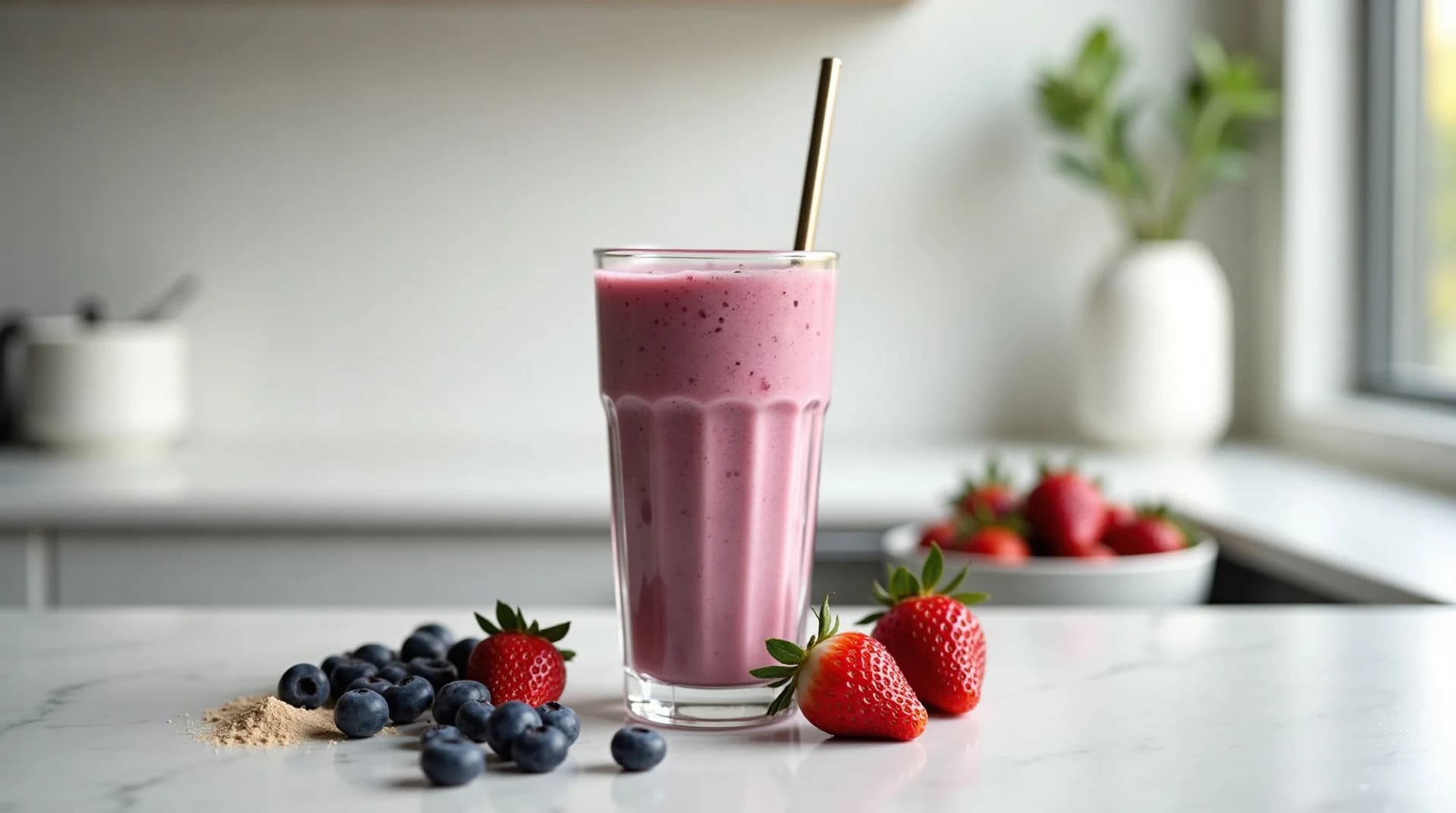
Method
- 1
Add the milk and Greek yogurt to the blender first so the blades catch.
- 2
Add the whey, banana, frozen berries and peanut butter.
- 3
Blend 30 to 45 seconds until smooth; add a splash more milk to thin if needed.
- 4
Pour and drink within the hour after training.
Blender
Use casein instead of whey if this is your last meal before bed.
A post-workout recovery shake is the simplest way to hit your protein and carbohydrate targets in the window when appetite is often lowest. This one lands about 40 grams of protein and 46 grams of carbohydrate — enough to support repair and start refilling the glycogen you just burned, in a form that goes down easily when solid food does not appeal.
It is for anyone finishing a hard session — a lifting block, a long run, an interval workout — who wants recovery nutrition handled in five minutes. Blender to glass, drink, done.
Think of it as the convenient option, not a magic one: a shake earns its place because it is easy to actually consume right after training, not because the timing is sacred.
Why these macros work
The protein does the structural work. A dose in the 20 to 40 gram range maximally stimulates muscle protein synthesis (Schoenfeld & Aragon, 2018); at 40 grams this shake sits at the top of that range, which suits a larger or hard-training person. The carbohydrate matters too: replenishing muscle glycogen is a central part of recovery, and getting carbohydrate in after depleting sessions supports that resynthesis (Burke et al., 2011).
That said, the single most important lever is your daily totals, not this one drink. As we cover in protein timing and total daily intake, hitting your protein target across the day outweighs precise post-workout timing — the shake is just the easiest way to bank a big dose when you are least likely to cook. For the rest of the recovery picture (sleep, cold-water timing, load management), see our evidence-based recovery protocol.
When to eat it
Drink it within an hour or so of finishing, especially after depleting endurance or high-volume sessions where glycogen is low and your next meal is hours away. If you will eat a full meal within an hour anyway, you do not strictly need the shake — but it is a reliable fallback when appetite is suppressed or you are heading straight back to work.
Tips to nail it
- Add the liquid first so the blades catch and the powder does not stick to the bottom.
- Frozen berries (rather than ice) thicken it and add fibre without watering it down.
- If you want it more like a milkshake, freeze the banana in advance.
- Too thick? A splash of milk. Too thin? More frozen fruit or a few ice cubes.
- If this is your last intake before bed, swap whey for casein for a slower overnight release.
Variations & substitutions
- Dairy-free / vegan: use a pea or soy protein isolate and a soy milk (soy keeps the protein content and leucine up), plus a coconut yogurt.
- Lower-sugar: drop the banana and use a smaller portion of frozen berries; add a spoon of oats for carbohydrate instead.
- Higher-carb (endurance refuel): add a second banana or a scoop of oats to push carbohydrate higher after long sessions.
- Chocolate: use chocolate whey and a tablespoon of cocoa.
- Nut-free: swap peanut butter for a spoon of ground flax or tahini.
The bottom line
A recovery shake is a tool, not a requirement. Its value is purely practical: it gets a large dose of protein and some fast carbohydrate into you in the one situation where solid food is hardest — straight after a demanding session, when appetite is suppressed and your next proper meal is hours away. Hit that and you have covered the part of recovery that nutrition actually controls. Everything else — the exact timing window, the precise ratio, the brand of powder — is a rounding error next to whether you consistently reach your daily protein and energy targets. Make this shake when it helps you do that, and skip it on days a real meal is already close. Consistency, not ceremony, is what drives the result.
Frequently Asked Questions
How much protein is in this recovery shake?
About 40 grams per serving, from whey, Greek yogurt, and milk — at the top of the 20 to 40 gram per-meal range that maximises muscle protein synthesis, which suits larger or hard-training people.
Do I need a recovery shake right after my workout?
Not strictly. If you will eat a full, protein-rich meal within an hour, that covers it. A shake earns its place when appetite is low after hard training or your next meal is hours away — it is the convenient option, not a magic window.
Can I make this dairy-free?
Yes. Use a pea or soy protein isolate and soy milk to keep the protein and leucine high, plus a coconut yogurt. Soy and pea drive a similar muscle-protein-synthesis response to whey.
What does the carbohydrate do?
The banana and milk supply carbohydrate to help refill the muscle glycogen you burned during training, which is a core part of recovery alongside the protein.
More performance recipes

Rate this article
Click on a star to rate this article